

By Ali Al-Ameri
When belonging feels like holding on
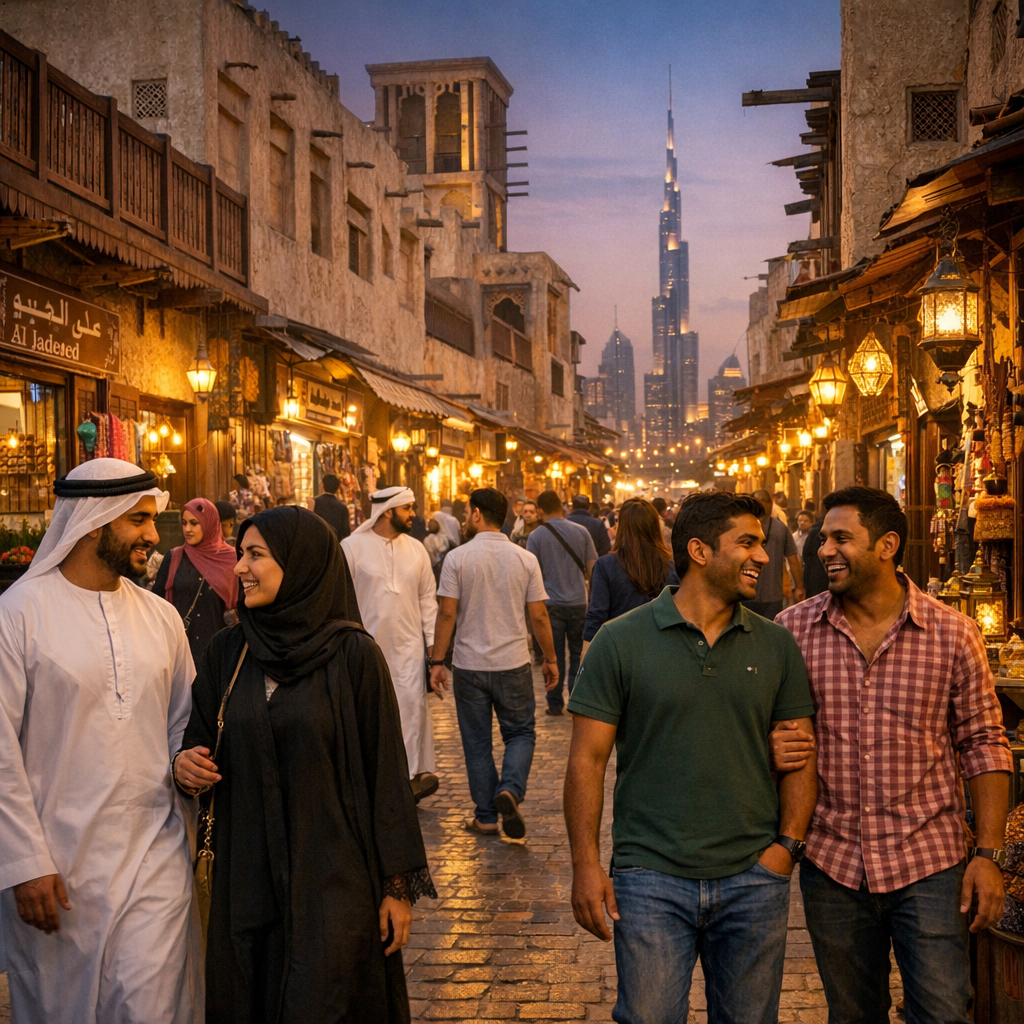
Dubai is evolving faster than its shadows shift through its streets. Yet amidst shimmering towers and gleaming malls, there are neighborhoods—Karama, Satwa, Al Fahidi—where life pulses differently. Older shop-fronts, shared courtyards, street-corner tea—it’s these slices of ordinary existence that make up the pulse of community here. But many long-term residents say they feel it slipping away, unnoticed in the rush of development.
Heritage under pressure
Take Karama: one of the city’s early residential areas built in the 1970s. It wasn’t meant to be glamorous, but it was alive. Generations of immigrants and Emiratis both cultivated small stories—shisha cafes that opened at sunrise, bazaars in alleys selling rangeela fabrics and spices. As new towers replace older low-rise apartment clusters and mixed-use buildings, those textures are fading. A project called “Everyday Modernity” has been documenting what residents remember—so shop owners, elders and longtime residents can say: this was our home, this was our identity. The walls aren’t the only thing preserved—the stories are.
Unseen costs of rapid growth
Many who live in Dubai speak of a paradox: extraordinary opportunity, paired with everyday friction. Traffic delays that stretch short trips into endurance tests. Air conditioning that bills you more than the breakfast you had. Housing that costs more and keeps you moving—not settling. For some, the romance of city-of-gold begins to erode when service calls go unanswered or the building walls let in noise from corridors or neighboring villas.
Feeling like a guest
A theme that comes up often: stability. Residence, work permits, visa renewals—all the paperwork of identity. You build your life here, yet there is a sense of being always provisional. While the city invites people from all over, few feel they own this place in the way someone born here might. That mingles with a broader emotional cost: long distances from home, neighborhoods changing faster than you can recognize, public spaces that feel designed for spectacle more than solace.
Why this matters
Because cities are not just buildings. They are how you get to your favorite teashop, your corner grocery, your friend’s home on foot, without needing a car. They are the sound of a street prayer, the scent of incense from a nearby shop, stories told over fence lines and balcony walls. If this connective tissue loosens, what remains is textureless luxury and curated aesthetics—beautiful in photos but hollow underneath.
What could help
To many, the path forward lies in small acts: preserving older buildings, updating zoning regulations that protect communal courtyards, supporting oral history initiatives (like Erth Dubai) that archive lives as much as sites, pushing for fair contracts and tenancy policies so people can feel rooted, planning neighborhoods where children can walk safely, where you don’t have to choose between car dependency or isolation.
Dubai’s promise is enormous. But promises only echo when people feel they’ve not just arrived—they belong.