

By Khalid Al-Qasimi
Dubai’s desert landscapes and urban bustle are shaped not just by towering skyscrapers, but by weather patterns and environmental forces we experience year-round. Understanding what to expect—and what’s changing—can help us get through the hot summers, rare rains, and everything in between.
Seasons & Climate at a Glance
Dubai has a tropical desert climate. It features two main seasons—summer and winter—separated by two transitional periods in spring (April–May) and autumn (October–November). During summer, temperatures regularly soar above 40°C, while winters bring cooler days around 23°C and cooler nights in the mid-teens. Rainfall is scarce, mostly falling in winter months, and the city receives under 100 mm on average each year. Coastal humidity amplifies the heat and can make summer feel quite oppressive.
Shifts We’re Noticing
While Dubai’s climate has always been harsh, there are now clearer signs of long-term change. Winters are getting milder, seasonal contrasts are less sharp, and what used to be extreme weather—like heavy rainstorms—is happening more often. Projections show rising temperatures and changing precipitation patterns underway. These shifts affect everything from how we stay cool to how our infrastructure handles occasional floods.
Air Quality and Urban Weather Risks
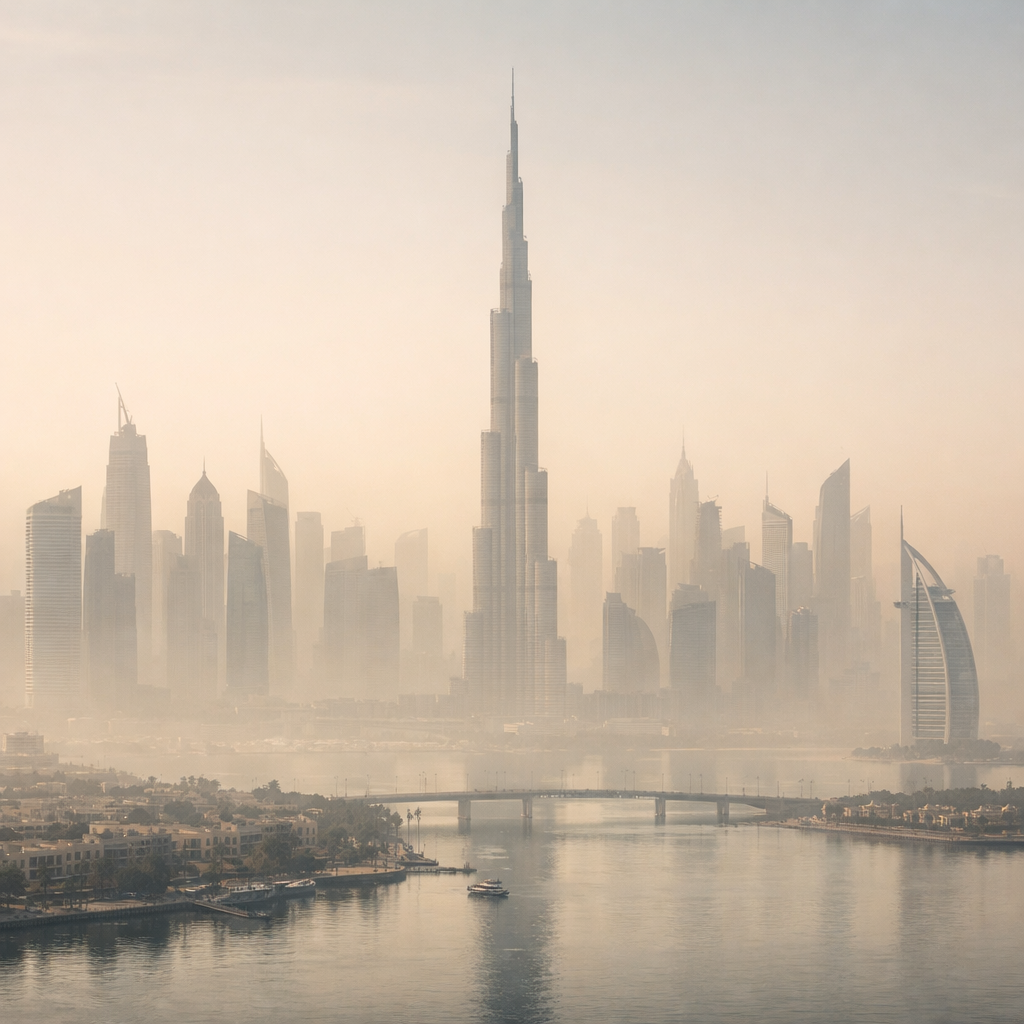
Air quality is a growing concern in Dubai. Dust storms, vehicle emissions, industrial sources, and humidity trap pollutants close to ground level. The government is monitoring key pollutants like particulate matter, nitrogen dioxide, and ozone through platforms that allow residents to check air quality in real time. Efforts are underway to reduce emissions via policy, technology, and public awareness.
Practical Tips for Residents
- On hot, humid summer days, avoid strenuous outdoor activity between midday and early evening; seek shaded or air-conditioned spaces.
- After rainfall, watch for localized flooding in low-lying areas, especially where drainage is limited.
- Check daily air quality indexes; on days with higher pollution or haze, limit outdoor exposure and consider wearing protective masks.
- Support greening initiatives, water conservation, and sustainable building design—every small effort adds up.
Looking Ahead
Dubai faces ongoing challenges and opportunities as weather and environment intersect. Rising temperatures, rare storms, air quality pressure, and urban development require thoughtful responses. While local strategies are in motion—such as national climate programs, air quality action plans, and resilience infrastructure—community awareness and adaptation are just as important.
Staying informed, staying safe, and staying sustainable will help us live well in Dubai—not just now, but for decades to come.