

By Ali Al-Ameri
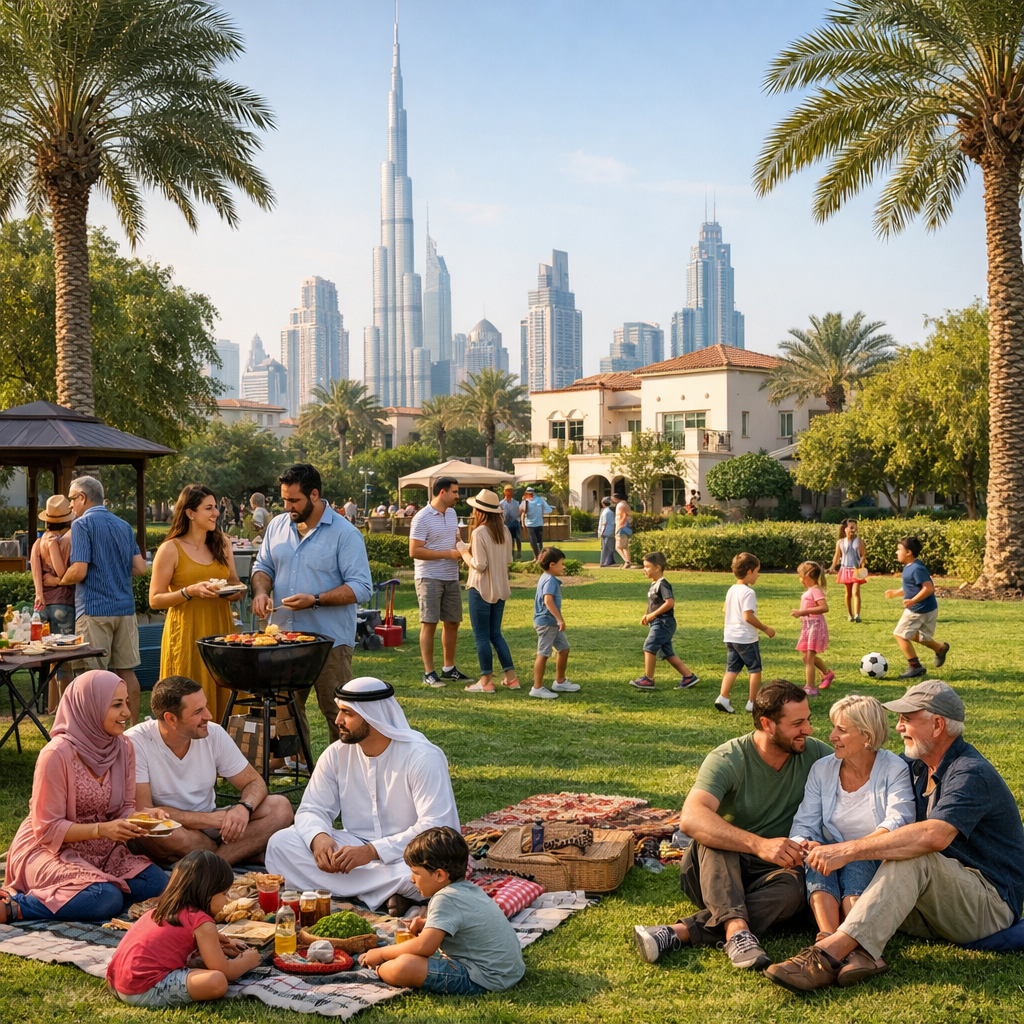
Walking through my neighbourhood park last evening, I saw children chasing kites, elderly residents sharing stories under the shade, and young couples picnicking on the grass. It struck me how public parks in Dubai are more than just landscaped spaces—they are places that shape the rhythm of our daily lives and forge our sense of community.
Green Spaces as Daily Lifelines
Dubai has committed significantly to parks: recent plans aim to add dozens of new public parks across the city, investing hundreds of millions of dirhams to enhance community wellbeing and deliver accessible leisure spaces. These parks are designed to be within a five-minute walk for many residents, integrating green zones into where we live, instead of being distant destinations. Residents benefit from places to exercise, relax, let kids play freely, and escape the city’s pace—right at their doorstep.
What Makes Parks About People
The best moments happen not because of a fountain or a playground, but because of how people use these spaces. Whether it’s by joining a fitness class under trees, practicing yoga at dawn, or simply exchanging greetings while walking dogs—parks become the backdrop for casual connections. In Dubai, where most of us are from somewhere else, these interactions matter more than we realise. They are where we share laughter and rituals from many cultures, blending daily life into something richer.
Neighborhood Identity and Belonging
Parks also anchor neighbourhood identity. When design reflects local needs—shaded paths, flexible event spaces, play areas for young and old—we see families returning week after week, friendships forming, and a sense of ownership taking root. In traditional Emirati ideas of community, gathering and belonging are central; parks translated through that lens become modern fareejs where belonging is shared, irrespective of background.
The Challenges Under the Green Canopy
Of course, parks aren’t perfect. Dubai faces hot summers, maintenance demands, and uneven distribution of green space—some neighbourhoods still lack safe, pleasant outdoor options nearby. Also, thoughtful programming matters: a park with amenities alone won’t draw visitors if it feels unsafe at night, lacks water, or doesn’t include simple essentials like lighting and seating. To truly serve our diverse population, parks must reflect the needs of children, seniors, working families, and those with special mobility requirements.
How We Can Grow Real Connections
Here are small but meaningful ways the city, planners, and residents can help parks reach their full potential:
- Design with residents: Regular consultations with those who live nearby—older adults, parents, people with disabilities—can guide park design beyond aesthetics.
- Activate space daily: Markets, cultural performances, fitness classes—small activities draw people out, making parks feel alive.
- Maintain and adapt: Shade trees, cooling features, water access and shaded seating are small investments that make parks usable in summer.
- Create safe access: Smooth footpaths, well-crossed roads, and lighting encourage people to walk or cycle to parks.
- Champions among us: Community volunteers who care for or organise in parks build social glue—gardening, clean-ups, festivals.
Concluding Reflections
Parks are mirrors of our community ambitions. They are where culture, family, and citizenship meet—not just in big policy statements, but in afternoons under trees, shared benches, and joyous shouts of play. As Dubai grows, if we preserve and expand places that nurture daily encounters, we deepen the belonging many of us long for.