

By Khalid Al-Qasimi
Arid Climate & Long-Term Weather Patterns
Dubai has a hot desert climate: summers are long, sweltering, and humid, while winters are mild with cooler nights. The driest months typically stretch from May through September, with almost no rainfall. The “cooler” season from December through February brings brief rainstorms and more comfortable conditions, especially in the early mornings and evenings.
Historical climate data show annual rainfall in Dubai averages under 100 mm, spread over about 20–30 days. The hottest months can see average highs above 40 °C, and overnight lows during winter can drop under 16 °C depending on location and altitude.
How Climate Change is Altering Rainfall and Heat
Recent studies suggest changes in rainfall patterns: fewer rain days but with more intense events when they occur. Winter storms now risk heavier downpours that can cause flooding even though the overall wet season remains short.
Meanwhile, high summer temperatures are creeping earlier into the spring and later into autumn. Periods of severe heat and humidity are lengthening, putting added strain on energy use, public health, and outdoor lifestyles.
Environmental Impacts & What Can Help
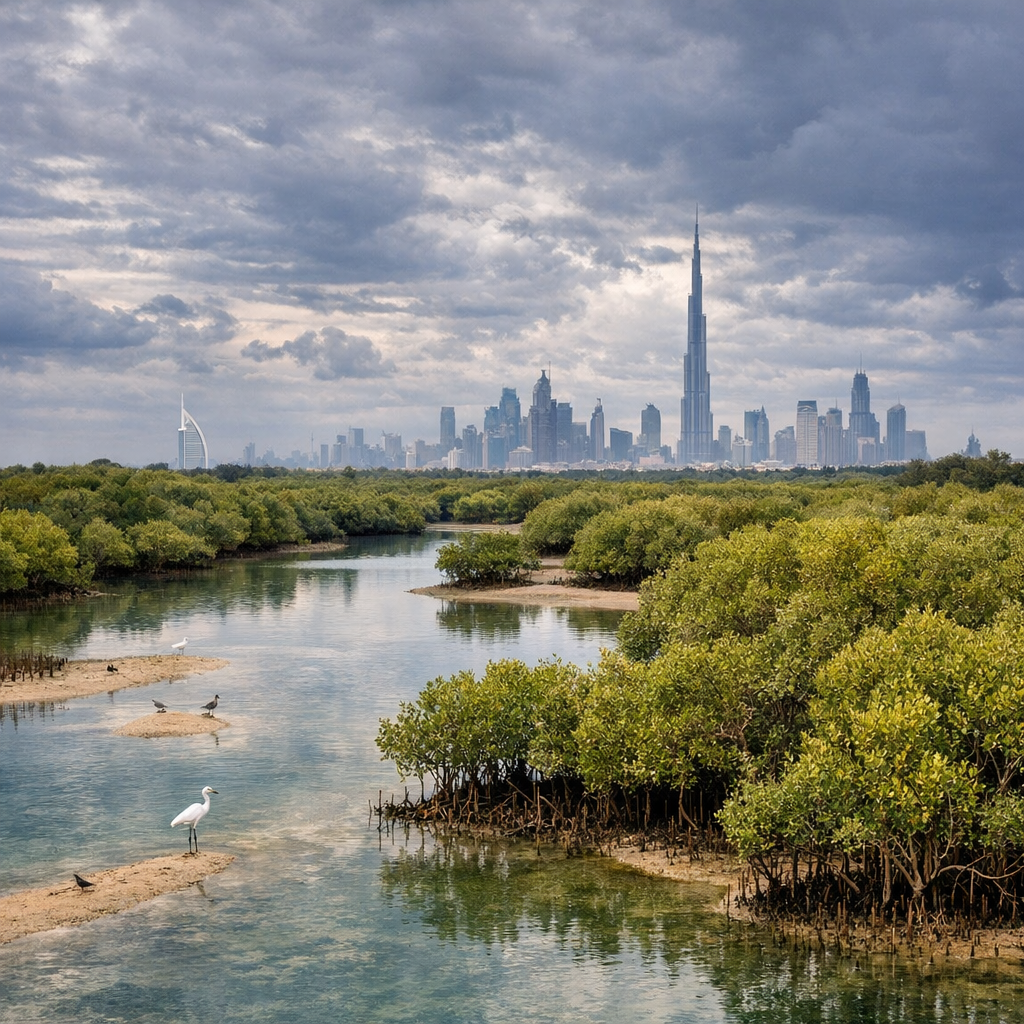
These shifts affect more than comfort. They stress water resources and urban infrastructure, and increase vulnerability to dust storms. Native ecosystems—including mangroves, coastal and marine habitats, and desert reserves—face pressure from higher temperatures and changing rainfall.
Dubai’s authorities have been implementing environmental protection programs in its protected areas, such as the Ras Al Khor Wildlife Sanctuary and Al Marmoom Desert Conservation Reserve. These efforts include habitat management, water quality monitoring, and planting of mangroves.
What Residents Can Do
- Stay weather-aware: keep an eye on forecasts during winter, especially when storms are predicted.
- Adapt daily routines to heat: schedule outdoor time in early mornings or after sunset during hot months.
- Support green initiatives: avoid plastic waste, conserve water, and help restore native plants.
- Choose energy-efficient solutions for homes and vehicles to cut down both utility bills and greenhouse emissions.
- Explore Dubai’s nature reserves responsibly—when opportunities arise—so we all appreciate the changes and preserve biodiversity.
Dubai’s climate may always be challenging, but by understanding the long-term trends and protecting its unique ecosystems, we can adapt and thrive in the environment around us.