

By Khalid Al-Qasimi
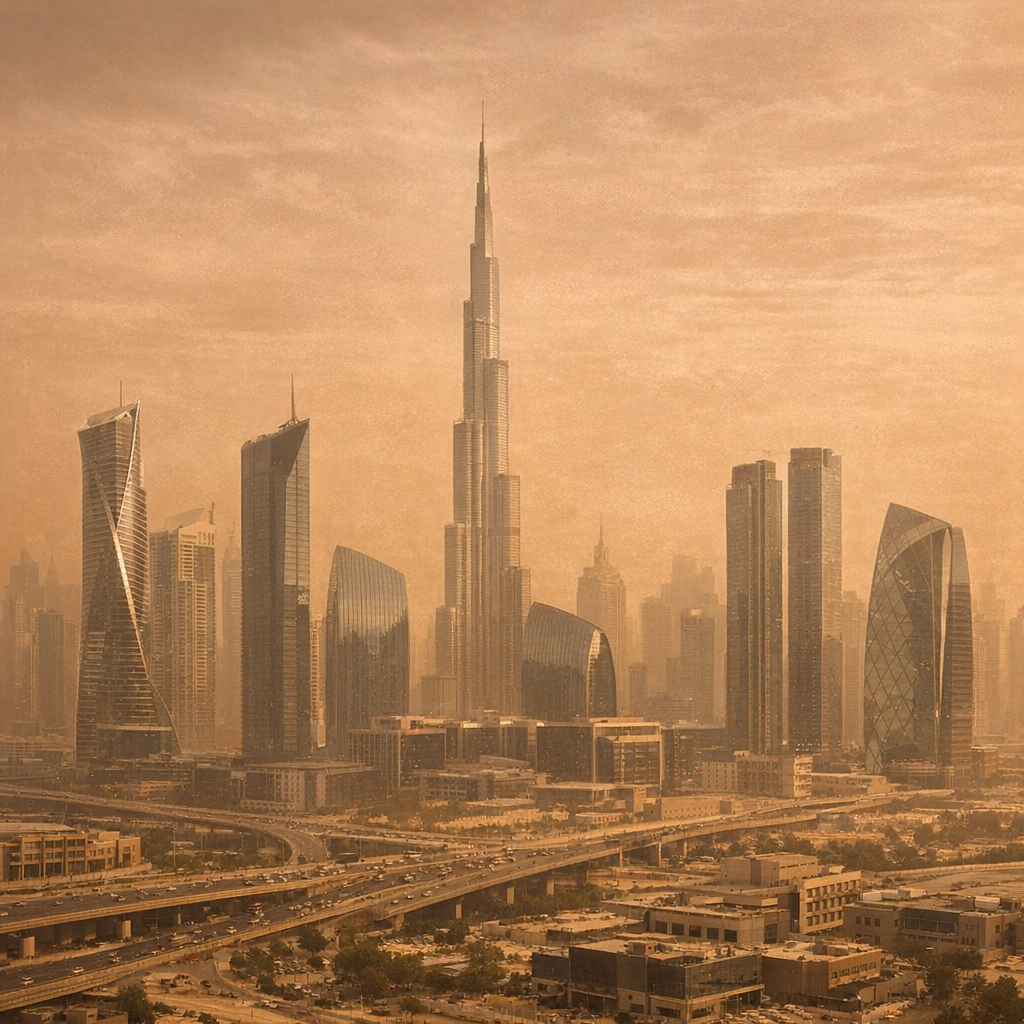
Dubai’s climate is often summed up as hot, arid, and sunny—but beneath that simple picture lies a complex mix of seasonal shifts, environmental pressures, and human agency. This article examines how climate patterns shape daily life here, what environmental concerns are growing, and what’s being done to protect our community.
Typical Weather Patterns Across the Year
Dubai has distinct weather phases: a sweltering hot period from May through September, cooler milder months between November and March, and transition periods in between. High summer temperatures frequently top 43°C, with nights remaining above 30°C. Winter daytime highs usually fall in the mid-20s °C, while nights near the coast can drop below 16°C. Rain is rare year-round and mostly occurs during winter storms. Humidity, particularly near the sea, plays a big role—summer humidity can make heat feel oppressive, with dew points and shaded relief offering unusually intense discomfort for many residents.
Environmental Challenges Emerging in Dubai
Extreme Heat and Heat Stress
Intense heat waves are increasingly common. Prolonged periods of high temperature strain infrastructure, increase energy demand, drive up cooling costs, and raise health risks—especially for outdoor workers, the elderly, and those without air-conditioned spaces.
Water Scarcity and Management
With very limited rainfall, Dubai relies heavily on desalinated seawater and treated wastewater. Water stress is compounded by rising temperatures and growing demand. Recent policy moves emphasize efficiency; for example, large-scale drainage and storm water management projects aim to reduce flood risk and better capture seasonal rainfall to replenish reservoirs.
Air Quality and Pollution
Air quality in Dubai fluctuates with weather, dust storms, and emissions. National platforms now provide real-time pollutant data, tracking substances like PM2.5, nitrogen dioxide, and ground-level ozone. Government strategies — such as the UAE Air Quality Agenda 2031 — are focused on reducing health risks through enforcement, monitoring, and transitioning to cleaner sources of energy.
Sea Level Rise and Coastal Impacts
As a coastal city, Dubai faces risks from rising seas and more powerful storms. Flooding in built-up areas during intense rain events has already exposed drainage weaknesses. Long term, rising sea level threatens infrastructure, saltwater intrusion, and the fragile balance of marine ecosystems.
Efforts Toward Adaptation and Sustainability
Dubai and national authorities are not standing still. Key responses include:
- Energy efficiency and renewable energy: Projects like solar parks and demand-side management aim to reduce reliance on fossil-fuel power, cut emissions, and moderate heat gains from built infrastructure.
- Regulation and monitoring: Environmental permits, smart emissions tracking, and ambient air quality platforms help enforce standards and raise transparency for both citizens and industry.
- Water conservation and stormwater projects: Investments in water reuse, capture of rainwater, and upgraded drainage systems are building resilience to both droughts and floods.
- Community awareness and behaviour change: From reducing single-use plastics to landscaping with plants suited to arid environments, individual choices are increasingly part of Dubai’s sustainability pathway.
What Residents Can Do
- Check daily weather and air quality reports before outdoor plans—avoid strenuous activity during peak heat.
- Seal gaps in windows and doors to reduce indoor cooling needs; use shading and reflective materials where possible.
- Conserve water through low-flow fixtures, responsible landscaping, and awareness of peak usage times.
- Use masks or filters during poor air quality days, and favor travel modes that reduce emissions.
- Support green urban design by making informed choices in housing, commuting, and consumption.
Dubai’s climate and environmental challenges are real—but so are the tools and policies aimed at mitigating risks and enhancing resilience. Both at the societal and individual level, awareness and action make a difference in weathering what’s ahead.