

By Khalid Al-Qasimi
Arid Climate With Sharp Seasonal Contrasts
Dubai has a classic hot desert climate. Summers (June–September) bring daytime highs often above 40 °C, combined with humid air from the Gulf, especially near the coast. Winters (December–March) are much more moderate, with daytime highs around 22-25 °C, and cooler nights dropping to the low teens. Rainfall is rare but tends to fall in winter months, sometimes through sudden storms. Transitional periods around April-May and October-November often bring dramatic shifts—heat rises or eases sharply, winds change direction, and humidity fluctuates.
Dust, Air Quality & Health Risks
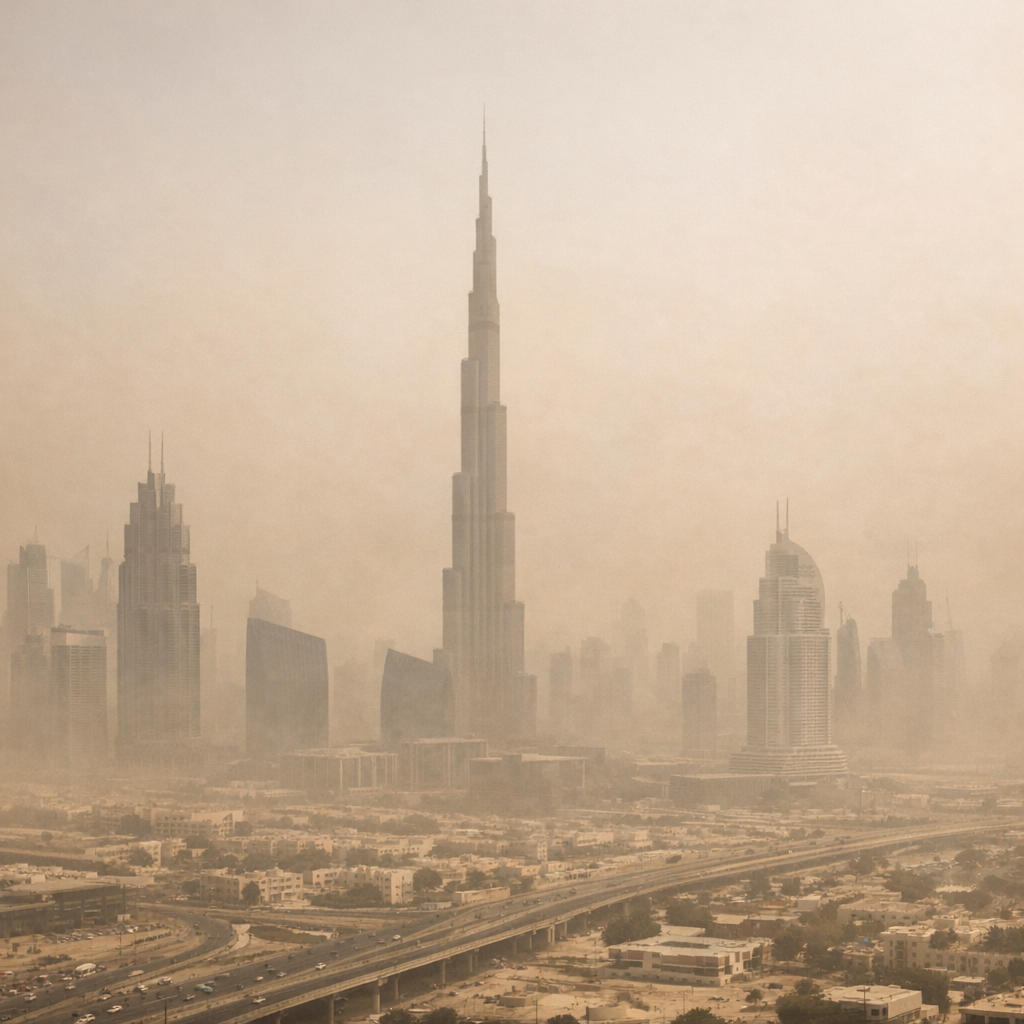
Sand and dust storms remain an important environmental and health concern. During the hotter months, rising temperatures, dry ground, and certain wind patterns lead to increased dust levels, sometimes noticeable even indoors. Particles known as PM10 and PM2.5 can spike during these events, worsening respiratory and heart conditions. On the air quality front, government stations and platforms track pollutants such as nitrogen dioxide, sulfur dioxide, ozone, and particulates, issuing advisories when levels exceed safe limits.
Warming Trend and Long-Term Environmental Shifts
Beyond seasonal variation, long-term changes are underway. Average summer temperatures are rising compared to past decades, and winters are less cool. Forecasts suggest hotter conditions will extend, with increased humidity making summers more taxing for residents and infrastructure alike. Challenges such as rising sea levels threaten coastal areas and artificial islands, while higher sea temperatures risk harming marine ecosystems like corals and mangroves. Water scarcity—already a constraint—may be aggravated by both heat and changing precipitation.
Adaptation & Practical Advice
For residents
Stay aware of air quality alerts during dusty or hot periods; limiting outdoor activity in peak midday heat helps reduce risks. Use indoor air purifiers if prone to respiratory issues. Hydration and sun protection remain essential year-round.
For planners and authorities
Infrastructure—especially drainage systems—needs to be designed for intense rainfall, even if rare. Urban design to reduce heat—such as increased greenery, reflective surfaces, and shaded walkways—can help alleviate heat stress. Monitoring climate trends and investing in coastal protections are critical to long-term resilience.
Dubai’s climate is not static—it breathes with seasons, but something deeper is shifting too. With awareness, planning, and action, we can better manage the heat, the dust, and the changing environment. The season ahead may test us, but it also offers opportunities to build a more resilient city.