

By Ali Al-Ameri
The Fareej That Feels Like Family
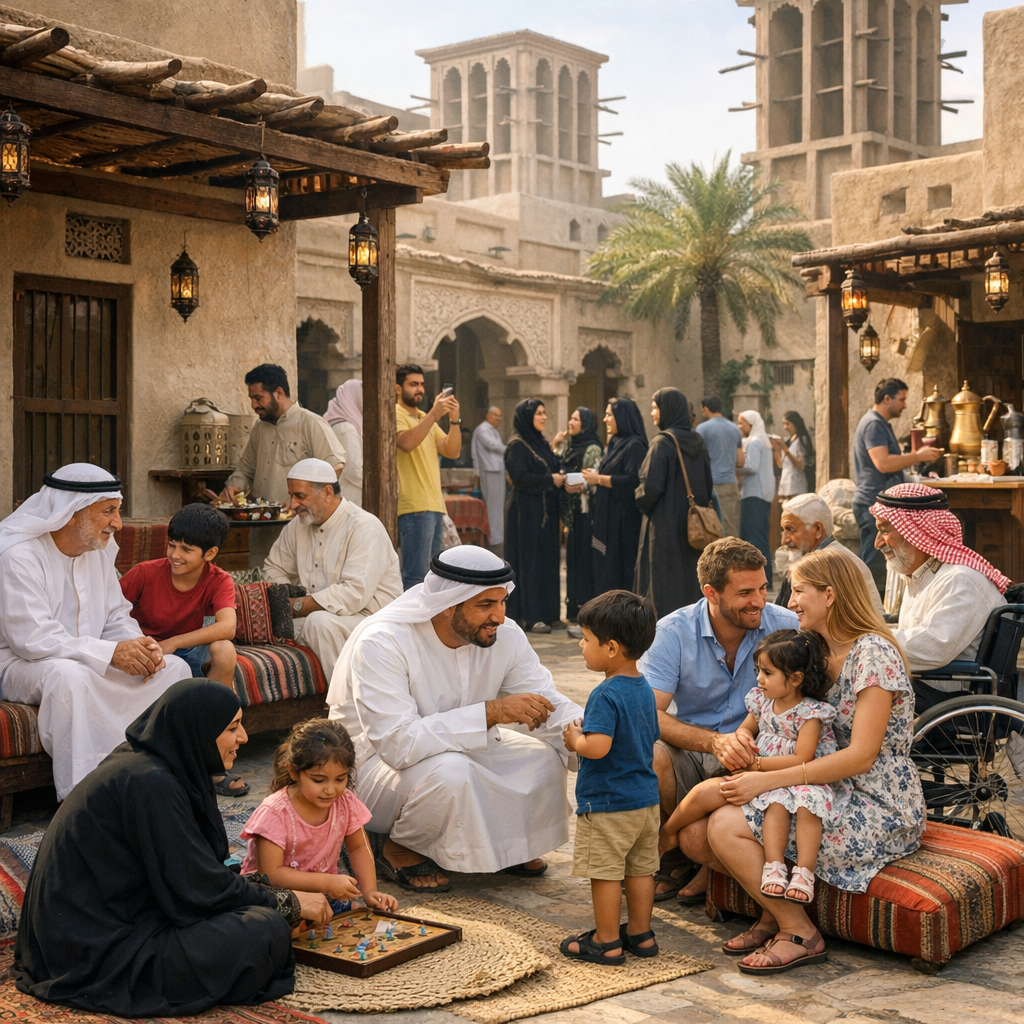
When I walk through Nad Al Sheba, Al Barsha or Muhaisnah these days, I see more than high-rises and busy streets. I see courtyards where children laugh, benches shaded under trees where elders sip tea, and spaces designed for strangers to become neighbours. Over the past few months, the Hewi Dubai initiative has expanded into new residential areas, reintroducing communal outdoor home spaces rooted in the traditional Emirati fareej. The goal? To preserve heritage, foster inclusion, and bring people of all ages together under open skies. This isn’t nostalgia—it’s a blueprint for belonging in a fast-changing city.
Small Acts, Big Impact
But a sense of community isn’t built by architecture alone. It grows in the simple moments: helping someone carry their groceries, arranging a shared iftar, or teaching a neighbour a few words in your native language. These everyday acts are becoming more common, reminding us of what holds us together. Shared learning spaces and cultural workshops are helping us speak, listen, and understand when life speeds by. Places like community centres and schools are not just for education—they’re where empathy is nurtured and diversity welcomed.
The Long Road to Feeling at Home
For many residents in Dubai—locals and expatriates alike—the challenge isn’t just about permanence in place, but permanence of heart. Some people come with identities from elsewhere, yet slowly, deeply, the city becomes part of who they are. They don’t just live here—they belong here. The sounds of azaan, Ramadan streets lit at night, South Asian food stalls open till late, someone calling out “habibi,” someone else responding in Tagalog—these mosaic moments stitch together what home feels like.
Avenues for Belonging
- Commit to learning: language, culture, or simply the names of neighbours.
- Create or take part in shared spaces—gardens, courts, souqs—where meetings happen naturally.
- Celebrate difference, not just in festivals, but daily conversations.
- Support initiatives that preserve heritage—traditional fareej spaces, local crafts, sahákulture.
- Volunteer. From working with children to helping those who work behind the scenes, everyone has something to offer.
What Belonging Means Moving Forward
Dubai is forever changing—its skyline, population, energy. We can’t cling only to past forms of community, but neither do we need to abandon them. Our modern fareejs are courtyards reimagined, our shared moments now happen online and offline. Belonging is not fixed—it’s built when we choose it, together. When my voice, your story, and someone else’s dreams are allowed to live side by side, rooted in respect, we make a city that isn’t just impressive—it’s home.