

By Khalid Al-Qasimi
Living in Dubai means adapting to one of the hotter, drier climates on Earth. But there’s more beneath the intense sun and rare showers than most residents notice. Here’s a clear look at the climate as it is, how it’s changing, and what you can do.
Desert Climate in a Nutshell
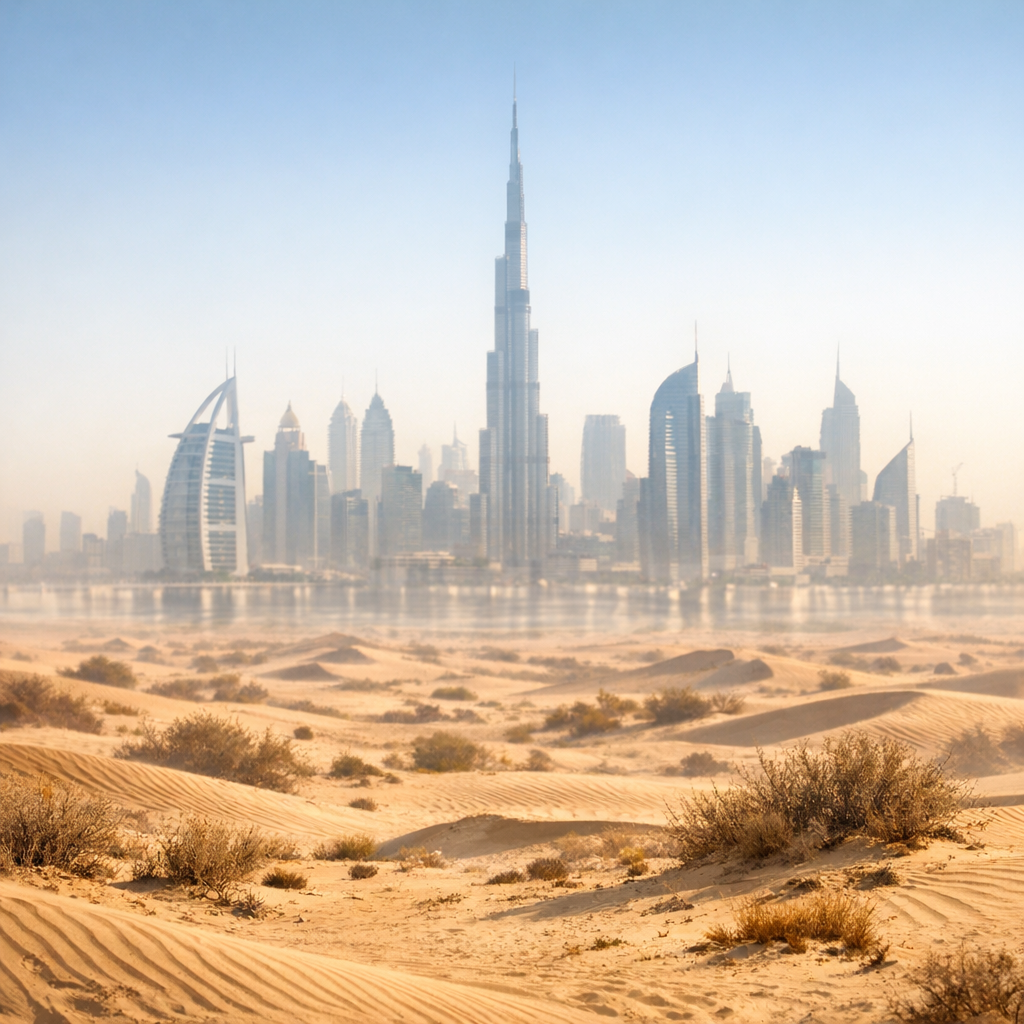
Dubai has a hot desert climate (Köppen BWh), with annual average temperatures around 27-28 °C. August tends to be the warmest month, while January brings the coolest nights. Annual rainfall usually totals less than 80 mm, mostly between December and March. During summer, rainfall is almost non-existent.
This combination of heat, humidity along the coast, and occasional storms in cooler months is characteristic of Dubai’s climate patterns.
How Seasons Feel and Why They’re Changing
The traditional four seasons are less clearly defined here. Winter (roughly December-March) brings cooler daytime highs in the mid-20s °C, and less humid nights. Spring and autumn serve as transitional periods—heat builds up or winds shift, though maybe you wouldn’t call them crisp in the way other places do. Summer (June-September) is long, hot, humid near the coast, with temperatures frequently rising above 40 °C.
Climate data shows winters are warming, and summers are feeling hotter and more intolerable. What used to feel like a mild spring day in May now already brings heat-stress. Humid heat—wet-bulb temperature—is increasing, especially in western UAE. Long-term trends show about +0.3 °C warming per decade in Dubai region.
Rainfall and Weather Events
Rain isn’t frequent, but when it comes, it comes fast. Most of Dubai’s rain falls in winter, often in intense storms rather than steady drizzles. Thunderstorms can appear suddenly, especially over coastal or mountainous zones. Cloud seeding is one tool the UAE has explored to enhance rainfall.
Air Quality: What You Should Know
Dubai has made strides in monitoring air pollutants—like particulate matter (PM₂.₅ and PM₁₀), nitrogen dioxide, ozone and sulfur dioxide—and its National Air Quality Platform shows data in real time. While many days fall within acceptable standards, there are days—especially during dust storms or heat events—when air quality drops.
The UAE National Air Quality Agenda 2031 lays out a plan to manage emissions and reduce pollution’s impact on human health, but challenges remain. Growing population, increased traffic, and industrial emissions are key pressure points.
What This Means for Residents
If you spend much time outdoors, especially during summer, take care—stay hydrated, avoid strenuous activity during peak heat, and use protection from sun and heat. Winter offers much more comfortable conditions, ideal for outdoor social life or sports.
On days with poor air quality, those with respiratory issues could use masks or stay indoors.
Architecturally, there’s growing interest in design that factors in heat mitigation—shading, reflective surfaces, cooled pavements—and in city planning that increases green space to lower urban temperatures. Such strategies can help curb the so-called “urban heat island” effect that makes downtowns hotter than outskirts.
Also, supporting policies that reduce emissions—whether by choosing cleaner transport options, or supporting renewable energy—makes a real difference over time.
Looking Ahead
Climate projections indicate that heat and humidity will continue increasing over decades unless global warming is curtailed. Some models suggest wet-bulb temperatures could exceed tolerable thresholds for outdoor work during peak periods if emissions remain unchanged. But local efforts—both governmental and community level—can shape how severe those changes feel for daily living.
Climate may always be harsh here—but understanding its rhythms, its shifts, and our role helps us adapt and thrive in Dubai’s distinctive environment.