

By Khalid Al-Qasimi
Dubai’s climate is defined by extremes—sweltering summers, mild winters, sudden storms, and ever-present desert dust. Understanding these patterns is essential not just for comfort, but for planning, health, and the sustainability of our city and its natural surroundings.
What Defines the Seasons Here
Dubai has a tropical desert climate. Summer, stretching from roughly April to September, brings daytime highs that often soar above 40 °C, paired with high humidity from the Arabian Gulf. Nights are slightly cooler, but warm and moist, leaving little relief.
Winter, from late October through early spring, is mild to warm during the day—about 22-25 °C—and surprisingly cool at night, especially further inland. Rainfall is modest and mostly occurs during these months, often quickly, in the form of heavy downpours and thunderstorms. Average annual precipitation is under 100 mm, though it’s been rising.
The Environmental Signals We Are Seeing
Heat and Urban Heat Islands
Dubai’s rapid expansion along its coastline and into desert terrain is creating what scientists call a “surface urban heat island.” In developed areas, especially near tall buildings and roads, nights remain significantly warmer than in less built-up zones. Research shows some neighborhoods are now 4-5 °C hotter at night than outlying regions.
Dust, Air Quality, and Health
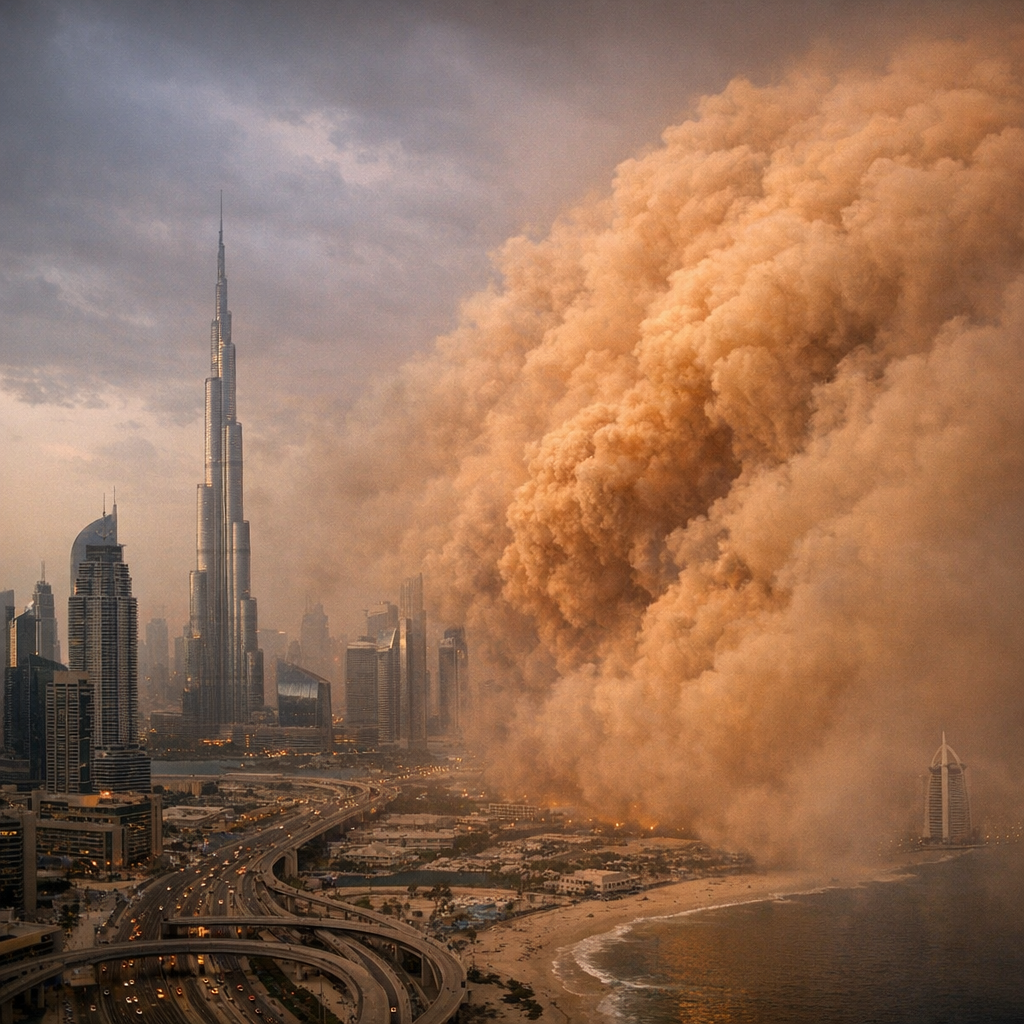
Sandstorms and dust-raising winds are frequent, particularly when dry summer air meets shifting wind patterns. These dusty conditions are worsening air quality—especially for young children, the elderly, and those with lungs or heart conditions. Forecasts suggest that aerosol levels will continue to increase over the coming decade across all seasons.
Rainfall Changes and Drainage Challenges
Heavy winter rains, though infrequent, can lead to flash flooding in certain parts of the city. Dubai’s infrastructure is adapting, but intense storms still stress drainage systems and reveal vulnerabilities in flood control. As rainfall becomes less predictable, planning must keep pace.
Coastal Risks and Sea Level Rise
As a coastal city reliant on reclaimed land and artificial islands, Dubai faces growing threats from rising sea levels. Even small increases matter: they affect seawater salinity, ecosystem health for coral reefs and mangroves, and place built infrastructure in danger.
What Can We Do—Individually and Collectively?
- Stay informed: monitor weather alerts for heat, dust storms, and rain.
- Protect your health: limit outdoor exposure during high heat or dusty days; use HVAC systems with good filters.
- Support greener design: push for more shaded walkways, reflective building materials, vegetation where possible.
- Plan for the long-term: consider how sea-level rise and changing rainfall may affect where you live and work.
- Engage with protection efforts: nature reserves, protected areas, and the many environmental programs run by authorities are key to preserving ecosystems and biodiversity. Dubai dedicates over 30% of its land to such protected areas, including marine, coastal, mountain, and desert regions.
Dubai’s climate will always test its inhabitants, but by recognizing the signs—heat, dust, water, sea—and taking both personal and shared action, our city can adapt and continue to thrive in harmony with its environment.