

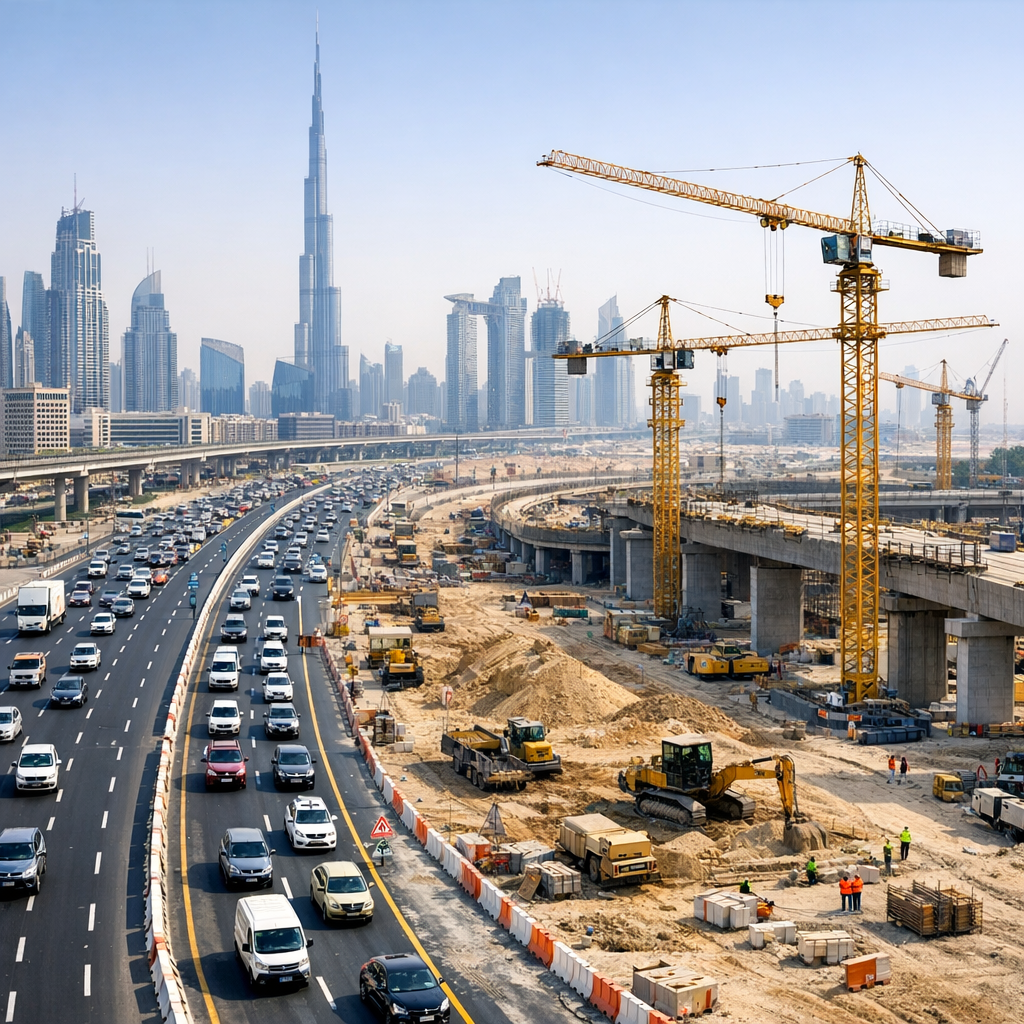
By Aisha Khalifa — Dubai’s cityscape is changing fast. From expanded roads to stricter waste controls, several ongoing initiatives are set to improve how residents live, travel and interact with their surroundings. Here’s a roundup of developments that are reshaping local life across neighbourhoods.
Major Corridor Project Cuts Commutes in Half
The Latifa bint Hamdan Corridor is among the most ambitious road upgrades underway. Spanning about 12 km, its development includes new tunnels, bridges and widening of key route stretches. Once finished, it’s projected to reduce travel time between Umm Al Sheif Street and Emirates Road from approximately 33 minutes to about 15 — a drop of nearly 50%. This should ease congestion on already busy roads and benefit those living or working in areas like Nad Al Sheba, Global Village and Al Barari. Completion is expected by end of 2028.
Dedicated Public Transport Lanes for Speed and Reliability
Dubai’s Roads and Transport Authority (RTA) isn’t just building roads — they’re prioritising public transport too. Dedicated bus and taxi lanes are expanding across six major routes in the city. On some of the busiest services, these lanes promise to reduce bus journey times during peak hours by up to 59%. For many commuters, that could mean shorter waits and more reliable service.
New Waste Management Laws Bring Fines & Oversight
On the regulatory front, Dubai has introduced a new implementing bylaw under Law No. 18 of 2024 to tighten the rules around waste management. The resolution improves oversight of waste companies, increases fines for illegal dumping and outlines more robust standards for collection and transportation. It also supports systems like RASID, a digital platform to monitor waste operators from point of collection to disposal. These changes aim to make waste services cleaner and more accountable.
What This Means for Communities
- Shorter travel times could lower stress and commuting costs, especially for residents living in areas served by the Latifa bint Hamdan Corridor.
- Improved bus and taxi lane coverage may encourage more people to shift from private cars to public transit — helping congestion and pollution.
- More consistent enforcement of waste rules may reduce neighbourhood litter, dumping issues, and blockages that cause drainage problems when it rains.
What to Watch As These Projects Mature
- Traffic during construction phases — local roads near major upgrades often become more congested. Advance route planning is useful.
- Public engagement — will residents feel included in decisions about road design, traffic signals, and stops? Spaces like RTA’s Customer Councils are examples to follow.
- Clarity on waste service providers and responsibilities. As laws tighten, community input on schedules, bin placement, and cleaning matters will grow more important.
Dubai’s growth isn’t slowing, and neither are the challenges of making urban living smoother for everyone. As these large-scale projects roll out, attentive planning and communication with residents will be what defines success.