

By Layla Al-Mansoori
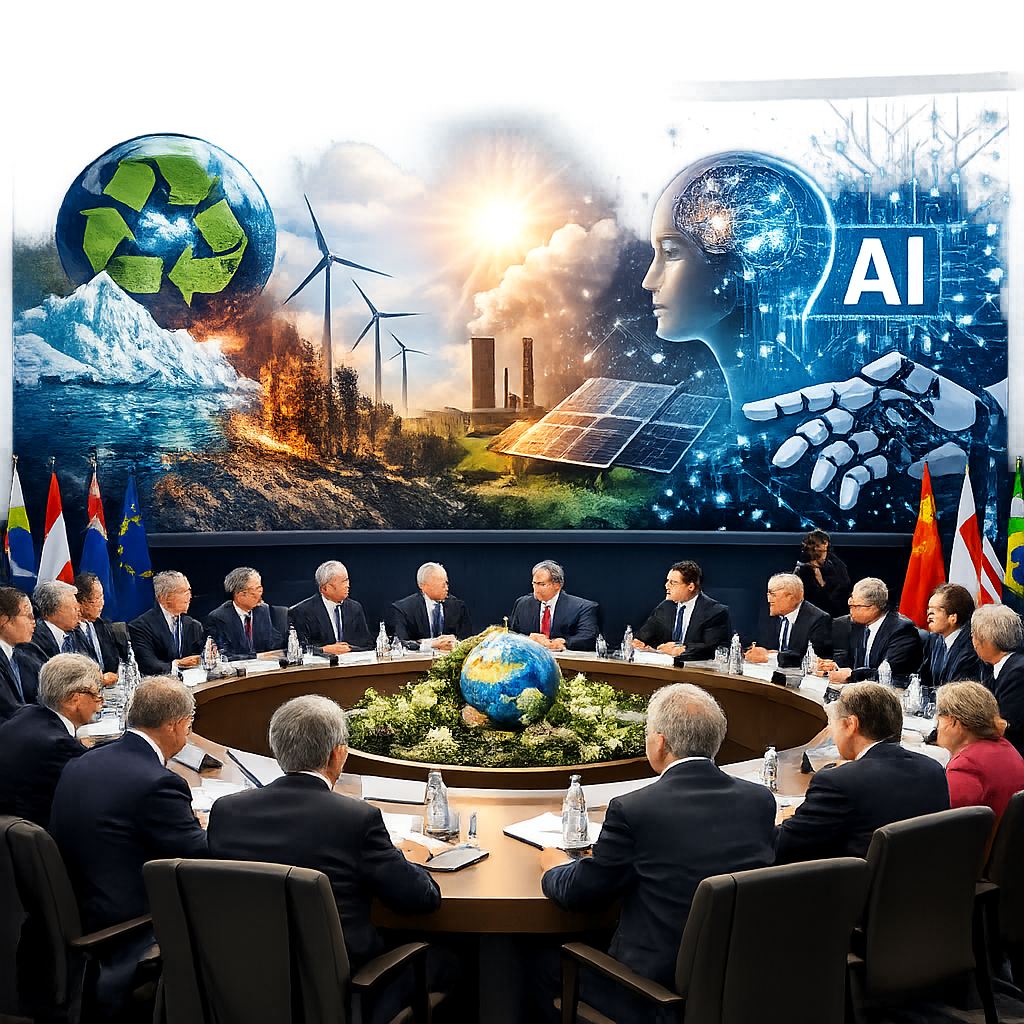
The world is facing interconnected global challenges—from climate change and emerging technologies to rising conflict. Below is an overview of ongoing international developments shaping our shared future.
1. Climate Cooperation and the Paris Agreement: Progress and Gaps
The Paris Agreement remains the cornerstone of global efforts to limit warming to well below 2 °C above pre-industrial levels, pursuing efforts to cap it at 1.5 °C. Nearly all UN member states are parties to it. Nations periodically submit Nationally Determined Contributions (NDCs), which spell out climate goals, and these are evaluated under the Agreement’s enhanced transparency framework. Countries are showing increasing political will, but many current pledges fall short of what’s needed to meet temperature targets. Significant finance and implementation gaps remain.
Key Issues to Watch
- Ambition gap: Many NDCs are not yet aligned with pathways to limit warming to 1.5 or 2 °C.
- Implementation shortfalls: Delays or weak policies in mitigation, adaptation, and loss & damage persist, especially in developing countries.
- Finance and support: Mobilizing investment—domestic and international—remains critical to closing gaps and building resilience.
2. AI Regulation Goes Global
Artificial intelligence is now one of the most watched domains of international policy making. Governments across regions are racing not just to develop AI technologies, but to regulate them. The EU’s AI Act has come into force as a benchmark for risk-based regulation, outlining rules for high-risk systems, transparency, and protections against misuse like deepfakes or illicit content.
Emerging Themes
- Cross-border risks and harms: Because AI systems, data, and their effects don’t respect borders, many governments are exploring international cooperation or harmonization.
- Regulatory models vary: Some regions prefer detailed bans or strict rules; others emphasize industry innovation and flexibility. Striking balance between safety, rights, and competitiveness is becoming key.
- Enforcement and oversight: Regulatory sandboxes, transparency requirements, and specialized bodies are being proposed or activated in different jurisdictions.
3. Rising Conflicts and Diplomatic Challenges
While global agreements are pursued on climate and technology, conflicts continue to threaten international stability. According to analysts, a growing number of interstate clashes have begun to reverse a post-Cold War trend where internal conflict dominated. Border disputes, proxy wars, and tension over strategic waterways are emerging or intensifying in several regions.
Key Conflict Zones to Watch
- The Middle East remains a hotspot for conflicts with regional spillovers, involving state and non-state actors. Impacts on civilians, displacement, and humanitarian access continue to be urgent concerns.
- Border tensions in Southeast Asia and other regions are raising refugee risks and demanding diplomatic attention.
- Climate stress, resource scarcity, and population movements are acting as risk multipliers for conflict, especially in regions with fragile governance or weak development infrastructure.
What These Trends Mean for Dubai and the UAE
As a global hub of trade, innovation, and diplomacy, the UAE is uniquely positioned at the crossroads of these trends:
- Climate action and green investment are already national priorities. Dubai’s renewable energy projects and adaptation efforts benefit from international cooperation, technology transfer, and finance mechanisms tied to global climate governance.
- AI regulation matters: With the UAE’s leadership in technology, establishing strong regulatory clarity, especially for content moderation, data protection, and high-risk AI systems, can signal both safety and competitiveness to global investors and partners.
- Diplomatic engagement: The UAE’s role in mediating regional tension, participating in multilateral forums, and supporting humanitarian responses is more critical than ever amid rising global conflict risk.
Looking Ahead
While international institutions offer frameworks for action, real progress depends on implementation. Governments everywhere must translate policy into practice through funding, stronger oversight, and cross-sector collaboration. Civil society, private sector, and local communities all have vital roles to ensure that the promises of global cooperation become reality. For Dubai and beyond, being engaged in shaping rules and norms globally—not just adapting to them—will define success in the decades to come.