

By Layla Al-Mansoori
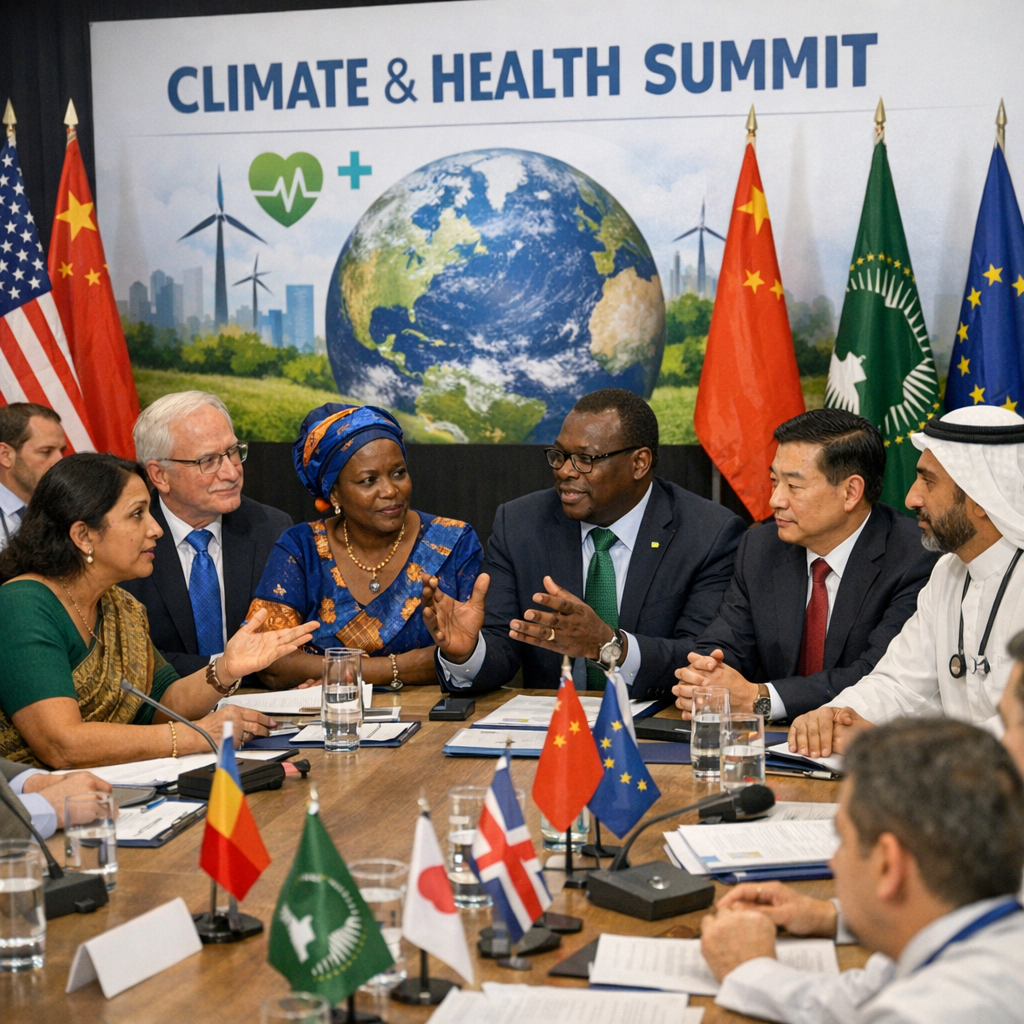
As the world confronts overlapping crises—from infectious diseases to climate change—recent international developments are offering paths to stronger global cooperation. Here are key global health and climate milestones, and what they mean for us all.
Advancing Pandemic Preparedness
In July, negotiators from across the world met in Geneva to move forward the Pathogen Access and Benefit Sharing (PABS) annex, a centerpiece of the WHO Pandemic Agreement. They agreed to speed up the sharing of pathogen samples and genetic data, while seeking fair access to vaccines, diagnostics, and treatments among all countries, rich or poor. Though technical and legal challenges remain, the urgency is clear: the next pandemic won’t wait. The eighth intergovernmental meeting is scheduled for mid-September to finalize details.
Reforming Global Health Architecture
In May, WHO Member States approved the Strategy on the Economics of Health for All (2026-2030), placing health, equity, and well-being at the heart of economic policy. They also updated the framework for ethical international recruitment of health workers for the first time in 16 years, ensuring recruitment during emergencies is governed with transparency and respect. Concerted efforts are underway to restructure global health governance to ensure better coordination, align funding with national priorities, and clarify the roles of various organizations in responding to crises.
Climate Climate Action: From Agreement to Implementation
The outcomes of the United Arab Emirates Consensus—agreed during COP processes—signal significant upgrades in the global climate agenda. Among them: commitment to triple renewable energy deployment, double energy efficiency, and ensure nations submit economy-wide climate targets. Another crucial piece is the Global Stocktake, a mechanism to measure progress since the Paris Agreement and recalibrate climate goals to stay under critical temperature limits. The first Stocktake, finalized in Dubai, has paved the way for follow-up actions around adaptation, resilience, and loss-and-damage funds.
Challenges Ahead—and the UAE’s Role
Though these agreements are powerful, they face serious obstacles: financing gaps, trust deficits, and technical hurdles in implementation. For the UAE, recent outcomes offer both responsibilities and opportunities. As a key player in the UAE Consensus, the country has committed funding for loss and damage, championed renewables, and opened space for global climate diplomacy.
Why This Matters to Everyone
- Health security: Global systems for sharing pathogens, vaccines, and medical expertise can prevent or severely limit pandemics.
- Climate resilience: As weather extremes grow, the urgent implementation of pledges protects ecosystems, economies, and communities.
- Equity in policy: Many new frameworks are built on fairness—ensuring that the poorest and most vulnerable aren’t left behind.
The global stage is shifting. Agreements once theoretical are being turned into detailed plans—with timelines, deliverables, and shared responsibilities. For nations around the world, including here in the UAE, the challenge now is to keep up the momentum.