

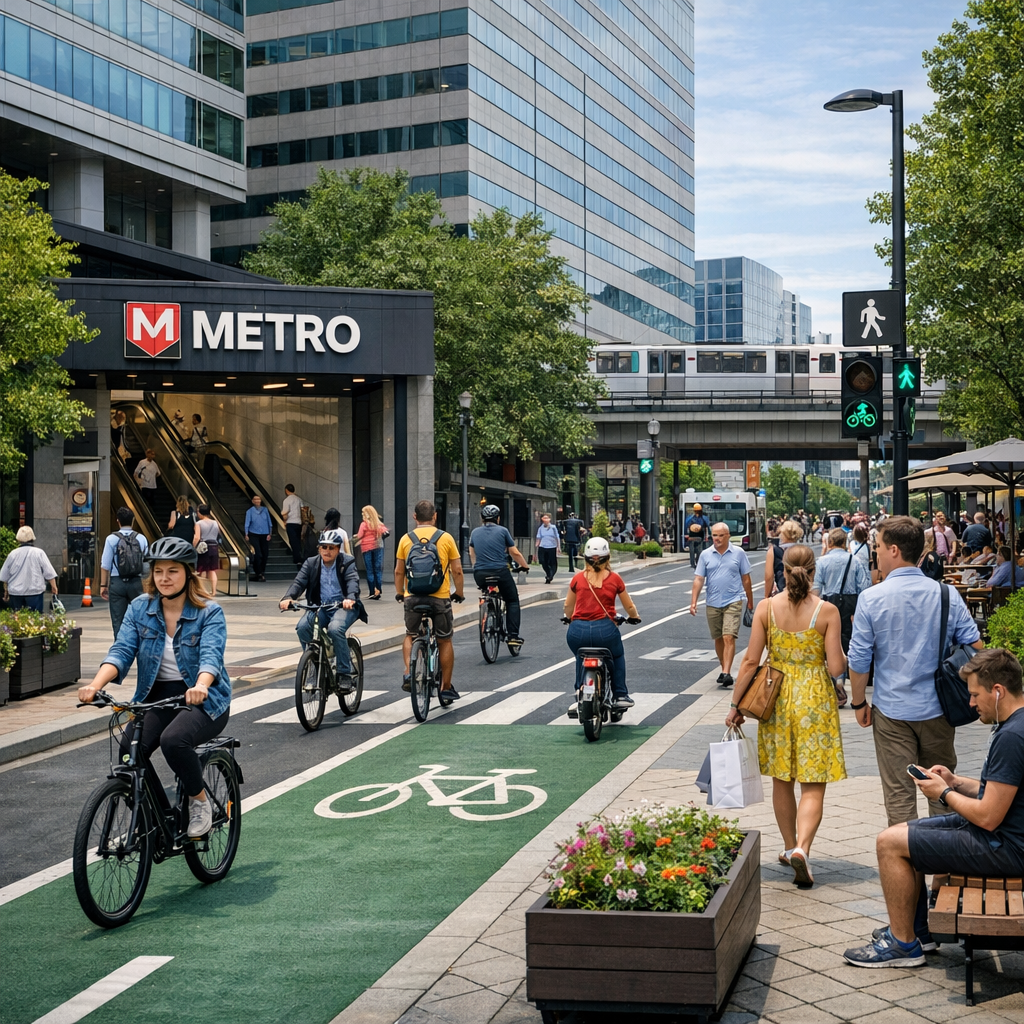
Dubai is steering toward a future where daily travel within the city centres on walking, cycling, e-scooters and seamless connections to public transit. Recent initiatives from the Roads & Transport Authority (RTA) and city planners are putting that vision into action across residential neighbourhoods and transit hubs.
Soft mobility gets a boost: walking, cycling and safe access
The emirate’s five-year Soft Mobility Plan aims to strengthen first- and last-mile connections, connecting homes and public transport at over 60 metro and bus stations and covering more than two dozen residential areas by 2030. Key features include pedestrian crossings, cycling tracks, shading, landscaping, and rest areas to make streets safer and more attractive for those on foot or bike. Satisfaction among pedestrian users recently exceeded 80% — evidence of growing demand and improvement. – RTA
Smart extensions: Bus-On-Demand and Metro Blue Line
For those beyond good walk and bike distance, Dubai has significantly expanded its Bus-On-Demand service. New coverage areas like Al Qusais, Jumeirah Village Circle, Al Warqa’a and Dubai Investments Park now benefit from minibuses that pick up and drop off riders on flexible routes, helping bridge gaps between homes and fixed transit lines. Fare is kept affordable, making this a realistic choice for many.
Meanwhile, construction is underway on the Dubai Metro Blue Line — a 30-kilometre inter-district route with 14 stations, partly underground, designed under the Dubai 2040 plan to connect residential, economic, and university clusters more directly. It promises to ease reliance on private cars in some of the city’s busiest sectors.
Engaging communities and planning smarter
Community input is playing a larger role. In recent council meetings, residents of Umm Suqeim, Jumeirah, Al Safa and surrounding areas shared feedback on internal roads, traffic flow, street lighting and cycling tracks. The RTA has begun acting on many of these suggestions, especially concerning safety features and road corridor upgrades.
All this ties back to the Dubai TOD (Transit-Oriented Development) Manual, which guides new developments around metro and tram stations to be more walkable, densely built and interconnected. New zoning and design rules will be stepping stones as Dubai pushes to shift travel habits and make public and active modes of transportation more appealing and accessible.
What this means for neighbourhoods
- Homes near transit hubs are becoming better connected: expect safer sidewalks, more shade and better paths to stations.
- Options increase for shorter trips without a car — walking, biking or catching a Bus-On-Demand ride.
- Roads are being redesigned for people: upgrades to lighting, crossings, and dedicated infrastructure for shared bikes and scooters.
- A Metro line under construction means long-term benefits in reduced travel time and traffic, especially in districts that will be served by the Blue Line.
Local travel is often where our daily life is made or broken — how easy it is to walk to the store, bike with kids to school, or catch a ride when it gets too hot. These changes are all contributing to a more livable Dubai, where going somewhere is just part of the joy of living here.