

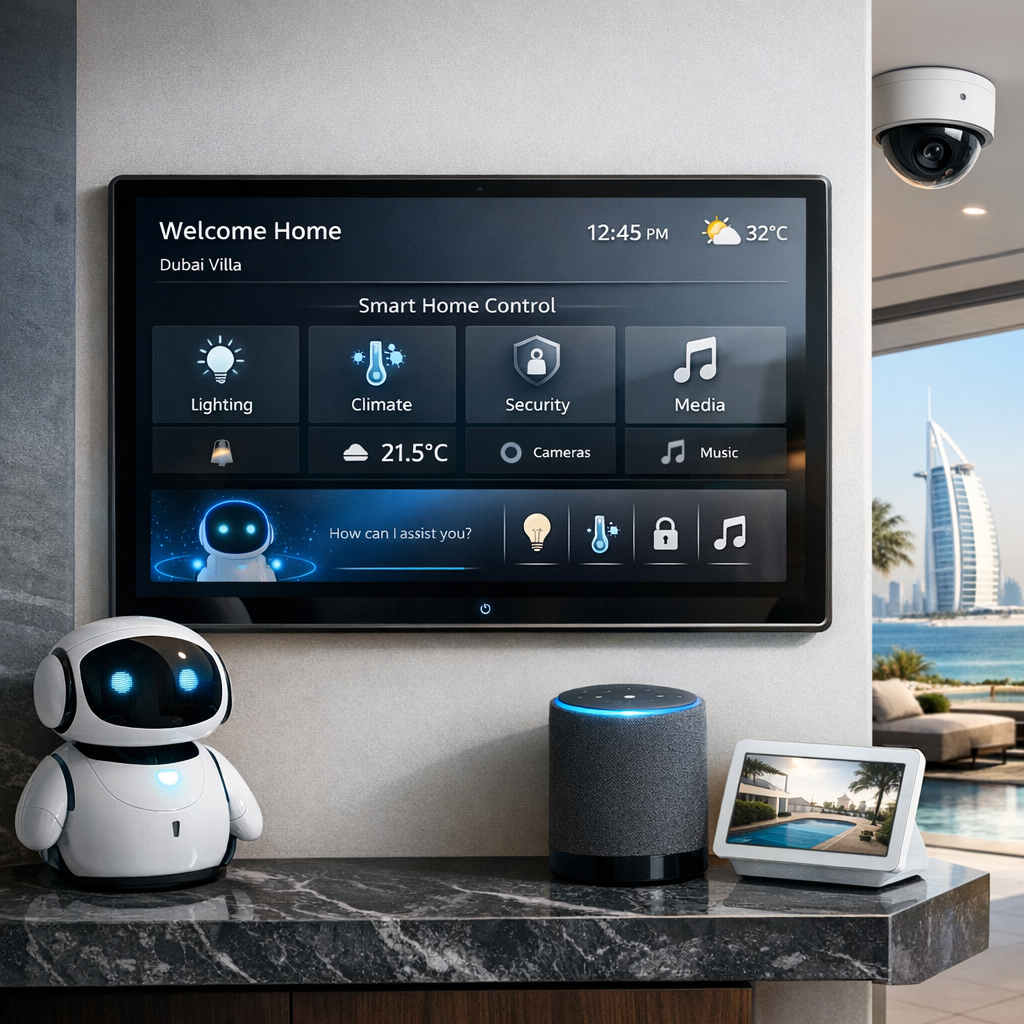
Dubai’s skyline isn’t the only thing changing—artificial intelligence is steadily transforming the way residents live, work and play. As AI startups close major funding rounds and smart home platforms leave early adopter status, everyday technology is humming quietly behind tasks big and small.
AI Startups Driving Local Tech Innovation
In 2026 Dubai’s startup scene is buzzing. Some names headlining the wave include CNTXT AI, which raised a $60 million Series A round, 1001 AI with $30 million in funding, and Algebra AI, backed with $7 million—each aiming to embed AI into enterprise workflows, language models, regulatory compliance and more. These are not just proof-of-concepts, but companies delivering tools that touch sectors like finance, government and services.
Smart Homes: From Hype to Home Automation Reality
Which gadgets people in Dubai really want
Across villas and apartments, the most requested upgrades are devices that control lighting, climate, security, curtains and water leak detection. Smart locks, automated scenes and wireless-friendly protocols like Matter and Thread are now standard in new home builds.
The AI features that work (and the ones that need more polish)
Today’s smart homes in Dubai can recognise when a room is occupied, adjust air conditioning or lighting accordingly, or let you open curtains via voice command. Security cameras can classify motion or faces rather than just blurry alerts. But full autonomy—homes that anticipate your every need without input—remains more aspirational.
Beyond the Home: AI Embedded in Daily Services
You likely interact with AI more than you realise. Government services use predictive agents for visa renewals and appointments. Airports have biometric corridors that clear travellers in seconds. Companies deploy AI for corporate wellness tracking. Even robot delivery is no longer a pilot—it’s making its way into residential neighborhoods.
What Dubai Residents Should Keep in Mind
- Privacy over features: As devices listen, watch and learn, demand for on-device AI and local control is rising. Users care about who stores their data and where.
- Quality over buzzwords: Not every “AI-enabled” gadget delivers meaningful value—features like face recognition are helpful when accurate; others are still more show than substance.
- Regulation matters: The UAE’s approach to data protection, biometric use law, and government directives is shaping which technologies thrive and make people feel safe.
AI in Dubai isn’t science fiction—it’s resident-facing. Whether through startups solving real problems, homes that adapt to routines, or public services that respond before you even ask, the technology is becoming a backdrop to daily life. What you choose to adopt depends on comfort, utility and trust—not just gadget glossy adverts.