

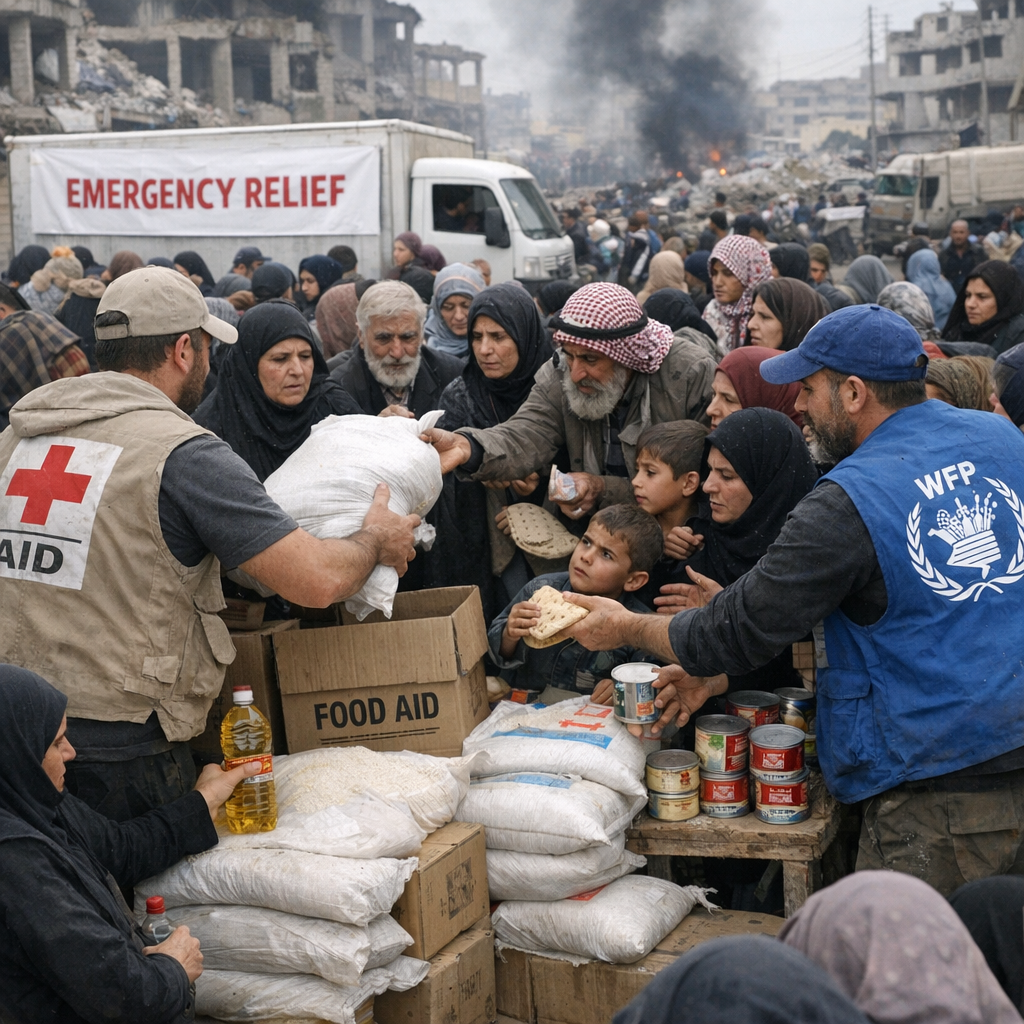
Across the world, food insecurity is not just persisting—it’s growing in severity. The 2026 Global Report on Food Crises paints a stark picture: conflict, climate shocks, and economic shocks are converging to push more people into hunger than at any point in recent years. As many as 266 million people are now facing emergency levels of food insecurity. For communities already teetering on the edge, even small disruptions can be catastrophic.
Main Drivers of the Crisis
Conflict and Instability
Conflict remains the leading cause of acute hunger globally. Young lives in regions like Sudan, Yemen, South Sudan and Gaza are caught in the crossfire—not just of physical violence, but of collapsed markets, blocked supply routes and humanitarian access denied. Damage to farmland, fishing areas, and irrigation lifts livelihoods out of farmers’ hands. Often, the fight to farm becomes as difficult as the fight for peace.
Climate Shocks Do More Than Burn Fields
Droughts, heatwaves, and mounting weather extremes are disrupting local food production in vulnerable regions. El Niño’s return threatens to bring new instability to rain patterns in South Asia, Southern Africa, and parts of East Asia. Too often, climate shocks hit in places already weakened by conflict, making recovery almost impossible without strong external support.
Economic Strain and Rising Costs</n
Higher food and fertilizer prices, inflation, trade disruptions—these economic pressures hit hardest those with the least buffer. Disruptions in key chokepoints—such as the Strait of Hormuz—have ripple effects, pushing up the cost of essential inputs. At the same time, aid funding has dropped sharply, even while needs grow. Families facing starvation are left waiting.
What’s Fraying and What Holds Hope
Projections show that famine risk remains high in multiple hot spots. Yet there are signs that policy tools and international cooperation can make a difference. Early warning systems are sounding alarms earlier than before. Agricultural resilience programs—measures that help farmers adapt to changing weather—are growing. But these efforts need scale, funding and political will.
Why Dubai and the UAE Should Care
Even far from conflict zones, Dubai and the UAE are affected by global food security trends. As a major import market, the UAE depends on stable supply chains and healthy agricultural productivity abroad. Rising global food inflation can feed into domestic prices. More broadly, the UAE’s strategic humanitarian and diplomatic role gives it a chance to be part of solutions—whether through investment in resilience or support to multilateral responses.
Actions That Can Make a Difference
- Supporting early warning and climate adaptation projects in vulnerable countries.
- Increasing funding for agricultural development and smallholder farmers.
- Pushing for peace-building and aid access in conflict zones.
- Fostering trade policies that protect both producers and consumers.
- Encouraging regional cooperation on supply-chain security.
Global hunger won’t end overnight. But recognizing the patterns—where conflict, climate and economic stress overlap—is the first step. With strategic actions, larger investments, and sustained coordination, the world can curb the risk of widespread famine before it’s too late.