

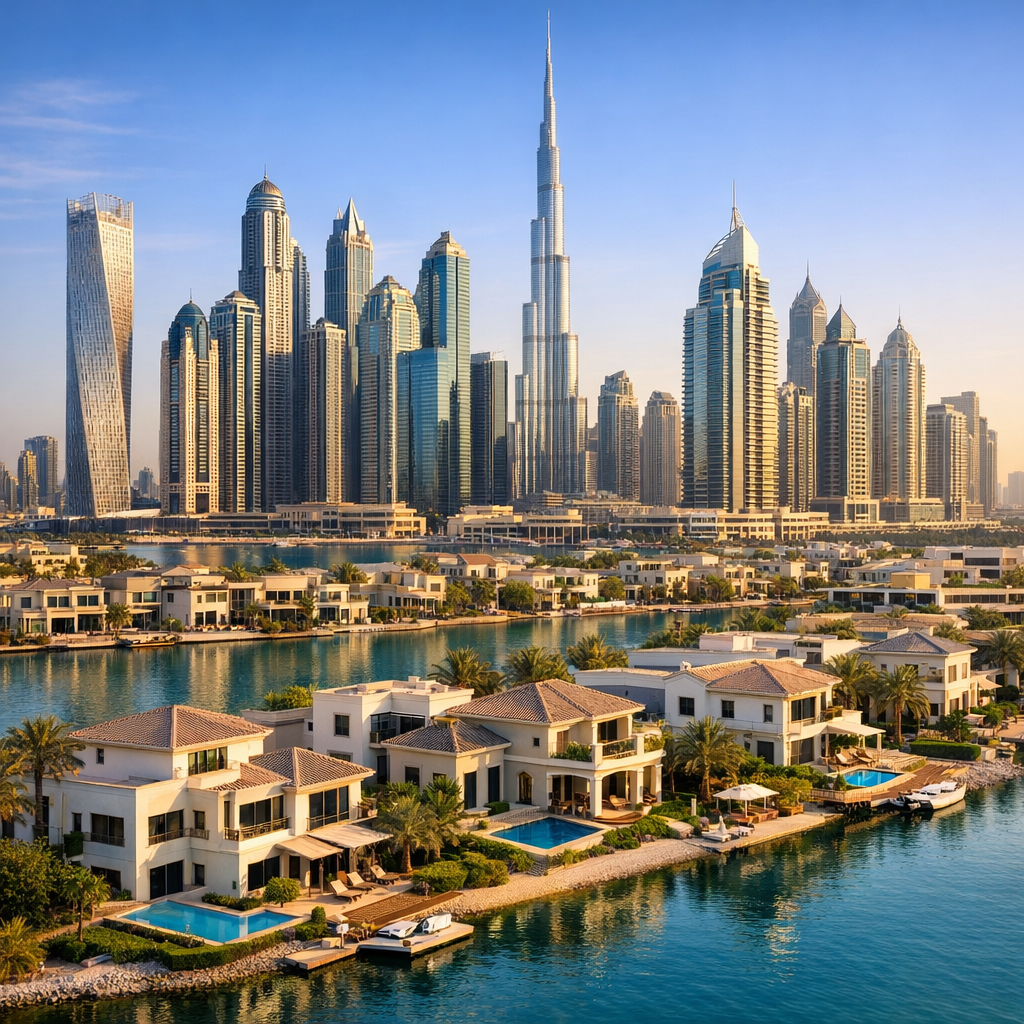
Current Market Trends
The first half of the year has seen Dubai’s residential real estate market remain active but more measured. Off-plan sales continue to dominate—making up over 70% of transactions—while villa- and luxury-market segments show strong performance amid rising buyer scrutiny around developer reputation, location, and quality. Rental activity remains stable overall, with growing tenant preference for value, space, and family-friendly communities. Price growth is moderating in many apartment-heavy districts. Property yields on average are around 6.6%.
What This Means for Renters
More Choice, Stabilised Rents
Downward pressure is emerging on rental growth in areas with oversupply—especially in newer towers. Established villa and waterfront communities continue to hold value more steadily, thanks to limited supply and strong demand from families. Lease renewal rates are outpacing new contracts in many areas, enabling better negotiation power for tenants. Landlords in commuter-friendly suburbs are offering incentives—flexible payment plans, fit-outs, or reduced rent for longer leases—to compete.
Where to Look
Communities like Arabian Ranches, Dubai Hills Estate and waterfront developments are resilient picks. But if you’re cost-minded, newer off-plan projects further from core areas may offer better rent-to-feature ratios—just factor in completion dates and developer history.
Guidance for Buyers
Off-Plan vs Ready Properties
Off-plan remains popular, but buyers are becoming more selective. Key considerations should include: developer track record, project delivery timelines, and payment plans. With plenty of upcoming supply, particularly of apartments, new launches should be evaluated against resale or ready properties for risk and value.
Legal and Financial Checklist
- Confirm whether you’re buying freehold or on long-term leasehold/usufruct in your chosen area.
- Ensure transaction contracts are Form F or SPA approved by Dubai Land Department; secure the title deed and verify any developer liabilities.
- For many buyers, mortgages are available—loan-to-value up to ~80% for first homes for residents; non-residents may face lower LTV limits.
- Factor in all fees: service charges, developer NOCs, transfer duty, and annual maintenance—these can add significantly to total cost.
Community Developments to Watch
Hundreds of off-plan projects have been registered recently across Dubai, stretching over both central districts and emerging suburbs. Developments in Dubai South, Arjan, and newer phases of Dubai Hills Estate are adding supply and expanding community amenities. These are affecting price benchmarks particularly for apartment units and layouts tailored to families.
Tips to Navigate the Choices
- Always visit show homes and check for tangible progress on construction.
- Ask about infrastructure: access to metro, schools, parks, retail.
- Look into projected yields and likely long-term growth in your area—not just current prices.
- Hire a trusted broker or legal advisor who understands local regulations and can help you avoid common pitfalls like misleading service charges or unfulfilled promises on handovers.
Whether you’re renting for convenience or buying for long-term investment, Dubai’s market is increasingly balanced. Patience, due diligence, and a clear list of priorities will help you make the right decision in a changing landscape.