

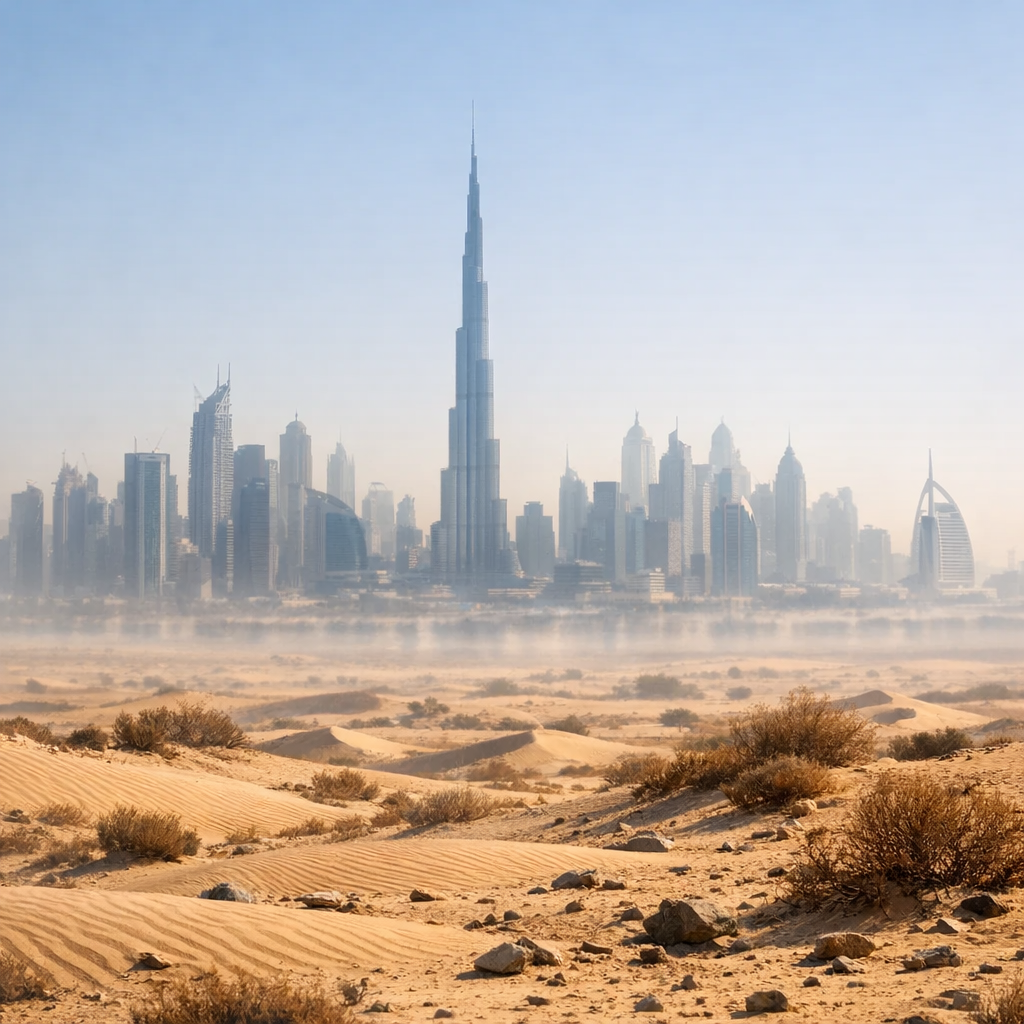
Dubai’s climate has always been defined by extreme heat, sparse rainfall, and arid landscapes. Yet with each passing year, signs of changing weather and environmental strain become more visible here in the city and across the emirates. Let’s take a closer look at what’s happening in the skies and on the ground—and what we all might expect if current trends continue.
Heat, Humidity, and Urban Hot Spots
Days of soaring temperatures are nothing new. But a recent study on Dubai’s local climate zones shows that heat intensity—especially at night—is growing noticeably in built up areas. Compact mid-rise neighbourhoods and dense low-rise zones trap heat, creating what experts call ‘urban heat islands’. Surface conditions, like the colour of pavement (albedo), play a larger role than many trees or shade structures during extreme heat events. This has direct effects on comfort, energy use, and public health.
Rainfall and the Rains That Don’t Behave
Rain here traditionally comes in bursts in winter and early spring, but patterns are becoming less predictable. Extreme rainfall events, once very rare, are now happening with more frequency—delivering heavy downpours that test the city’s drainage systems. When rain does come, the storm intensity often surprises us more than the amount. Wet seasons are shorter, and the middle months bring longer stretches of dryness punctuated by sudden storms.
Dust, Air Quality, and Living with the Particles
Dust storms have long been part of life in Dubai and across the Gulf. They lower visibility, irritate eyes and lungs, and contribute to poor air quality—especially when combined with emissions from traffic and construction. On certain days, outdoor activities become a health risk, particularly for children, older people, and those with breathing conditions. Monitoring systems now provide better real-time data, helping residents adjust routines when air quality dips.
Margins of Sea & Sand: Where Environment Meets Infrastructure
Dubai’s coastline and natural reserves are under pressure. Rising sea‐surface temperatures and rare but intense coastal storms are prompting concerns about erosion and shifts in marine life. Within the emirate, natural reserves such as the desert and coastal ecosystems play a vital role in biodiversity—but human development, waste, and water scarcity threaten their health. Meanwhile, infrastructure must adapt: drainage, building materials, cooling systems, and planning are increasingly designed to handle harsher weather extremes.
What Is Being Done
To meet these challenges, Dubai recently established the Dubai Environment and Climate Change Authority (DECCA), charged with protecting natural resources, managing climate risk, and steering environmental policy for the emirate. Key targets include expanding protected areas and green cover, reducing greenhouse gas emissions, improving air quality under World Health Organization guidelines, and enhancing food security. Other initiatives focus on energy efficiency, cleaner building codes, waste-to-energy systems, and integrating scientific research into planning frameworks.
What You Can Do
- Check daily air quality and heat alerts. Limit strenuous outdoor activity when levels are high or when it’s particularly humid.
- Support shaded and green public spaces—trees, parks, rooftop greenery help cool the city and improve air.
- Conserve water and energy at home—small savings add up when climate stress increases.
- Participate in community efforts: recycling, litter-free public spaces, and protecting local flora and fauna.
- Be aware of changes: heavier rains, salt spray, temperature shifts—sharing observations helps scientists chart evolving climate trends.
Dubai is growing fast. Adapting to weather, environment and climate change isn’t optional—it’s essential. With the right policies, engaged citizens, and continuous innovation, our city can stay not only resilient, but comfortable, healthy, and thriving.