

By Khalid Al-Qasimi
Dubai’s climate is often defined by extremes—scorching heat, intense sun, sudden storms, and soaring humidity. To understand how weather patterns here affect life and environment, it helps to look at how seasonal changes, geography, and long-term climate trends intersect in this city.
Key Features of Dubai’s Climate
Situated in a subtropical desert region, Dubai experiences very high temperatures during its hot season, typically from late spring through early autumn. Daytime temperatures often reach 40-45 °C or more, especially in peak summer months.�humidity frequently climbs above 80-90 %, driven by moisture from the Arabian Gulf and humid air moved over from the Indian Ocean and the Gulf of Oman. These conditions make it feel hotter than the thermometer reads.�Rain is rare during these summer months, as stable atmospheric layers prevent moisture from rising and forming heavy cloud cover or precipitation.
The Transition Periods
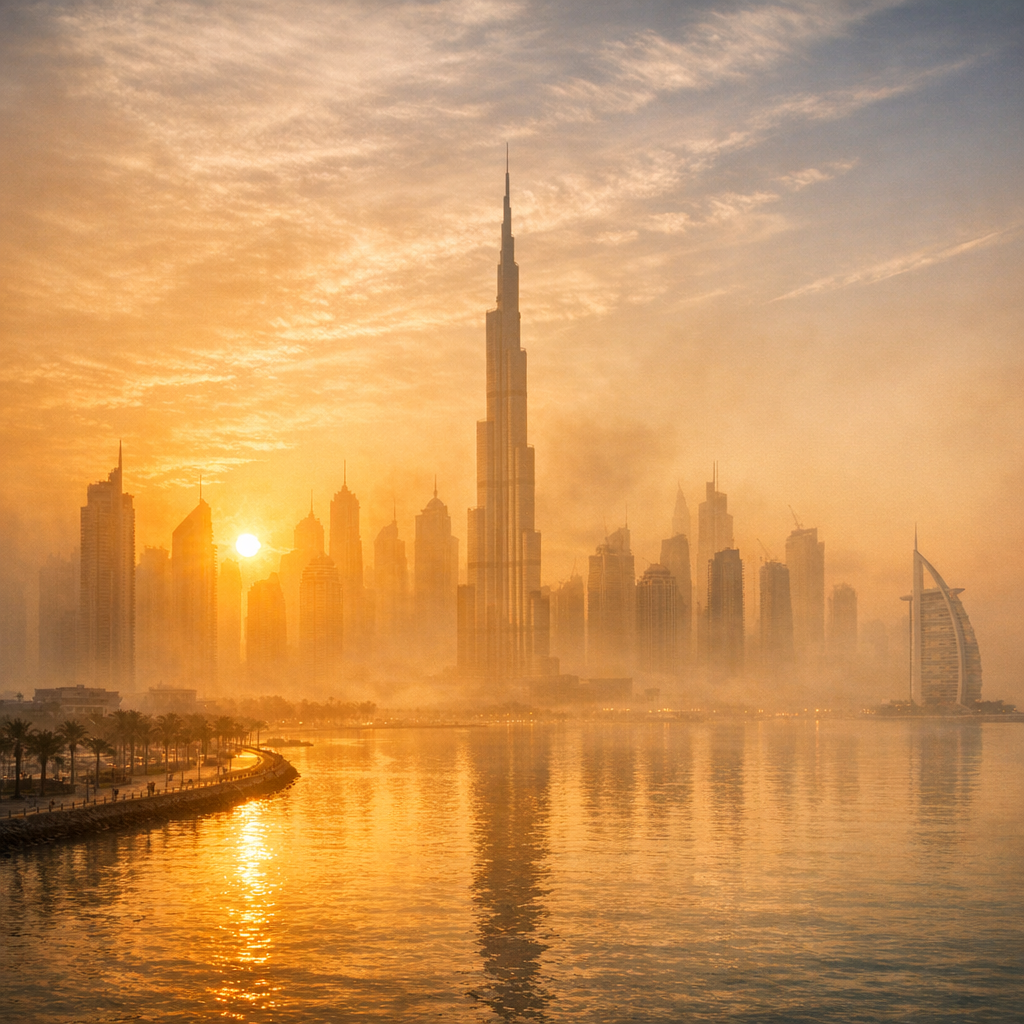
Late summer into early autumn and again in spring bring transitional weather: nights may stay warm, humidity tends to spike, and fog or mist can form—especially in coastal areas. Inland and elevated locations cooling more overnight may see greater contrast in temperature. Meanwhile, during cooler months (December-March), daytime temperatures tend to moderate, rainfall becomes more common—though still erratic—and the air often dries out.
Environmental Pressures and Climate Risks
Dubai’s climate isn’t just about discomfort—environmental challenges are rising. Some of the key issues include:
- Water scarcity: Precipitation is low and irregular. The city relies heavily on desalination and imported water. Climate change is expected to increase evaporation and reduce rainfall, worsening water stress.
- Sea level rise and coastal erosion: Low-lying coastal areas are at risk as sea levels increase. Infrastructure, property, and ecosystems may face damage unless stronger protective measures are in place.
- Biodiversity loss: Rapid urban expansion, heat stress, and marine warming threaten native flora and fauna—from mangroves and coral reefs to desert species.
- Air quality and health risks: Dust storms, stagnant air during humid periods, and emissions from vehicles and construction contribute to elevated particulate levels. Heat plus humidity adds strain on the body.
Adaptation and Local Response
Dubai is not standing still. Several initiatives aim to tackle both current discomforts and long-term risks:
- The emirate has approved a Climate Change Adaptation Strategy, first of its kind in the Gulf Cooperation Council, focusing on resilience of infrastructure, health systems, water management, and environment.
- Dubai Environment and Climate Change Authority (DECCA) works on restoring ecosystems, promoting green economy practices, and conserving marine-and desert habitats.
- Urban planning is being reshaped: the Blue and Green Spaces Roadmap 2030 aims to expand parks, coastal waterfronts, and green corridors to improve liveability, reduce heat islands, and support biodiversity.
What Residents Can Do
Living in Dubai’s climate means adapting daily habits:
- Stay hydrated, avoid sun exposure during midday, and use shaded or air-conditioned paths when walking outdoors.
- Install good ventilation and manage moisture indoors to avoid mould, especially during humid months.
- Pay attention to air quality alerts and limit outdoor activity when particulate levels are high.
- Support local conservation efforts—plant native species, reduce waste, opt for sustainable transport—every action helps.
Looking Ahead
Experts predict that without significant shifts in energy use, urban design, and environmental policy, Dubai will face stronger heat waves, higher humidity overall, and more volatile weather events. But the city’s ongoing adaptation plans, nature conservation efforts, and green infrastructure projects offer hope that the region can remain resilient and liveable.