

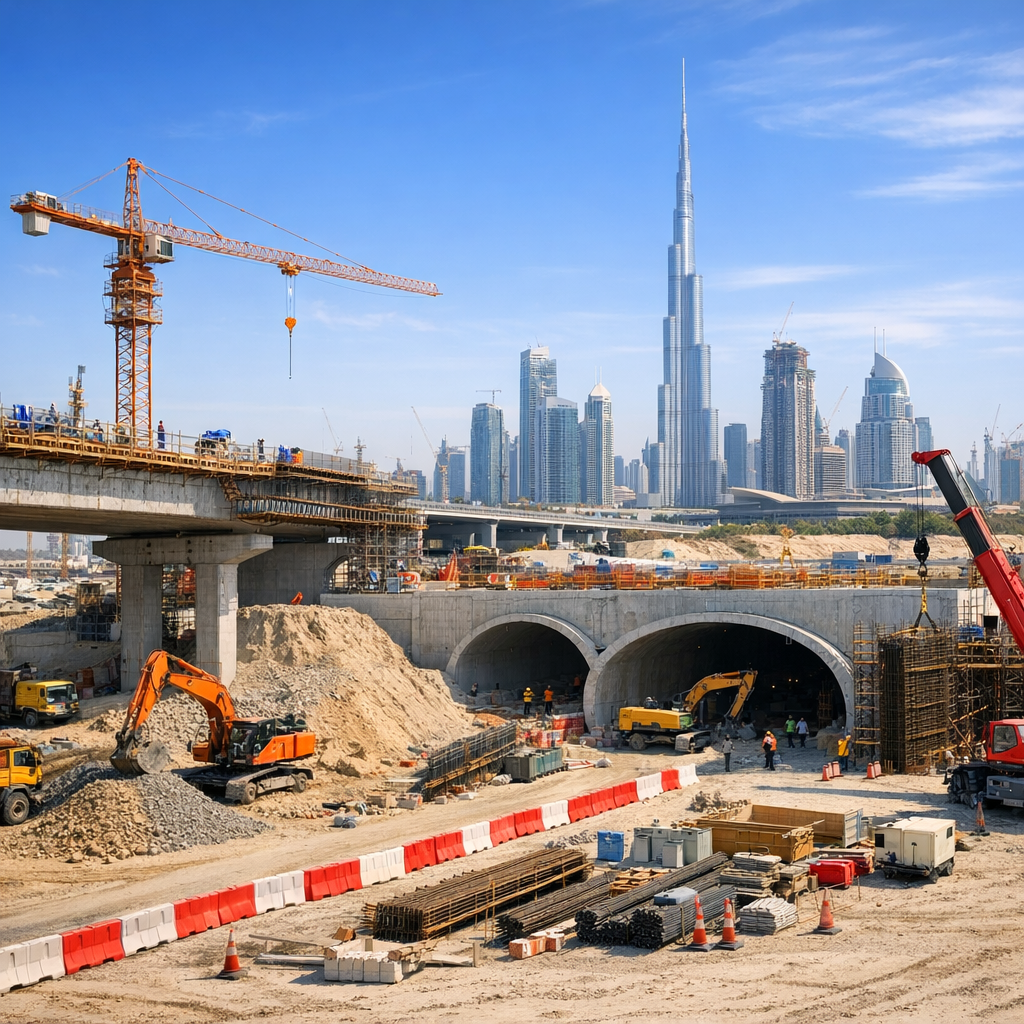
By Aisha Khalifa — Dubai’s skyline isn’t the only thing expanding. Behind the scenes, large-scale infrastructure is rewriting how people move—reducing travel times, increasing safety, and connecting more neighbourhoods.
Latifa bint Hamdan Corridor: Cutting Commutes and Tying Key Roads Together
In July, the Roads & Transport Authority (RTA) approved a new 12-kilometre corridor that will link Sheikh Zayed Road, Al Khail Road, Al Meydan Street, Umm Suqeim Street and Emirates Road. The AED 2 billion project includes seven bridges, eight tunnels, and enhancements intended to handle approximately 16,000 vehicles per hour in both directions. Once complete—expected by end-2028—it aims to reduce travel time between Umm Al Sheif Street and Emirates Road from 33 minutes to around 15 minutes.
What it means for communities
- Areas such as Nad Al Sheba, Dubai Hills, Barari, Global Village and others will benefit from improved connectivity.
- New cycling tracks—12.5 km—will integrate into existing networks, giving cyclists safer, more extensive routes.
- Multi-level interchanges and loop ramps are designed to ease congestion at major junctions.
Metro Blue Line: Underground, Elevated, Moving Forward
The Dubai Metro Blue Line project has officially reached about 10% completion, with over 500 engineers and thousands of construction workers involved. Spanning 30 km with 14 stations—five of them underground—this line will link areas from Academic City to Dubai International Airport and serve over a million people. Once operational, the line’s capacity is expected to exceed AED 56.5 billion in economic benefits and change commuting patterns across multiple districts.
Tunnels, Bridges, and Urban Renewal Along Shindagha Corridor
Not far from Dubai Creek, the Al Khaleej Street Tunnel is now about 80% complete. It’s part of the broader Shindagha Corridor Improvement Project, which also includes a bridge between Infinity Bridge and the Port Rashid area. The tunnel spans 1,650 metres and features three lanes in each direction, accommodating up to 12,000 vehicles per hour. Outside commuting benefits, the tunnel’s inner walls will become a permanent piece of art through mosaic installations—offering visual relief to both drivers and residents.
What to Watch: As Projects Unfold
Expect lane closures, traffic detours, and noise in areas of construction. For residents near Umm Suqeim, Al Meydan Street, or Deira-Al Khaleej stretch, keep up with RTA announcements. Also watch how public transport routes adjust once Metro Blue Line opens—they will likely reshape feeder services and neighbourhood access.
These city-scale efforts show Dubai’s focus on long-term urban mobility, built not just for speed and capacity, but for walkability, safety, and livability too. For many, the impact will be felt in daily commutes—and for some, finally in the spaces between the roads too.