

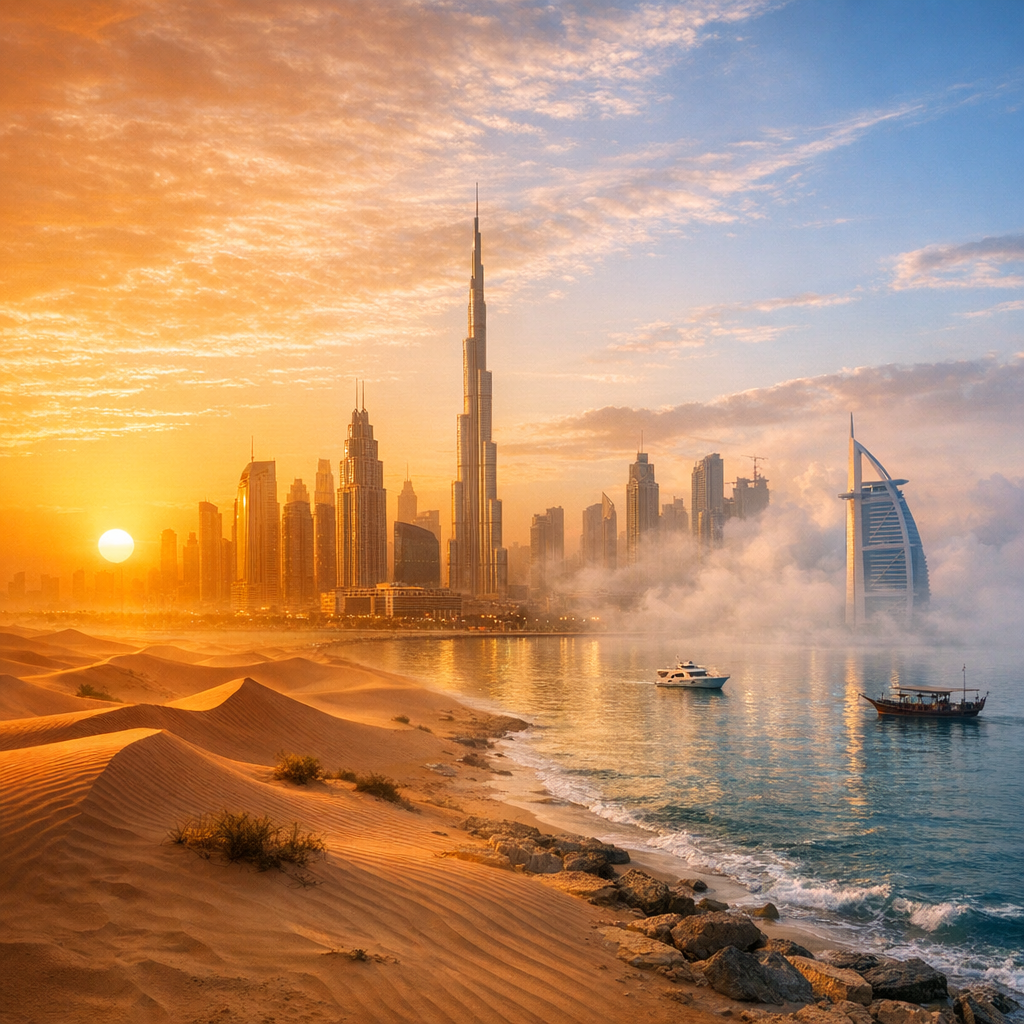
Dubai’s climate is often described in simple terms—hot summer and mild winter—but in reality there are four distinct periods shaping the weather: winter, two transitional seasons (spring and autumn), and summer. Understanding these shifts can help residents plan better and stay comfortable, whether for work, travel, or outdoor leisure.
Four Key Periods in Dubai’s Year
Winter (December to March)
Winter brings the coolest and wettest weather. Temperatures typically range between 16–25 °C during the day and drop to 12–15 °C at night near the coast. Occasionally, inland or elevated areas see colder morning lows. Most of Dubai’s rain falls in this season, usually in short bursts. Light to moderate rainfall and occasional thunderstorms are common.
First Transition: Spring (April–May)
As winter ends, conditions begin changing rapidly. Daytime highs climb, nights grow warmer, and skies often fluctuate from cloudy to clear. Humidity remains low initially but starts rising. Rainfall dwindles sharply. Some spring days still feel mild, especially earlier in the period, but by late spring the heat becomes more palpable.
Summer (June–September)
This is Dubai’s most intense weather period. Temperatures regularly exceed 40–43 °C during the day, and overnight lows above 30 °C are typical. Humidity rises sharply, especially near coastal areas, making conditions feel much hotter. Rain is nearly non-existent along the coast; thunder or rain chances slightly increase near mountains, due to convective activity. Dust and sand storms driven by hot, dry winds may also occur.
Second Transition: Autumn (October–November)
After peak summer, the air gradually begins to cool, especially at night, and humidity — though still high — starts to moderate. Both the sunrise and sunset times shift noticeably. Rain remains rare, but occasional shifts in wind patterns or low-pressure clouds can bring unexpected showers. These months offer some relief—though the summer’s intensity doesn’t vanish overnight.
Long-Term Changes and What They Mean
Climate data shows that Dubai is warming overall—annual mean temperatures have risen over the past decades. Summers feel longer, autumn cooling is delayed, and spring warming begins earlier than it used to. Winters are milder, especially at night. These changes increase stress on infrastructure, health, and outdoor routines.
Rainfall remains highly seasonal and low overall—most comes in winter and early spring. But future models suggest heavier and more erratic downpours may become more common, particularly in certain emirates or mountainous zones. Sea surface temperatures are also rising, which affects humidity levels and marine life.
How to Stay Comfortable in the Shifts
- Plan outdoor activities in late autumn, winter, or early spring—when temperatures are lowest, and humidity is forgiving.
- Prepare for heat by staying hydrated, using shade or air-conditioned spaces, and avoiding midday outdoors in summer.
- Be weather-aware: even in summer, coastal winds, mountain ranges, and low-pressure systems can alter conditions rapidly.
- Stay updated on environmental health alerts—especially related to heat stress or air quality during dust storms.
Dubai’s weather isn’t one mood—it’s many, across time and space. As seasonal transitions become less sharp and the climate warms, understanding those moods matters more than ever.