

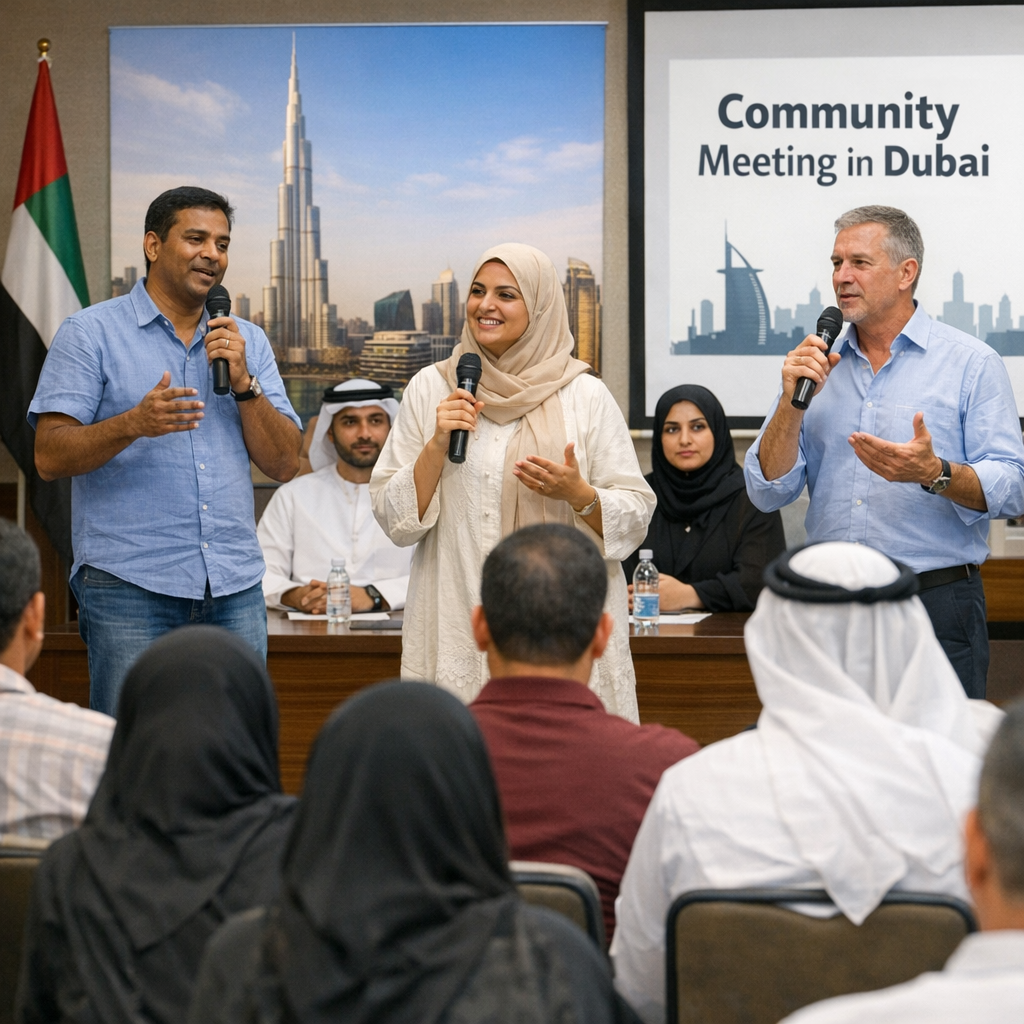
My name is Ali Al-Ameri. I’ve lived in Dubai for many years, witnessed its growth, and seen what happens when people speak up—and what too often happens when they don’t. What follows is part reflection, part guidance, to help all of us understand why local voices matter, and how to make sure they’re heard.
Why Community Voices Matter
Dubai isn’t static. Its buildings rise fast, its streets fill with people, its public spaces evolve overnight. When local residents offer feedback—about noise, traffic, parks, or amenities—municipal leaders often respond. For example, in Al Warqa, residents met with Dubai Municipality to raise concerns like sewer smells, drainage issues, housing, public parks, and more. Officials listened and have incorporated suggestions into ongoing planning. These are small but real wins for quality of life.
Likewise, platforms such as 04 give residents a direct line to dozens of government entities. Whether it’s a suggestion, complaint, or idea, people from all across Dubai have used it to influence policy and service improvements. This kind of open channel reinforces the idea that community engagement isn’t optional—it’s essential for a city that aims to serve its people.
Barriers to Being Heard
Of course, many people still feel stuck—either unsure where to raise issues, or convinced their feedback won’t change anything. Sometimes bureaucratic delays, unclear accountability, or lack of awareness leave issues unaddressed. And other times, smaller communities, lower-income workers, or those who speak less frequently find themselves excluded.
How You Can Make an Impact
Use the Right Channels
Start with official platforms. The 04 platform allows citizens and residents to submit feedback to government bodies directly. Municipalities often hold dialogue sessions—such as in Al Warqa—where people can raise concerns face-to-face. Find out your local municipality’s schedule or online forums for participation.
Be Specific, Be Persistent
Signals get drowned without details. Instead of “the park’s bad,” say what exactly is wrong—lighting, benches, paths, safety at certain times. Then follow up: check whether there have been commitments, send reminders if not. Persistent but respectful pressure helps.
Build Community Voices Together
There’s power in numbers. Talk to neighbours, form local groups, use social media to collect shared concerns. When many people speak the same message, authorities are likelier to take notice. And if you’re in a multi-national community, remember that different backgrounds can bring varied perspectives—when combined, they strengthen your message.
What Local Government Should Keep Doing
If speaking up is going to be effective, authorities must ensure transparency (showing what’s being done), speed of action (not too many delays), and accessible participation (so everyone—workers, residents in remote areas, people of all backgrounds—can share their views).
When feedback is visible, acted upon, and communicated back, trust builds. And when trust builds, we all gain—not only in amenities or services, but in feeling that we belong here, that Dubai is not just built by its buildings, but by its people.
So: whether you note something small—a broken street lamp—or big—a lack of green space in your community—don’t hesitate. Your voice matters. When we all participate, our city becomes better, together.