

By Khalid Al-Qasimi
Dubai’s Seasonal Cycle
Dubai’s weather is shaped by two primary seasons—summer and winter—with transitional periods in spring and autumn. Summer (June to October) brings intense heat, extreme humidity along the coast and sparse rain. Winter (December through March) is much cooler, with daytime highs in the mid-20s°C, cooler nights, and the bulk of the year’s rainfall. Transitional months like April-May and October-November are marked by variable weather and rising or falling temperatures. Mean summer highs often reach 40-43°C, while winter nights inland can dip below 15°C. Relative humidity in summer regularly exceeds 70-80%, leading to a muggy, oppressive feel.
Rainfall Patterns and Variability
Rain in Dubai is rare and concentrated in the winter months. January is usually the wettest, averaging around 40-45 mm, while summer months bring virtually no precipitation. Storms, when they happen, can be sudden and heavy, often causing localized flooding in areas with poor drainage. The variability between years is high—some winters are much wetter than others, and mountainous eastern emirates tend to receive more rain.
Environmental Pressures & Climate Change Impacts
Dubai faces growing environmental pressures worsened by global warming. Temperatures are rising, especially during heatwaves, which strain health, energy, and infrastructure. Combined with coastal humidity and limited green space, this creates a pronounced urban heat island effect.
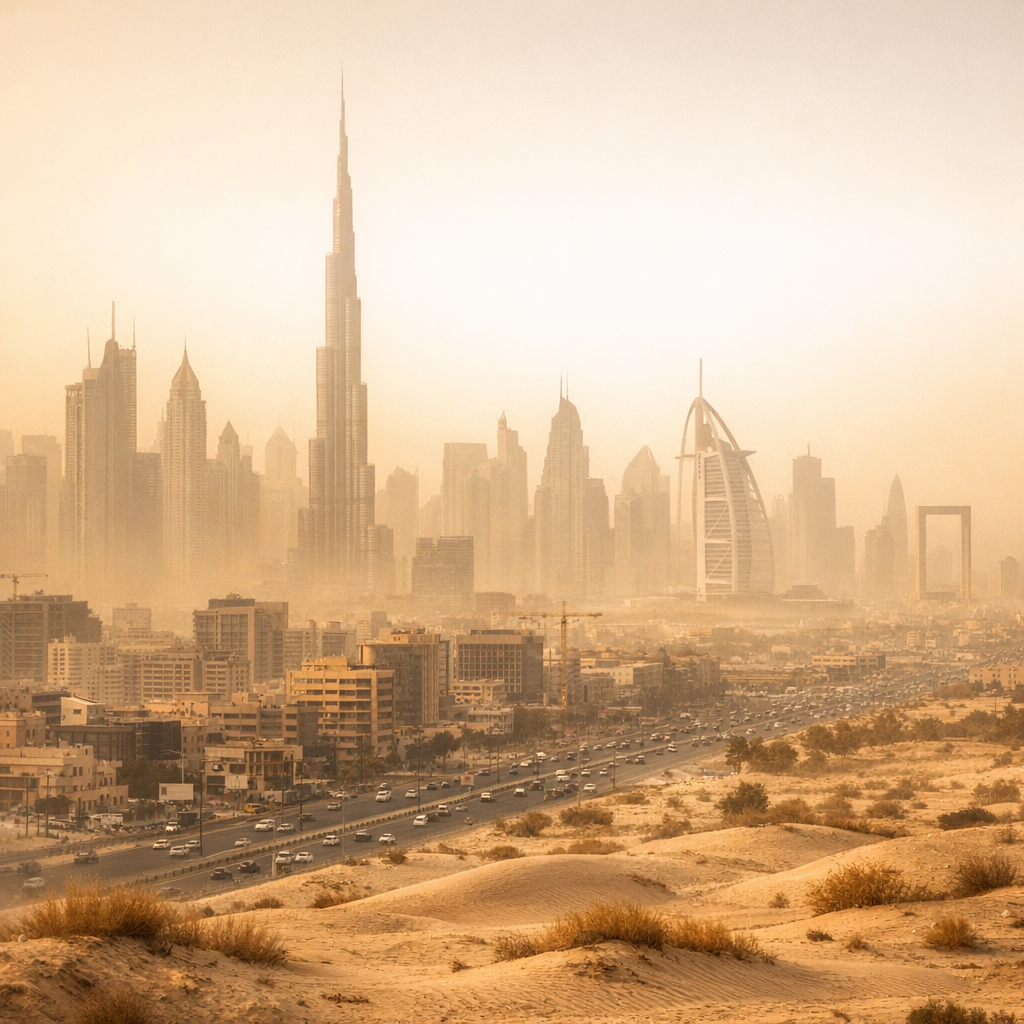
Other threats include sea level rise, instability in coastal ecosystems, declining water resources, and more frequent dust storms. Rainfall extremes may increase, leading to sudden floods, while summers are likely to grow longer and more oppressive.
Local Initiatives & What Residents Can Do
The UAE has rolled out several strategies to address these environmental challenges. Dubai is a key player in efforts like the Dubai Clean Energy Strategy 2050, the UAE Net Zero by 2050 plan, and the National Air Quality Agenda 2031. Monitoring stations across the city track pollutants and issue advisories where necessary.
On a day-to-day level, residents can adapt in practical ways: choose shaded or indoor spaces during peak heat, stay hydrated, use energy-efficient cooling systems, plant local and drought-tolerant greenery, and support green building practices. Simple behavior and design changes help reduce heat exposure, energy bills, and environmental impact.
Looking Ahead: Trends to Watch
- Heat intensity and duration: Heatwaves are expected to grow more intense, with higher “feels like” temperatures due to humidity.
- Rainfall extremes: More frequent heavy storms in winter may stress existing drainage systems.
- Sea level and coastal risks: Coastal erosion, saltwater intrusion, and flooding risks are likely to rise.
- Air quality concerns: Dust, pollutants, and ozone are expected to worsen unless mitigated by regulation and green infrastructure.
Understanding the climate, staying informed about environmental initiatives, and adapting both personal and community habits—these all matter. Dubai may be a desert city, but it’s one that is evolving fast.