

By Noura Al-Dhaheri
The Framework: National Policy and Community Access
The UAE’s Sports law, enacted at the federal level, sets a foundation for everything from grassroots participation to elite competition. It encourages residents of all nationalities to engage in sports, supports community-wide events, and prioritises access for people of determination. Dubai Sports Council and national organisations are aligned with this vision. The goal: make sport a regular part of life, strengthen public health, and nurture home-grown talent.
School Sports: Development, Exposure, and Opportunities
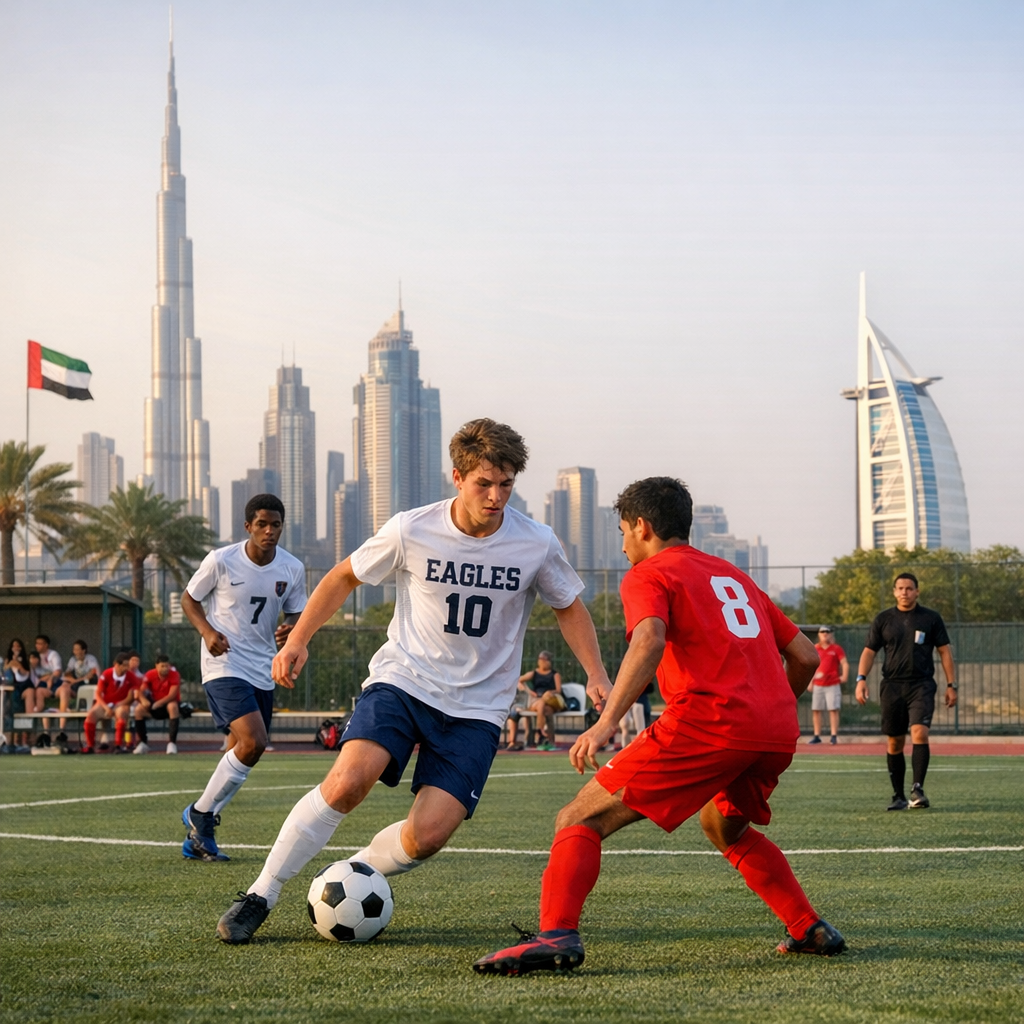
In Dubai, many international and private schools run expansive sports programmes offering dozens of sports for primary through high school students. These cover classic team sports like football, basketball and cricket, but also less mainstream disciplines such as fencing, sailing and climbing. Schools design age-appropriate training pathways so students progress over time—not all play is competition; many activities are recreational or co-curricular, encouraging inclusivity.
Leagues and Competitions
Leagues and associations like DASSA (Dubai’s school sports association) organise open-entry competitions in athletics, cricket, cross-country, badminton, and more. Schools compete formally each term in multiple sports—and also host intra-school tournaments or house challenges—to build camaraderie, discipline and school spirit.
Classroom to Field: Learning and Health
Physical Education and health courses beyond sport teams help students acquire basic fitness, understand safety, and form healthy habits. Some schools even offer electives centred on sports conditioning, preparing young athletes physically and mentally for more intensive involvement.
Community and Social Sport: Keeping Everyone Moving
For adults and non-school youth, community leagues and social wellness groups serve as the backbone of sports culture. The Dubai District Games, for example, allow teams from different districts to represent their area in football, basketball (3×3), volleyball and badminton, promoting both competition and social cohesion.
Communities like Desert Sports host pieces of social wellness—weekly sessions in tennis, padel, lacrosse, basketball and academy-style offerings that welcome beginners and seasoned players alike. These are spaces where sport serves connection, mental wellness and belonging, as well as exercise.
Challenges and Opportunities Ahead
Despite these strengths, schools sometimes struggle with balancing resources—coaches, facilities, and adequate time in the curriculum are hard to maintain. Sports may be overshadowed by academic pressures, and not every student has equal access to competitive play. For community groups, sustaining consistent facilities and reaching wider participation—across nationalities, ages, and abilities—remains an ongoing effort.
What Helps Build Momentum
- Strong school-governance support: when leadership values sports, investments follow—for fields, indoor courts, coaching staff, health-oriented classes.
- Regulated and inclusive competition: open leagues with age brackets, fair eligibility rules, recognition beyond winning.
- Amplifying community options: social leagues, academies, wellness groups give people throughout life ways to stay active.
- Collaboration: schools, councils, local clubs and ministries working together on shared facilities, events and talent pathways.
Sport in Dubai is more than trophies—it’s about fostering resilience, health, community, confidence. When the systems at school, community, and national levels all move forward in sync, everyone gets a chance to play—and to thrive.