

By Fatima Abdullah
The Rise of Agentic AI in Everyday Spaces
Agentic AI — systems that make decisions, act autonomously, and orchestrate tasks without human supervision — is no longer a futuristic concept in Dubai. Under new directives, the private sector is being urged to adopt self-executing AI over the next two years. This transformation is about more than technology; it’s about embedding intelligence into routine experiences, from how bills renew themselves to how your commute flows. The government has already begun supporting incubators, training, and funds focused on AI startups to power this shift.
How It Touches Your Day
Many residents may not notice it, but agentic AI already runs behind key touchpoints:
- Travel & Immigration: Biometric corridors at the airport speeding up clearance; visa and residence permit applications processed through platforms using decision-support AI.
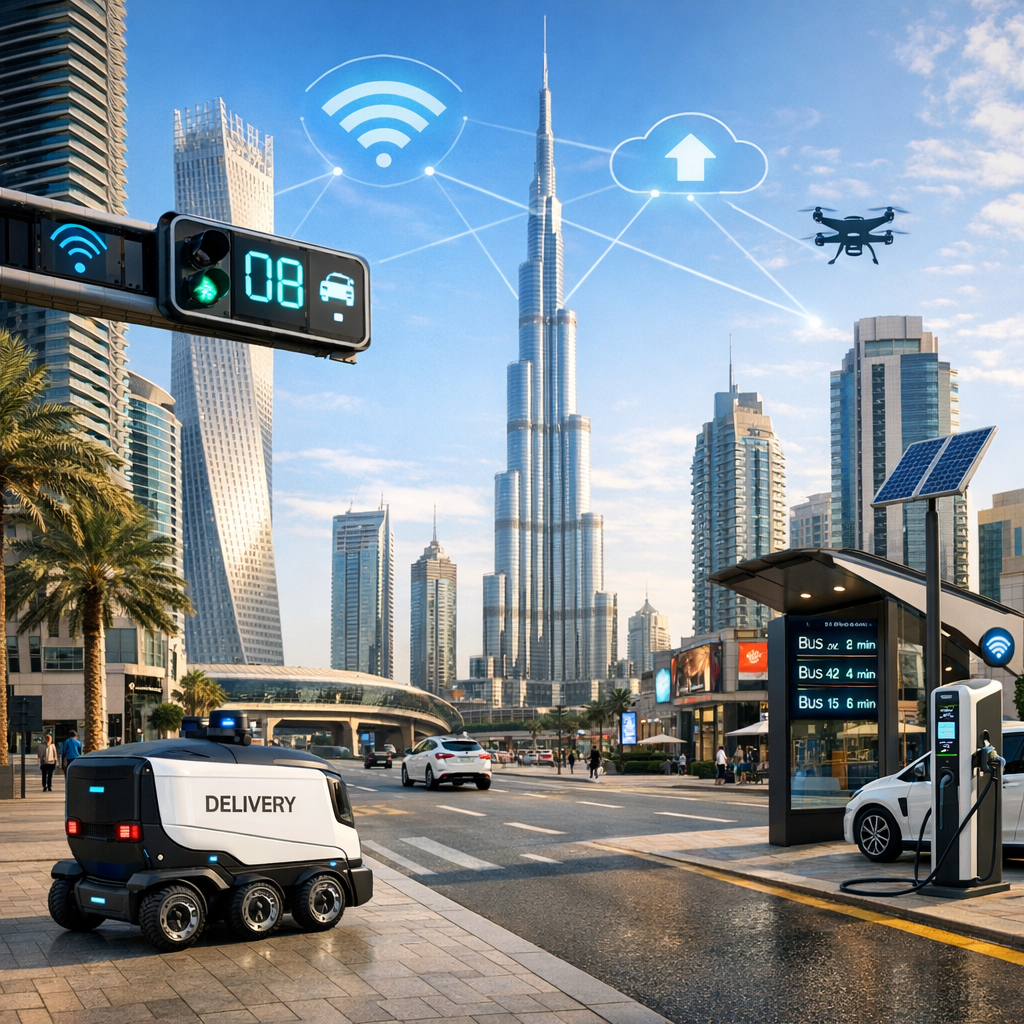
- Delivery & Mobility: Autonomous delivery robots navigating pavements in residential areas; logistics systems optimizing city traffic moments before delays occur.
- Health & Wellness: Corporate wellness programmes tracking employee health and AI systems helping large employers reduce sick leave; digital health options gaining ground.
- Public Services: Platforms that renew licenses or handle government enquiries without requiring multiple in-person visits; AI as the engine behind many federal service portals.
Startups Fueling the Change
Dubai’s tech startup scene is central to making agentic AI possible. Dozens of AI-focused startups are active in areas like enterprise AI, Arabic language models, health tech, and government-oriented applications. These startups are vital links between policy goals and lived reality.
Challenges Alongside Benefits
While many of these innovations promise smoother services and efficiency gains, they also raise questions:
- Data Privacy & Trust: As more decisions shift to automated systems, ensuring transparent, secure handling of personal information becomes essential.
- Workforce Skills: With AI taking on decision-making roles, people need new skills — both to build these systems and to collaborate with them.
- Access & Inclusion: Some residents or small businesses might be slow to adopt new platforms, or lack tools to participate fully.
- Oversight & Accountability: Agentic systems require guardrails so that when something goes wrong, there’s a clear path for redress.
What to Expect Next
Over the coming years, the landscape is likely to evolve in these ways:
- More routine tasks being automated — insurance claims, permits, even customer service tickets handled by AI agents.
- Increased integration of AI in homes and personal devices — smart tools adapting to habits, delivering convenience in everyday life.
- Greater regulatory clarity — rules around responsibility, transparency, and safety as AI takes larger roles in both public and private sectors.
- Expanded role for local innovation — Dubai’s startup ecosystem will continue pushing for solutions designed for the particular needs and languages of UAE users.
In many ways, Dubai today is becoming a city that’s less about tools and more about invisible intelligence weaving through daily life. Far beyond novelty, agentic AI promises to reshape how we work, travel, access services — and what it means to live in a connected, automated urban environment.