

By Aisha Khalifa
In Dubai, where rapid growth demands nimble solutions, recent municipal initiatives are making headway to improve traffic flow, public services, and community life. From new corridors to worker markets to creative public space design, here are the stories shaping the city at the neighborhood level.
New Road Corridors to Slice Commute Times
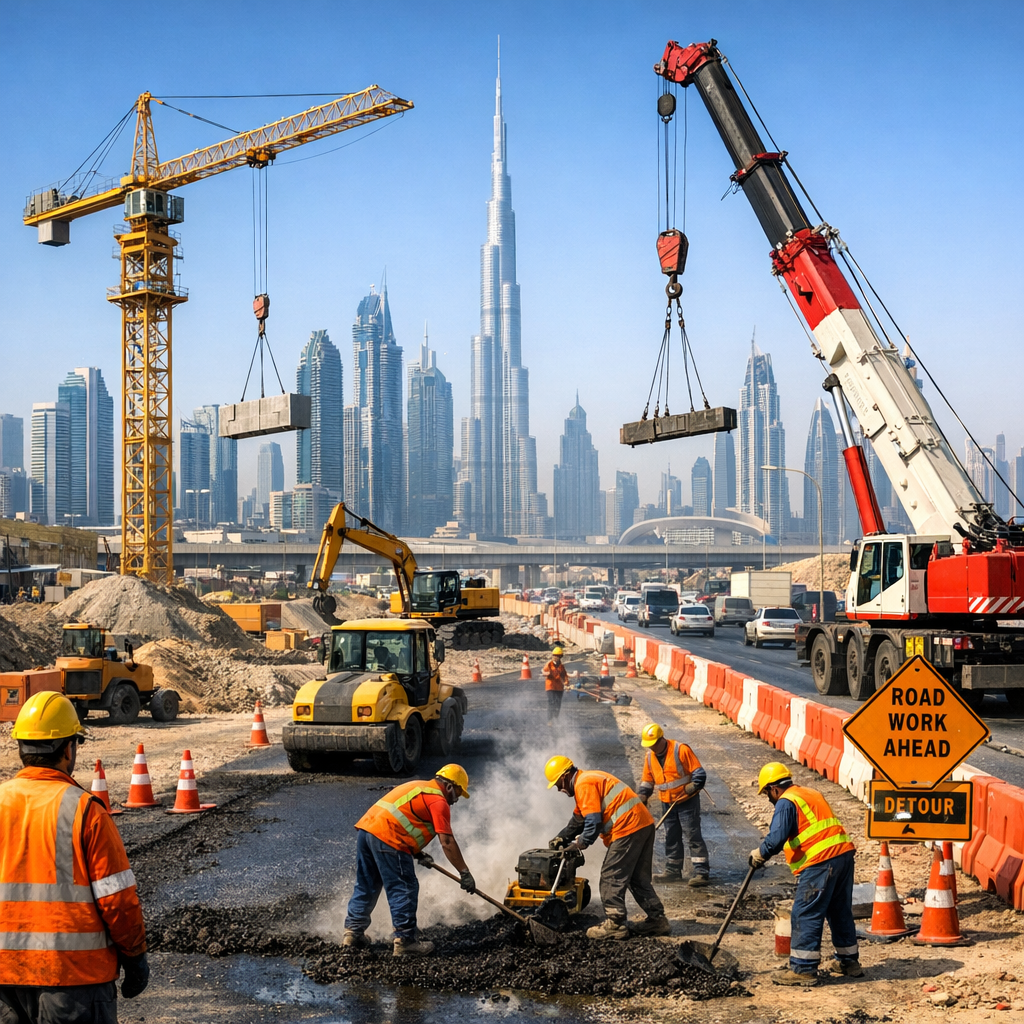
The Roads & Transport Authority is rolling out an expansive plan to relieve congestion in key parts of the city. One of the most ambitious is the Latifa bint Hamdan Corridor, a 12-kilometre route connecting several major arteries across Dubai. Scheduled for completion by late 2028, this project includes multiple bridges and tunnels, and aims to reduce the trip between Umm Al Sheif Street and Emirates Road by more than half—dropping commute time from about 33 minutes to just 15. It’s expected to serve over 130,000 trips daily. This corridor also aligns with long-term plans like the Dubai 2040 Urban Master Plan.
Another key focus is Hessa Street, where Phase II of its upgrade will double traffic capacity and introduce new flyovers, ramps and junction upgrades. A new 480-metre tunnel is part of this effort, with much of the benefit going to communities in Jumeirah Village Circle, Al Barsha, and nearby areas. Upon completion, officials estimate travel time on that stretch will plummet from roughly 24 minutes to around 5.
Markets & Spaces Close to Home for Workers
Dubai Municipality has also completed three integrated community markets in labour areas such as Muhaisnah 2, Al Quoz Industrial, and Jebel Ali. Together covering over 69,000 square metres and housing 866 kiosks and stalls, the markets combine essential goods, services, awareness programs, and recreational facilities. More than 640,000 workers are estimated to benefit—many now have safer, more organised options within walking or short commuting distance.
Design Innovation & New Public Destinations
Perhaps most forward-looking is Dubai’s first ever AI-powered park design challenge, focused on Al Safa 2 Park. The competition invites designers, students and innovators to propose ideas using artificial intelligence, data analytics and community input, in order to reimagine public space in ways that promote accessibility, well-being, and sustainability.
Other urban improvements include approval for a specialised Falcon Market, a rich tradition bolstered with modern amenities including veterinary support and event spaces. Dubai Creek is also getting a new lighting scheme aimed at turning the waterfront into a more inviting cultural and visual destination after dark.
What This Means in Everyday Dubai
- Shorter drives between previously congested districts, easing stress on daily commuters.
- Workers living in labour zones gaining more access to affordable services and communal facilities close to their homes.
- New participatory and tech-driven approaches to designing parks and shared spaces.
- Public spaces becoming more than transit points—now places to gather, shop, rest and connect.
As these projects move from planning to construction and into use, their true test will be in how residents experience everyday life: shorter trips, safer crossings, greener parks, and stronger neighbourhood bonds. I’ll be watching how new infrastructure and public spaces reshape the rhythms of the city—especially where it matters most.
— Aisha Khalifa