

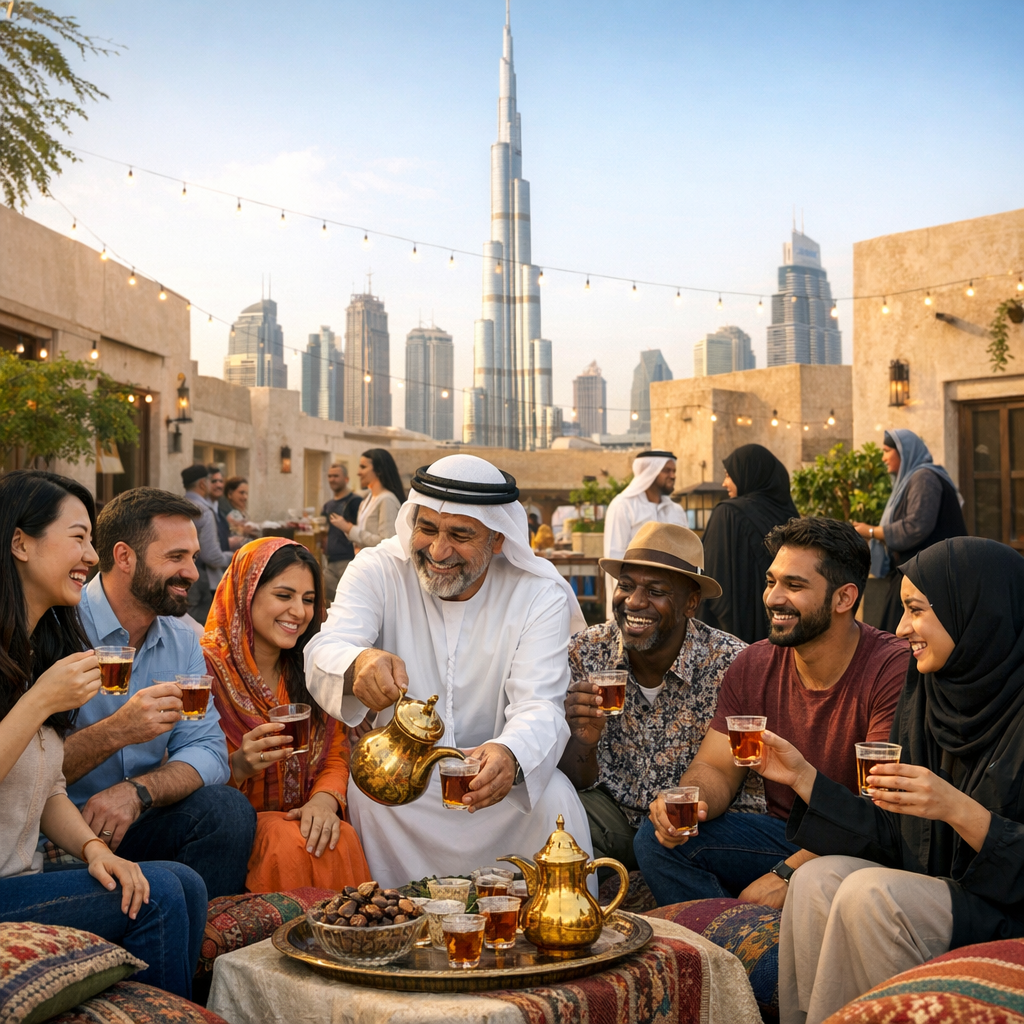
When I moved to Dubai years ago, I believed my life would revolve entirely around work, weekends, and mixing with others from my home country. What I didn’t expect was how much I’d crave the connections that reach beyond the expatriate circle—the friendships, moments of shared culture, and sense of being part of something rooted here in this city.
What is the expat bubble
The expat bubble in Dubai isn’t a myth—it’s a routine. People from similar countries, professions, or backgrounds often end up in the same residential compounds, eat at similar restaurants, and rarely break out of familiar social circles. It offers comfort—but it comes at a cost.
Studies show that while Dubai excels in economic opportunity and quality of life, deeper integration into local Emirati culture, and forming relationships outside our expat communities, is far harder to achieve. Language, social norms, and even legal or residency structures can impose real limits. Many expats go years, even decades, before feeling fully at home beyond their familiar networks. Research suggests that surface-level daily navigation is easy—but transformative belonging is something quite different.
Why ‘integration’ matters
There’s value in diversity for its own sake—but the richer rewards come when cross-community dialogue happens: when you share food during Iftar with Emirati friends, learn some Arabic, or attend local cultural events. Feeling rooted this way doesn’t erase your own heritage—it enhances it.
Without this deeper engagement, life can feel transient. Many expats describe Dubai as an in-between space, one where time seems borrowed. Work may tie you down, but your social identity floats. That’s why so many newcomers and long-timers alike express an unspoken longing—not just to live here, but to matter here.
How to build authentic connections
Volunteer with purpose
One of the simplest ways I found my place was through volunteering. Dubai and the UAE have robust platforms—Volunteers.ae, Dubai Cares—offering chances to teach, help in humanitarian aid, or support cultural programs. Through these, you gain shared projects with Emiratis and expats alike.
Learn the language and culture
I began carrying a phrasebook Arabic-app and smiling more often when passing by homes, mosques, or families on the street. Small greetings—Salam Alaikum, asking about someone’s health—matter. Knowing local holidays, traditions, and customs shows respect, and builds a bridge many don’t expect anymore.
Use shared spaces wisely
Community centres, libraries, public beaches, markets—they can feel neutral. Attend mosque markets, museums, cultural exhibitions, or sporting events where you’ll find people across backgrounds. I once met Emirati entrepreneurs at a pop-up art show; their kindness changed how I saw “local.”
Tell your own story
Share where you come from, the traditions you bring with you, and your reasons for staying in Dubai. Openness invites conversation. I began hosting small meals with food from my home country. A few returns of curiosity—and you begin to see yourself not just as guest, but as neighbour.
What the city can do—and already is doing
Government efforts like the Itma’en mental wellbeing service reflect growing recognition: even in a cosmopolitan city, emotional belonging counts. Free, confidential guidance for all shows that community isn’t just about physical presence—it’s about feeling seen.
In volunteerism specifically, laws and platforms support engagement: Federal law protects volunteer participation; registration systems streamline giving back. For many expats, these legal frameworks are not just form; they’re an open door.
Closing thoughts
Dubai doesn’t ask for assimilation—it offers a choice: to be part of its tapestry. If we cross a few social lines, learn a few new words, offer our time to causes outside our immediate circle—we do more than exist here. We belong. And that belongs to all of us.