

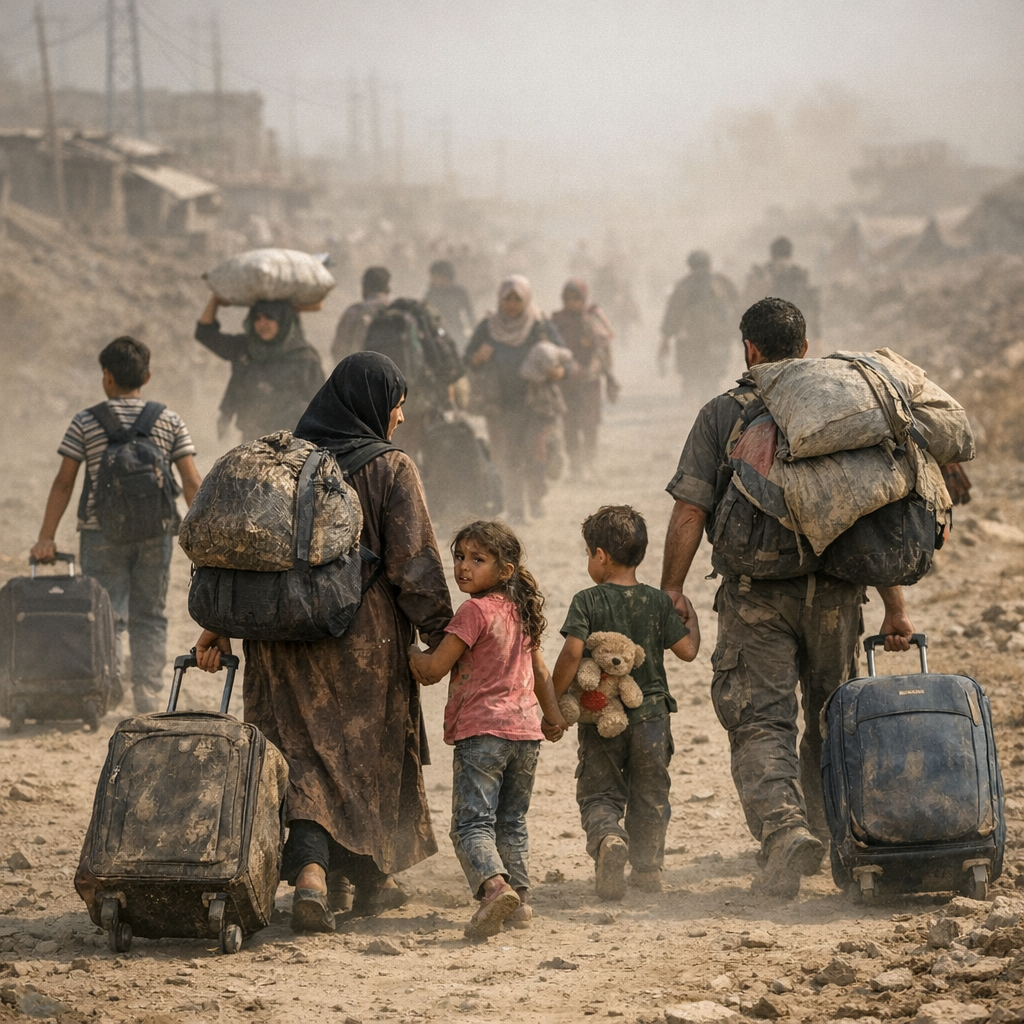
How Many People Are Forced to Flee?
At the end of 2025, more than 117 million people around the world were forcibly displaced due to conflict, violence, persecution or human rights abuses. This includes those who have fled their countries as refugees, those seeking asylum, and people who remain displaced inside their home countries. Globally, this represents about 1.4% of the world’s population. UNHCR notes a slight decline in total numbers, driven by returns in a few major displacement crises. Still, displacement levels remain near historical highs.
Main Drivers Behind the Displacement
Conflict and violence remain leading causes—particularly in places like Sudan, Syria, Afghanistan, and Yemen—forcing millions to flee both across borders and within their own countries. The domestic upheavals, fragile governments, and frequent clashes make lasting return or resettlement difficult.
Climate change is becoming an increasingly serious factor. Sudden disasters like storms and flooding, along with gradual changes such as drought or land degradation, erode livelihoods and prompt mobility. Many people displaced by climate-related risks are already in countries struggling to respond due to poverty, weak infrastructure, or competing emergencies. Scholars also caution that climate by itself is often not the only factor but interacts with social, political, and economic vulnerabilities.
Where Displaced People Are Living
Most displaced people—refugees and other forced migrants—remain close to home. Around two thirds are hosted by neighbouring countries. Many host nations are low- or middle-income, where resources and infrastructure are already stretched.
Why Returns Don’t Mean Safety
While returns of refugees and internally displaced persons have contributed to a recent dip in global displacement numbers, the conditions in many return areas remain challenging. Infrastructure is often damaged, services are inconsistent, and safety is not guaranteed. For many, the choice is between hardship at home or continued uncertainty away.
What Needs to Change
- Inclusive policies—host countries must integrate refugees into health care, education and labor markets to foster dignity and self-reliance.
- Anticipatory action—planning ahead for climate risks can prevent displacement before it occurs. Early warning systems, local resilience programs and disaster-risk reduction are essential.
- International cooperation to share funding burdens, develop legal protections, and ensure safe returns. Aid resources are finite, and coordination helps avoid duplication and gaps.
Why This Matters for Dubai and the UAE
As a global hub with diverse populations and deep involvement in humanitarian action, Dubai, and the UAE are uniquely positioned. The country can continue to play a leadership role by supporting international relief, investing in climate change mitigation, and hosting displaced people with dignity. Understanding global displacement also helps UAE residents grasp how interconnected our world has become.