

By Aisha Khalifa
Every day in Dubai, changes in the city’s roads and waste systems touch lives from JVC to Al Warqa. Here are recent developments and ongoing efforts aimed at improving our daily routines.
Reducing Congestion with Major Road Upgrades
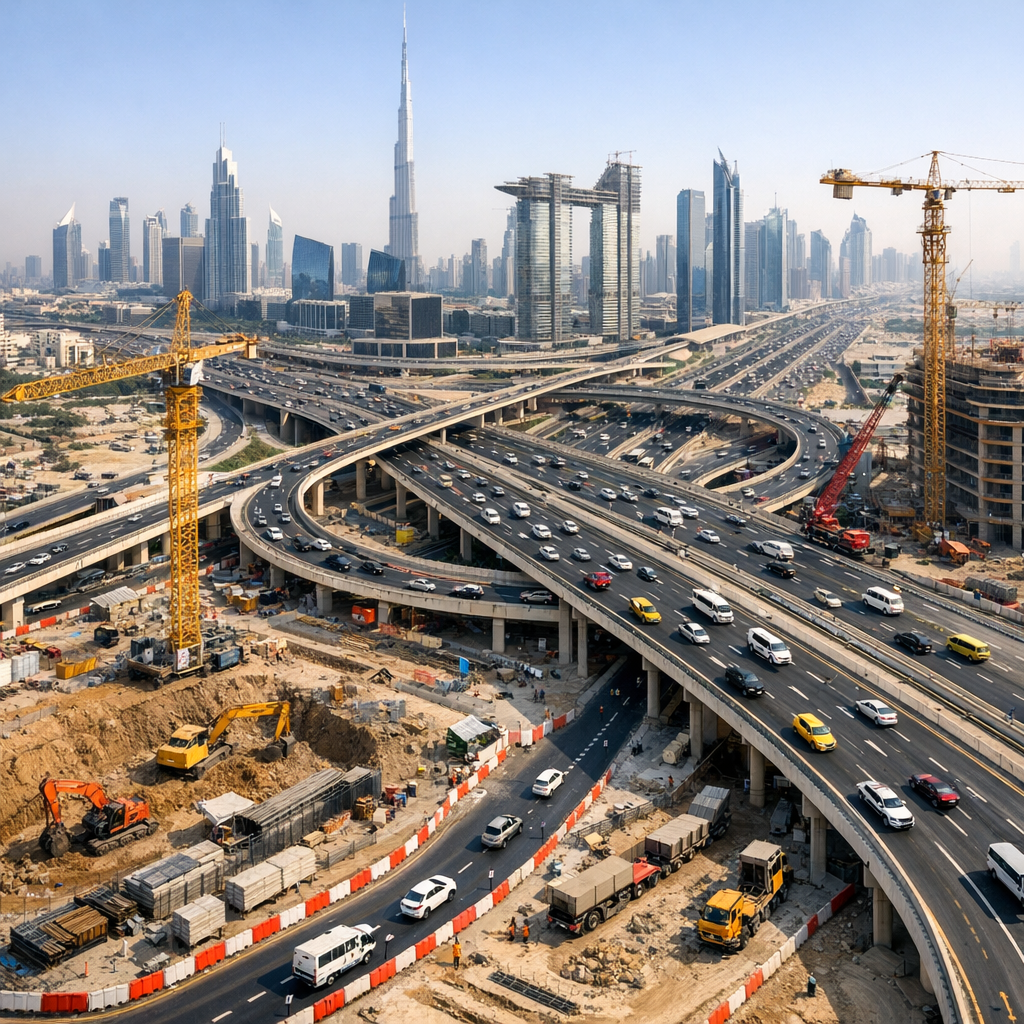
The Roads and Transport Authority (RTA) is completing a range of infrastructure projects focussed on easing traffic on Dubai’s busiest corridors. One such project links Al Khail Road with Al Wasl and Oud Metha Streets using a new three-lane bridge to reduce congestion. It’s part of a larger scheme including tunnels and junction improvements.
Meanwhile, the upgrade of Hessa Street, expanding it from two to four lanes each way, has cut journey times from 15 minutes down to about four along that corridor—serving over half a million residents across nearby communities.
New Payment Systems for Public Transport
Public transport users are preparing for a shift in how they pay. The nol card system is being transformed into an account-based ticketing platform. Commuters will soon be able to use bank cards, digital wallets or QR codes—giving more flexibility and faster access across buses, metro and tram services.
“Circle Dubai” and Community Waste Management Innovation
Dubai’s “Circle Dubai” initiative targets a reduction in waste generated per person—from around 2.2 kg to 1.76 kg per day. To help make this happen, authorities are promoting waste segregation, boosting recycling rates, and encouraging sustainable practices at household and commercial levels.
A pilot scheme led by Dubai Holding Community Management is testing a circular model in Palm Jumeirah that turns excess algae and organic matter into compost. Under the “Sea to Soil” plan, community gardens and landscaping will benefit from nutrient-rich “Re-Soil” produced on site.
Community Feedback Shapes Policy
In Al Warqa, residents met with Dubai Municipality leaders to highlight local concerns. Stormwater drainage, sewer odours, urban planning setbacks and recreational spaces were among the issues discussed. Authorities have pledged upgrades to sewage infrastructure and new parks, alongside better enforcement of environmental regulations.
These dialogues reflect a growing trend: policy shaped from the ground up, where resident input guides what governments prioritise.
What Residents Can Expect
• Smoother commutes around Oud Metha, Al Wasl, Hessa, Al Khail and E11 corridors thanks to completed bridges, widened roads, and new intersections.
• Easier payments for public transport—no need for the Nol card alone; bank cards and digital wallets will become options in the near future.
• Cleaner shared spaces as waste initiatives expand and source-separation becomes standard in homes and public areas.
• Greater transparency and response as municipal leadership continues to meet with communities directly.
Dubai is growing fast. By aligning infrastructure, transport, and environmental efforts across neighbourhoods, the city appears to be working toward a more liveable, sustainable future—one road, one payment, one compost bin at a time.