

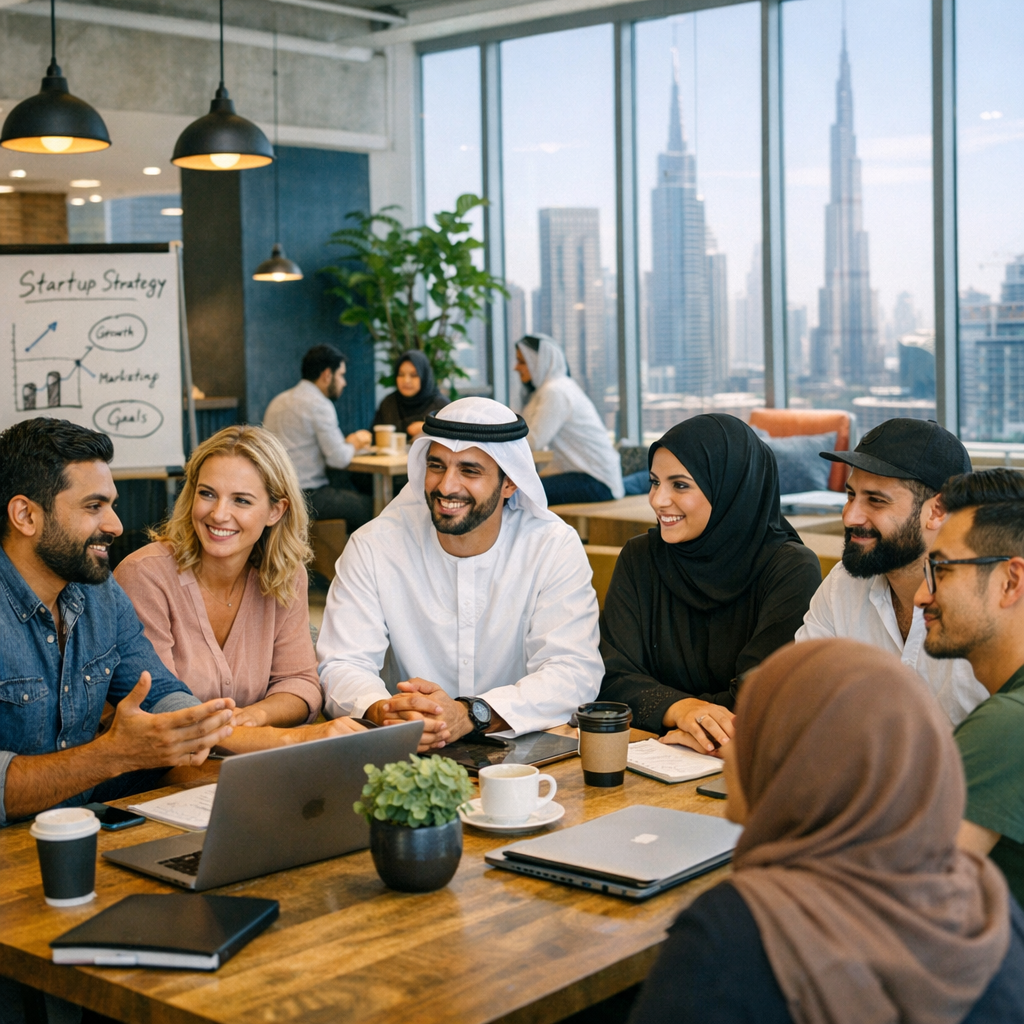
Dubai’s economy is entering a new chapter—one where small and medium-sized enterprises (SMEs) and startups are not just contributors, but key architects of the city’s long-term trajectory. With government agendas like D33 and programs aimed at strengthening infrastructure, the landscape for entrepreneurship has evolved dramatically. Here’s a look at several enduring trends shaping business and job opportunities in Dubai.
Strong support for entrepreneurship and SMEs
The government has rolled out a range of incentives for founders and small business owners. Notable initiatives include full foreign ownership in most business activities, streamlined licensing processes, and long-term visas tailored for entrepreneurs. These moves lower entry barriers and build confidence among local and international business founders.
Entities such as Dubai SME, the Mohammed bin Rashid Establishment, play a growing role—they helped launch over 3,400 new Emirati businesses recently, up significantly year-over-year. Support in advisory services, mentorship, and funding is helping many nascent companies move beyond ideation toward sustainable operations.
High-growth sectors and innovation engines
Dubai’s startup ecosystem is accelerating especially in digital and tech-driven fields. AI, fintech, HealthTech, and SaaS are among the fastest-growing subsectors. A particularly striking trend: a large share of new digital startups are founded or expanded by international teams, showing Dubai is being chosen as a global base for innovation.
Meanwhile, strategic industrial sectors—such as manufacturing, logistics, and communications infrastructure—are growing steadily. Government strategies like Make it in the Emirates and industrial resilience programs are reinforcing supply chains and creating conditions for these sectors to scale up.
Jobs of the future: what to watch
Forecasts tied to Dubai’s economic goals show a demand for new roles across STEM fields, green transition, professional services, and support work. Over 750,000 new jobs are expected across sectors including manufacturing, education, finance, health, and logistics. Skilled roles like data analysts, risk management specialists, AI/ML engineers, and biomedical professionals will become increasingly important.
This shift brings implications for education and upskilling. Reskilling programs are essential, especially for workers in sectors transforming rapidly under automation and tech integration. Employers and training institutions alike are investing in bridging the gap between the current workforce and future needs.
Challenges ahead: sustainability and staying power
Despite the momentum, there are structural challenges. Many new ventures struggle to become established; high failure rates in saturated markets like F&B signal that differentiation, operational excellence, and realistic financial planning are crucial.
Sustainability—both environmental and economic—is increasingly prominent. More entrepreneurs are embedding sustainability into their business models, and regulatory shifts are pushing for greener practices. Likewise, fetching long-term capital past early stages like seed funding remains a challenge for growing companies.
Why it matters
Beyond headline GDP figures, these trends are reshaping opportunity. They forge pathways for jobs that didn’t exist in past decades, empower high-potential innovators, and anchor Dubai’s reputation as a global hub—not just for trade, but for ideas and growth.
For budding entrepreneurs and small business owners, the message is clear: the ecosystem is increasingly responsive and rich with possibility. With the right mix of vision, skill, and support, there’s real scope to build something that matters—and something that lasts.