

By Aisha Khalifa
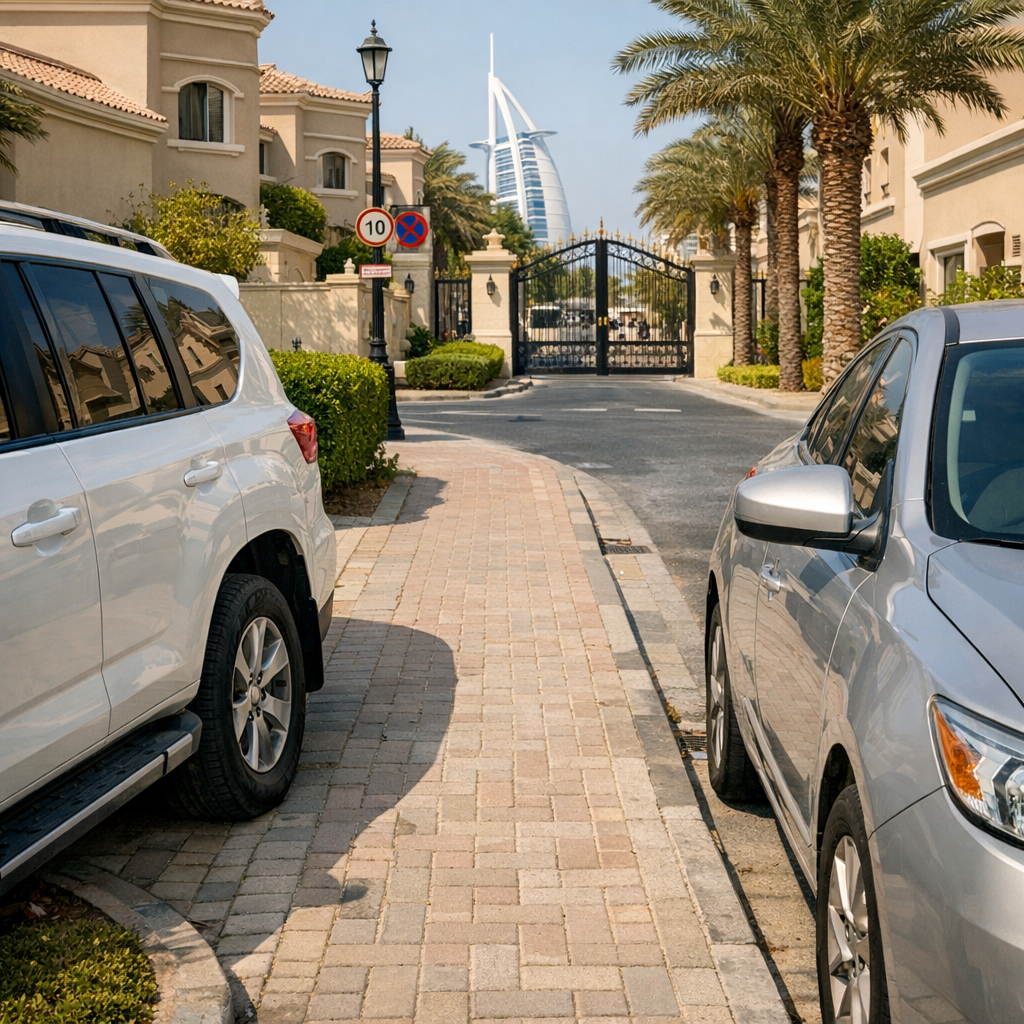
As Dubai continues to grow, quality of life often comes down to small daily frustrations. In many gated communities, sidewalks—meant for safe walking—are repeatedly blocked by parked cars, creating hazards especially for parents with strollers, elderly residents, and anyone with mobility challenges. These sightings, though seemingly minor, are causing mounting concern among communities that expect better in terms of pedestrian safety and community management.
Where the problem shows up
These issues are frequently reported in developments managed by Dubai Properties and other private management firms. Residents say driveways, paths near entrance gates, and walkways adjacent to parking lots are the worst offenders. Cars are often parked on pavements because there’s nowhere else to put them, or because drivers believe the restriction rules don’t apply in their community. Poor signage, lack of clarity in community rules, and minimal checks by security or management all contribute.
Real dangers and everyday frustrations
One mother described having to push her stroller into the roadway to bypass cars blocking the footpath, exposing her child to fast-moving traffic. Another resident mentioned elderly neighbours whose mobility aids scrape against raised curbs or hedge overgrowth where paths have been encroached upon by parked vehicles. These obstacles affect access—but they also affect dignity and safety.
What authorities say—and what’s available
Dubai Municipality allows complaints about obstruction of public walkways and issue-parking. In many gated communities, complaints can be lodged through the community’s Owners’ Committee or management office. If these fail, residents may reach out to municipality hotlines. Existing tools like the “Madinati” service let people report damaged sidewalks, broken signals and other right-of-way issues; enforcement depends on whether the community falls under public versus private jurisdiction.
Possible steps toward solutions
- Clearer policy and signage: Communities need visible signs reminding residents not to park on pavements, along with rules tailored to the layout of streets, driveways, and footpaths in each development.
- Stronger enforcement: Management security or community patrols should issue warnings and enforce penalties when pavements are obstructed.
- Designated parking zones: If space allows, providing marked bays or additional parking can reduce the temptation to park illegally.
- Community awareness: A short notice or newsletter reminding people about pedestrian safety could help change habits.
- Accessible reporting: Residents should know which entity to contact—management, municipality, or police—for which type of issue, especially when safety is involved.
For many who moved into gated communities in Dubai, the promise was a safe, walkable home environment. When pavements are blocked, that promise falls short. Change may not be dramatic overnight—but for parents, children, older adults, and indeed all residents, reclaiming the walk takes nothing more than some rules, respect, and shared responsibility.