

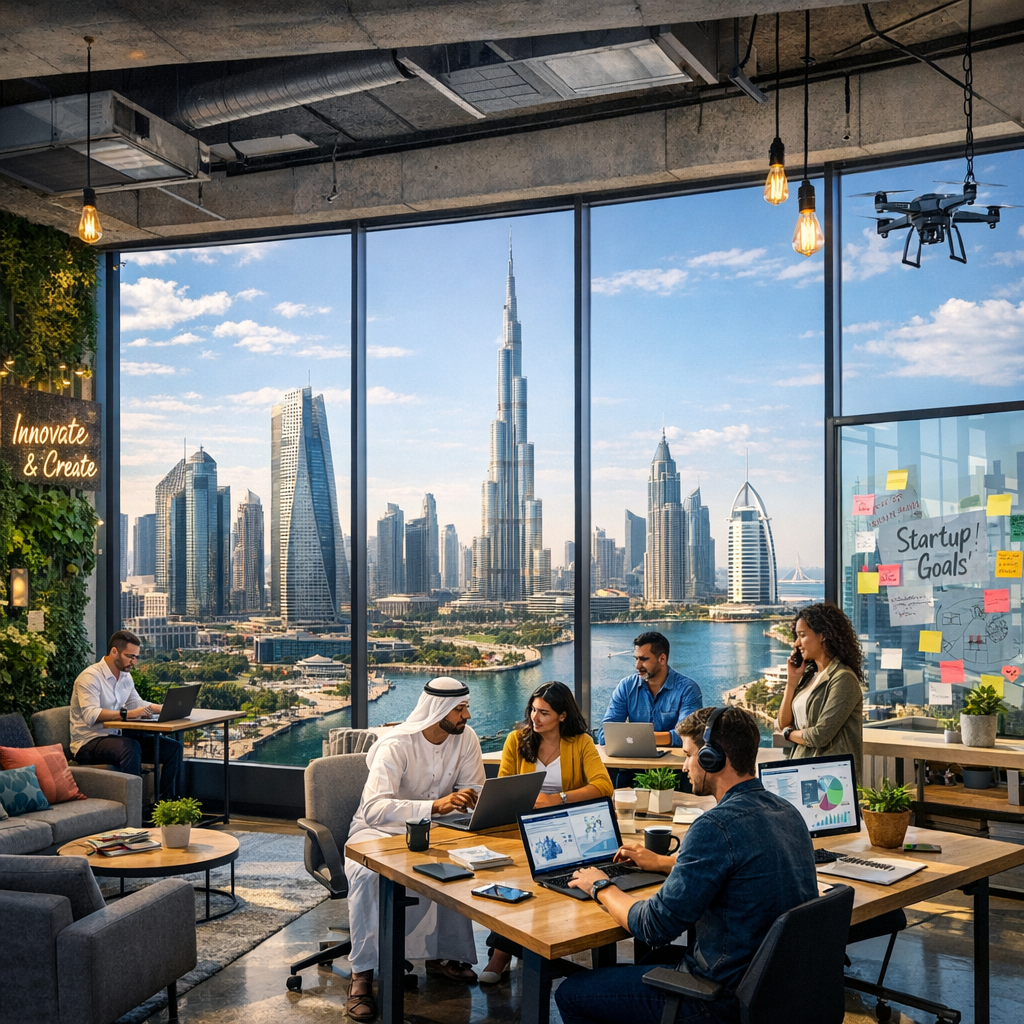
The rise of SMEs and startups in Dubai
Small and medium enterprises (SMEs) and early-stage startups are driving Dubai’s economic momentum. Programs like Dubai Traders have onboarded over 2,400 e-commerce sellers in a single year, helping local SMBs access major platforms, offer licensing support, and receive advertising tools — all designed to reduce traditional entry hurdles. In parallel, economic zones like Dubai Silicon Oasis and Dubai Airport Freezone are seeing high demand from new companies, particularly those focused on AI and digital services. These trends suggest a clear shift: entrepreneurial energy is increasingly concentrated in innovation and tech-enabled commerce.
Policy, infrastructure, and opportunities
Government policy remains central to Dubai’s business strategy. The Dubai Economic Agenda (D33) aims to double Dubai’s economy by 2033, supported by visa reforms, trade agreements, funding programs such as the National Program for SMEs and Projects, and digital economy initiatives. For entrepreneurs, this has meant better access to finance, more favourable regulatory frameworks, and stronger global links.
Infrastructure investments are keeping pace. Notably, the Dubai Integrated Economic Zones Authority (DIEZ) reported roughly 96% occupancy across its economic zones in the first half of 2026. Projects like “Block 14”, part of the Dubai Silicon Oasis expansion, are integrating commercial, residential, and transit-oriented designs to support both business growth and quality of life.
Sectors to watch and enduring challenges
Tech-driven sectors continue to draw attention. AI, fintech, and e-commerce remain among the top areas of growth, but experts also see manufacturing, food security, and compliance as promising spaces for investment. Compliance, in particular, has become central to business operations following VAT and corporate tax developments.
That said, there are still hurdles. Many startups struggle to scale beyond early stages: finding reliable Series B+ funding locally, proving revenue models, navigating complex licensing and banking systems, and managing operating costs in a competitive market all present real tests. Entrepreneurs often find the early phase of growth especially fragile.
What this means for jobseekers and entrepreneurs
For jobseekers, especially young Emiratis, rising demand in sectors like technology, digital services, and innovation ecosystems presents new paths forward. Growth of SMEs means more roles in operations, sales, marketing, product, and tech support. For entrepreneurs, aligning business ideas to high-demand local and regional needs — including sustainability, supply chain resilience, and digital transformation — boosts chances of long-term success.
Conclusion
Dubai’s economy is evolving fast. With government backing, strong infrastructure, and a surge of entrepreneurial activity in tech and innovation, many of the barriers that once held back local business are being addressed. Still, success depends on navigating the details: scaling sustainably, building credibility, and staying compliant. For those who can, the opportunities are real.