
By Ahmed Al-Hamed
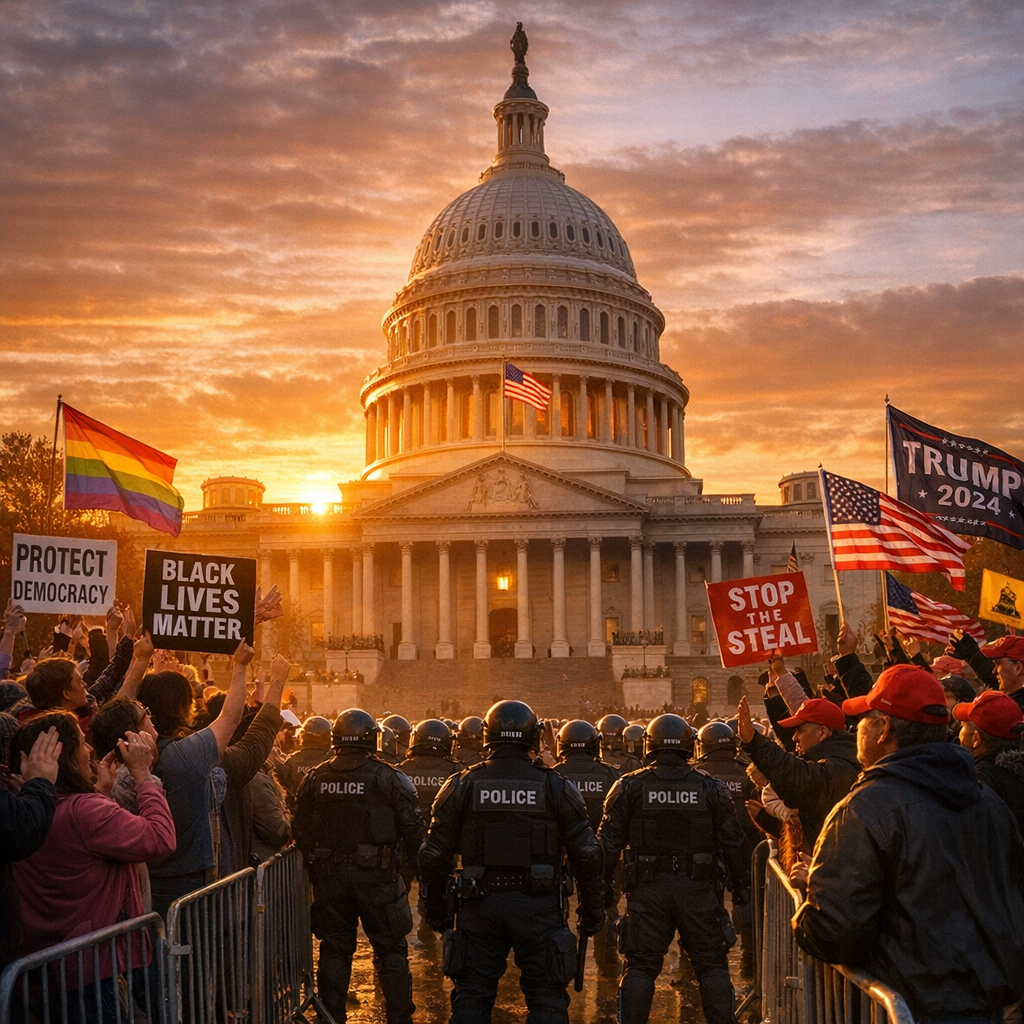
The United States finds itself at a crossroads. With the midterm elections on the horizon, the economy growing unevenly, and public sentiment leaning toward anxiety, political battles over immigration, inflation, and federal spending now more than ever shape national headlines.
Economic Performance: Modest Growth, Lingering Challenges
Real gross domestic product (GDP) grew at an annual rate of 1.5% in the second quarter of 2026, down from 2.1% in the first quarter. The slowdown reflects weaker contributions from government spending and softer import‐export activity. Personal consumption expenditures and business fixed investment remain relatively strong, particularly in equipment and intellectual property, indicating resilience in certain private sector corners.
Inflation remains a pressing concern. Although some inflationary pressures have eased, especially in goods, services inflation stays sticky—particularly in areas where labour costs are climbing. Meanwhile, many households feel financial stress, citing rising costs of essentials like food, fuel and healthcare.
Public Sentiment: Discontent, Divisions, and Distrust
On paper, the U.S. economy displays pockets of strength, but American perceptions tell a different story. Around 70 % of U.S. adults rate economic conditions as “fair” or “poor,” while only about 28 % consider them “good” or “excellent” — marking a persistent low in public confidence.
Political divisions are especially sharp along party lines. Republicans show slightly improved assessments of President Donald Trump’s performance and economic policies, while Democrats overwhelmingly believe the economy has worsened under his leadership. Trust in Congress is remarkably low across the board.
Political Stakes: Midterms, Policy, and the Future
With midterm elections approaching, economy remains front and center for voters. For the governing party, there is risk in persistent economic discontent; for the opposition, opportunity. Key policy debates—on immigration, trade, tariffs, debt, and energy—are being framed not just in terms of their substance, but their fairness and impact on everyday life.
International factors also weigh heavily. The IMF has noted U.S. economic performance has been “buoyant” but cautioned against risks posed by large deficits, tariff tensions, and external volatility—especially given recent geopolitical uncertainty. These external pressures amplify domestic frustrations.
What to Watch Going Forward
- Inflation dynamics—especially whether service-price inflation falls and gains for consumers regain ground.
- Labor market trends—whether job growth continues at a healthy clip without overheating.
- Commodity price shocks and foreign policy—how oil markets and trade disputes shape consumer costs and business confidence.
- Voter turnout and political mobilization—which party captures the momentum among undecided citizens worried about the economy and security.
For those following U.S. national news from abroad, these threads — economic health, political legitimacy, and global posture — remain tightly interwoven. How America addresses them now will define not just its midterm outcomes, but its standing at home and on the world stage.