

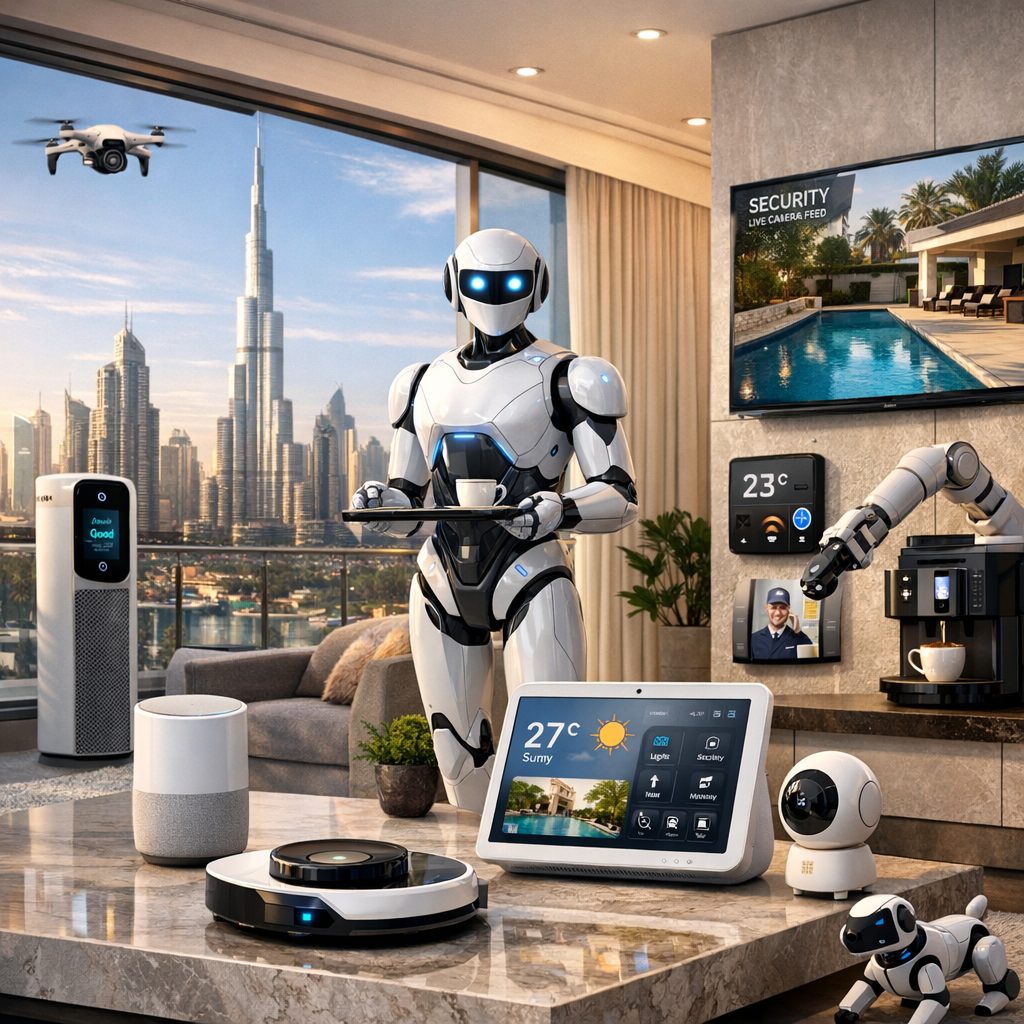
Living in Dubai today means rubbing shoulders with artificial intelligence in ways many of us barely notice—yet its presence is growing fast, often in service of making daily routines smoother. From government apps to wellness tools, AI, smart gadgets, and startups are transforming how we shop, travel, work, and care for ourselves without asking for much fanfare.
AI in the Day-to-Day
AI is no longer a novelty in Dubai, it’s becoming the operating layer for many services. For example, the federal government is pushing more user interactions through “agentic AI” tools—systems that carry out tasks autonomously—from visa renewals via platforms like Salama to biometric corridors at airports that speed up travel security processes. These aren’t prototypes anymore; they’re active components of service delivery. (Government strategy now aims for half of federal services to use agentic AI by 2028.)
Robotic delivery has moved off test tracks and into neighbourhoods. Areas like Sobha Hartland are seeing robots deliver parcels and food along residential pavements, a small but tangible sign of how last-mile automation is layering into our surroundings.
Startups & Gadgets Making a Difference
On the startup side, plenty of companies are developing tools for translation, content creation, health tracking, or workplace automation. Meanwhile, the gadget scene in the UAE reflects rising demand for devices that work smarter—not just newer. Smartwatches, wearables, and mid-tier smartphones loaded with AI features (photo editing, voice assistants, adaptive batteries) are capturing more attention. Brands like Xiaomi, Huawei, and others are growing fast by offering strong features at lower prices, while flagship models from Samsung, Apple and others push forward premium innovation. (For example smart band and earbuds categories are growing fast in mid-tier segments.)
Digital Culture & Consumer Behaviour
Dubai’s digital life isn’t just about hardware—it’s about habits and expectations. Connected devices are nearly everywhere: almost everyone here has a smartphone, many also use smartwatches, and increasingly digital wallets and online payments make traditional methods feel slow or outdated.
According to survey data, most residents believe AI’s growing role is inevitable—and that its successful rollout can improve quality of life. However, concerns around privacy, digital literacy, and fairness linger. Not everyone has the same comfort level or access to AI-powered tools, especially among informal business owners who juggle between caregiving, entrepreneurship and the digital divide.
Challenges to Watch
- Trust and Safety: High on the list of concerns—how our data is used, who controls the systems, how decisions are automated.
- Accessibility & Cost: Premium gadgets and advanced AI services often come with premium prices.
- Digital Skills: To make the most of AI or smart devices, users need to understand them.
- Invisible Trade-offs: Energy use, environmental impact, and “invisible” labour behind many AI systems.
Looking Ahead
If current trends hold, AI and smart tech will keep weaving into points we barely think about—our commutes, our homes, our health. GovTech innovation will likely continue to emphasize efficiency and speed. Startups will keep pushing solutions that blend AI into normal life rather than selling futuristic dreams.
For you and me, the question isn’t whether technology will change our lives—it’s how we’ll respond. Which tools will we adopt, which trade-offs we’ll accept, and how we’ll demand that development includes transparency, equity, and care.