

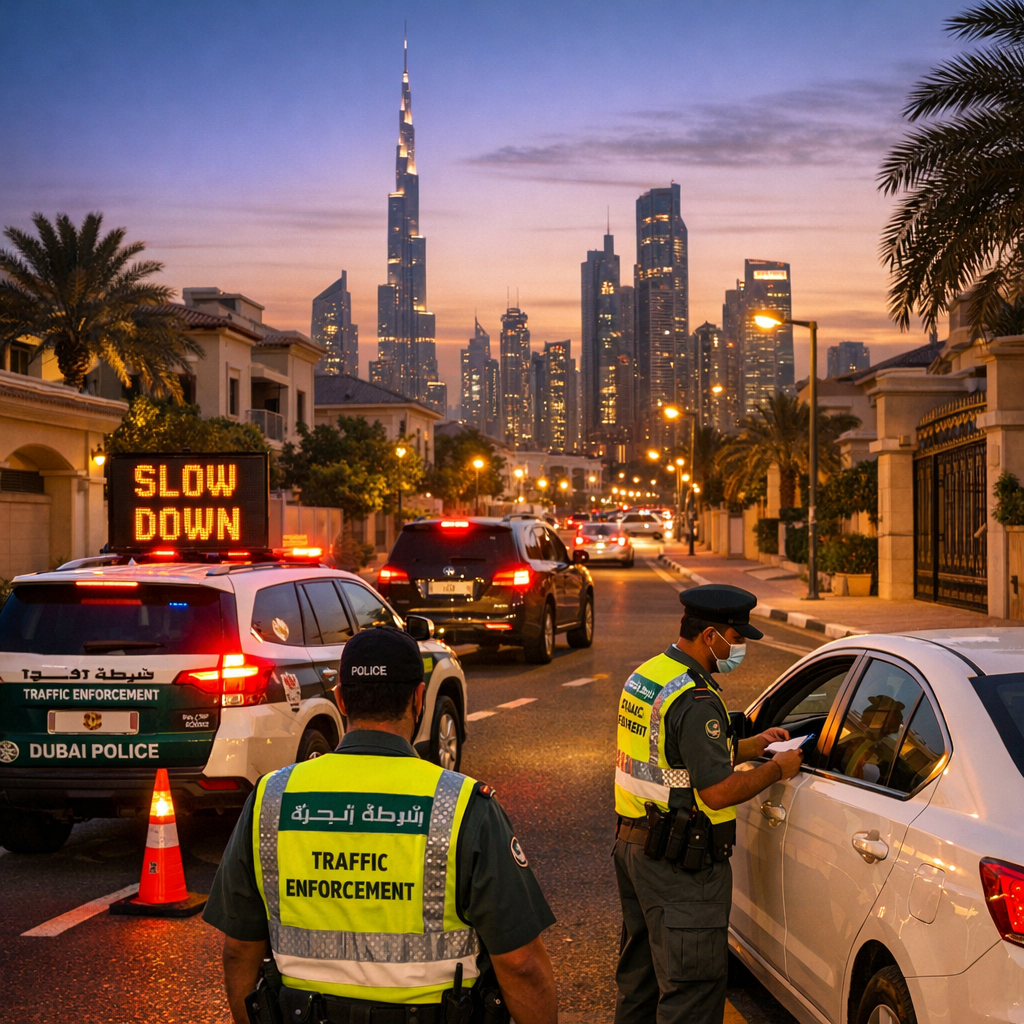
Working to keep pace with Dubai’s rapid pace of growth, authorities are stepping up efforts to address long-standing concerns around traffic, noise and safety in residential zones. With new road upgrades, more stringent regulations, and smarter police initiatives, many communities are seeing welcome improvements.
Quiet Roads Initiative tackles noise and reckless driving
The Dubai Police have intensified enforcement under their “Quiet Roads” campaign. Over 1,200 vehicles have been seized, and more than 33,000 fines issued as officers crack down on loud audio systems, erratic driving and other nuisances that disrupt peaceful residential life. The strategy is data-driven—targeting the streets that most frequently draw complaints. For many residents, quieter streets and safer neighbourhoods are becoming a reality.
Major road upgrades ease pressure on busy corridors
The Roads & Transport Authority (RTA) has carried out key infrastructure work, including widening Hessa Street from two to four lanes in both directions. This has cut journey times drastically—from around 15 minutes to just four—along sections that serve communities like JVC, Al Barsha South and Arjan.
Elsewhere, traffic flow at Majan and Al Barari has improved after the installation of signalised junctions and reversible lanes, particularly at exits onto Sheikh Mohammed bin Zayed Road. Peak-hour delays have dropped significantly for many residents.
Public tools and community engagement
Government agencies are also giving residents a stronger voice. The RTA’s Community Engagement Platform invites feedback from local people on traffic issues—so community input helps shape road design and signal timing in neighbourhoods.
Meanwhile, Dubai Police’s “Your Neighbourhood Police” platform encourages residents to report disruptive behaviour and take part in workshops and safety initiatives. A recognition scheme rewards those who support peace and public safety in their communities.
Next steps for lasting improvements
While results so far are promising, many who live in older or rapidly densifying areas say more work is needed. Small touchpoints like additional entrances and exits, better pedestrian crossings, and timely completion of infrastructure upgrades continue to emerge as key demands.
For others, strengthening public transport options and making neighbourhood streets more walkable are seen as essential. As Dubai continues its modernisation, maintaining comfort and safety in all its communities remains a shared goal.