

By Khalid Al-Qasimi
Dubai has always been a city shaped by its climate—scorching summers, mild winters, rare rains—but recent years have shown just how much more unpredictable our weather is becoming. For residents and visitors alike, understanding these changes isn’t just academic—it’s essential to daily life, infrastructure, and the environment.
Rising Heat and Extended Humid Seasons
One of the most noticeable changes is how early and intense our summers are getting. Heat waves now arrive earlier in the year and linger longer. Humidity is creeping forward into months that once felt dry. This shift isn’t only a discomfort issue—it raises risks for heat-related illness, stress on energy systems, and pressure on water supplies. The city’s traditional summer months are expanding into what feels like near-permanent intense heat.
From Rare Rain to Extreme Downpours
Dubai’s annual rainfall has always been modest—by some accounts under 100 mm—but we’re seeing more extreme events. A storm in 2024, for example, dumped in a few hours what the city usually gets in a year. These downpours overwhelm drainage, flood roads, and disrupt daily routines. With intense rains becoming more frequent, infrastructure upgrades for stormwater management are no longer optional—they’re urgent.
Water Stress, Rising Seas and Ecosystems at Risk
We live in one of the world’s most water-scarce regions. Groundwater extraction, dependency on desalination, and shrinking natural precipitation are testing our resilience. Meanwhile, rising sea levels and warming Gulf waters are threatening coastal infrastructure and marine habitats. Mangroves, coral reefs, and salt marshes—once thriving—are now under threat from salinity changes and temperature rise.
Dust, Sandstorms, and Air Quality Changes
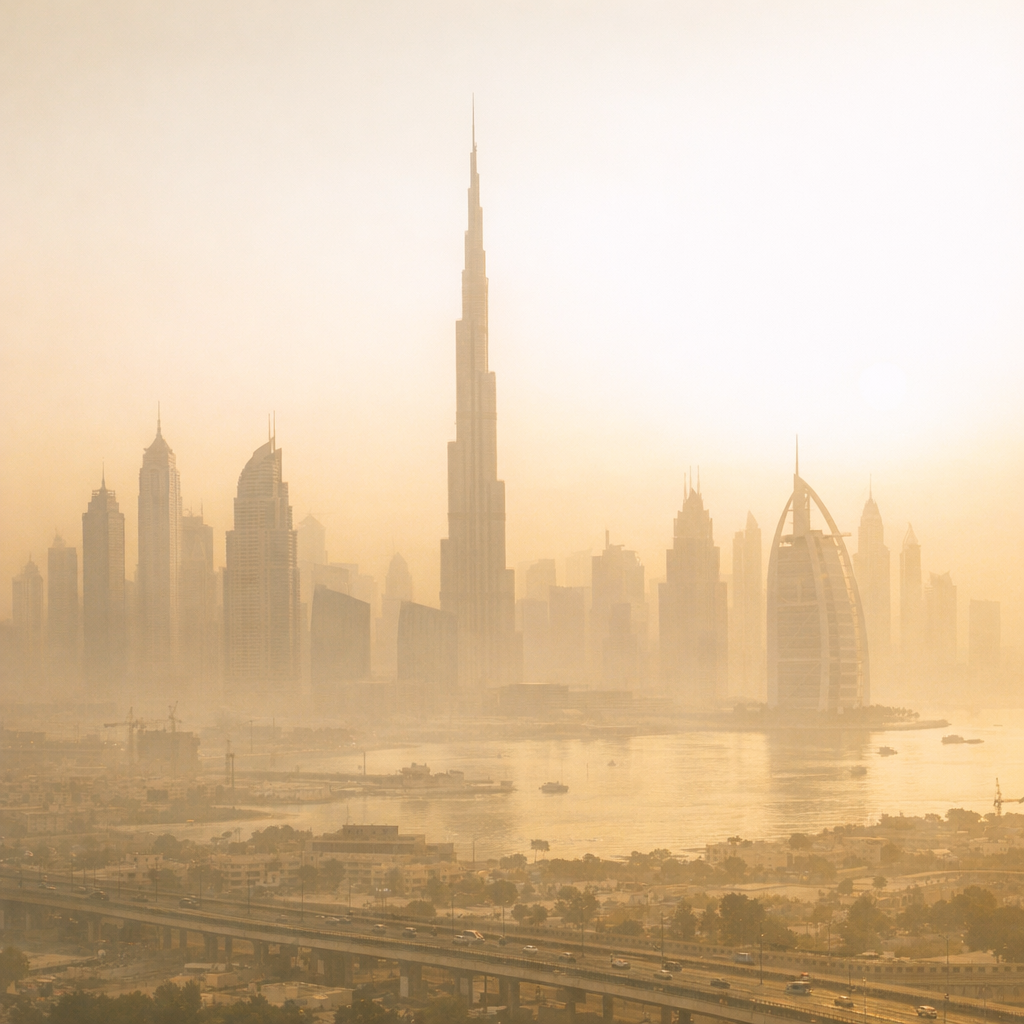
On many recent days, dust storms carry far further than they used to, triggered by shifting winds and exposed soil. Poor air quality isn’t just a nuisance—it carries health risks, especially for children, the elderly, and people with respiratory conditions. As the climate shifts, there’s concern these phenomena will grow more common and more intense.
What We’re Doing—and What We All Can Do
Dubai has taken legislative steps to adapt: In 2024, the city established the Dubai Environment and Climate Change Authority to lead environmental governance, mitigation, and adaptation. National plans set targets for rising temperatures, sea level rise and extreme weather, paired with strategies to protect biodiversity and adapt urban systems.
But government alone won’t be enough. Each of us—through water-wise habits, choosing shaded or cool routes, supporting tree planting, using indoor cooling wisely—can make a difference. Awareness helps us stay safe when heat or heavy rain or fog hits. Supporting green spaces helps reduce heat in cities. Small steps matter when changes add up daily.
Bottom Line
Our city’s weather isn’t just changing—it’s teaching us something: resilience is part of our future. By understanding the shifts—from hotter, stickier summers to heavier rains and coastal threats—we’re in a better position to adapt. Dubai has the resources, the will, and increasingly, the laws to build a more climate-resilient tomorrow. Now it’s up to all of us to act.