

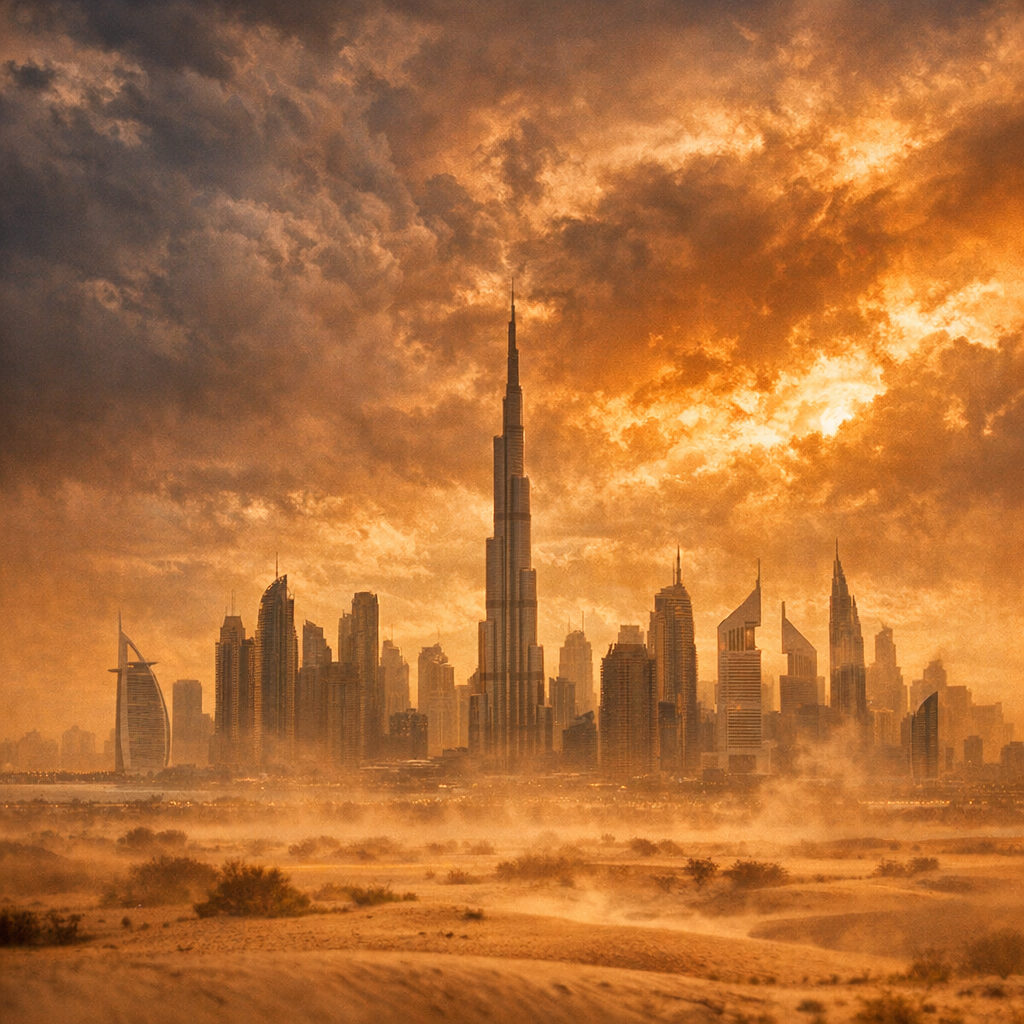
Dubai’s climate is consistently defined by its desert character—long, intense summers; mild winters; little rainfall; high humidity, especially near the coast. To understand both what’s normal and what’s changing, is to get a clearer view of daily life and environmental challenges here.
Seasons & What to Expect
Summer (April–September)
Temperatures soar above 40 °C through the peak months, often with overnight lows that stay in the high twenties, especially in July and August. Humidity from the Persian Gulf and Arabian Gulf can push heat stress beyond what temperature alone suggests.
Winter (December–March)
Milder days—mean highs in the mid-20s °C and cool nights—this is when weather turns most comfortable. Rainfall is rare but concentrated in December through February. While total precipitation remains low, occasional thunderstorms bring much-needed relief.
Transitional Periods (April–May, October–November)
These months often offer rapid shifts in conditions: dry heat, rising humidity, and sudden changes in wind. The skies may clear, haze may drift in, and gusts can pick up dust. Observant residents notice these transitions become more unpredictable with time.
Environmental Trends & Risks
Temperature Rise & Heat Stress
Forecasts show Dubai, along with other emirates, facing consistent warming—possibly 2-3 °C higher by mid-century. Nights are likely to stay warmer; hot days and humid evenings may last longer.
Rain Patterns & Extreme Events
While total annual rainfall remains low, scientists expect heavier downpours in short spans. The flash floods of recent years show that Dubai’s infrastructure is under stress during intense storms—making drainage improvements vital.
Water Scarcity & Ecosystems
Desert, low rainfall, high evaporation: it’s a tough combination. Dependence on desalinated seawater and groundwater is high. Coastal and marine ecosystems, especially mangroves and reefs, remain under pressure from development, heat, and pollution.
What Dubai Is Doing—and What That Means for You
Authorities are responding with major policies and agencies focused on climate and environment. In 2024, the Dubai Environment and Climate Change Authority (DECCA) was established by law to centralise responsibility for environmental protection, climate adaptation, natural resources, biodiversity, and air & water quality.
Other ongoing efforts include the UAE’s Net Zero by 2050 strategy, local clean energy and energy efficiency programmes, and strict waste management and water usage initiatives. These measures aim to make Dubai more resilient to the stresses of climate change.
Practical Tips for Living in Dubai’s Climate
- Plan outdoor activities in early morning or late evening in hot-summer months.
- Stay informed about potential rainstorms in winter—sometimes heavy downpours follow clear skies.
- Limit water waste—using water-efficient fixtures, following guidelines and helping reduce demand.
- Support trees and green spaces—shade trees dramatically reduce heat stress outdoors. Community and individual efforts help both comfort and ecosystem health.
- Watch air quality reports, particularly when dust or haze is present—on those days, reduce strenuous activity outdoors where possible.
Dubai’s weather qualifies as harsh in many ways, but many of its challenges are manageable—with good planning and growing environmental foresight. The climate won’t wait: it demands our respect and our readiness.