

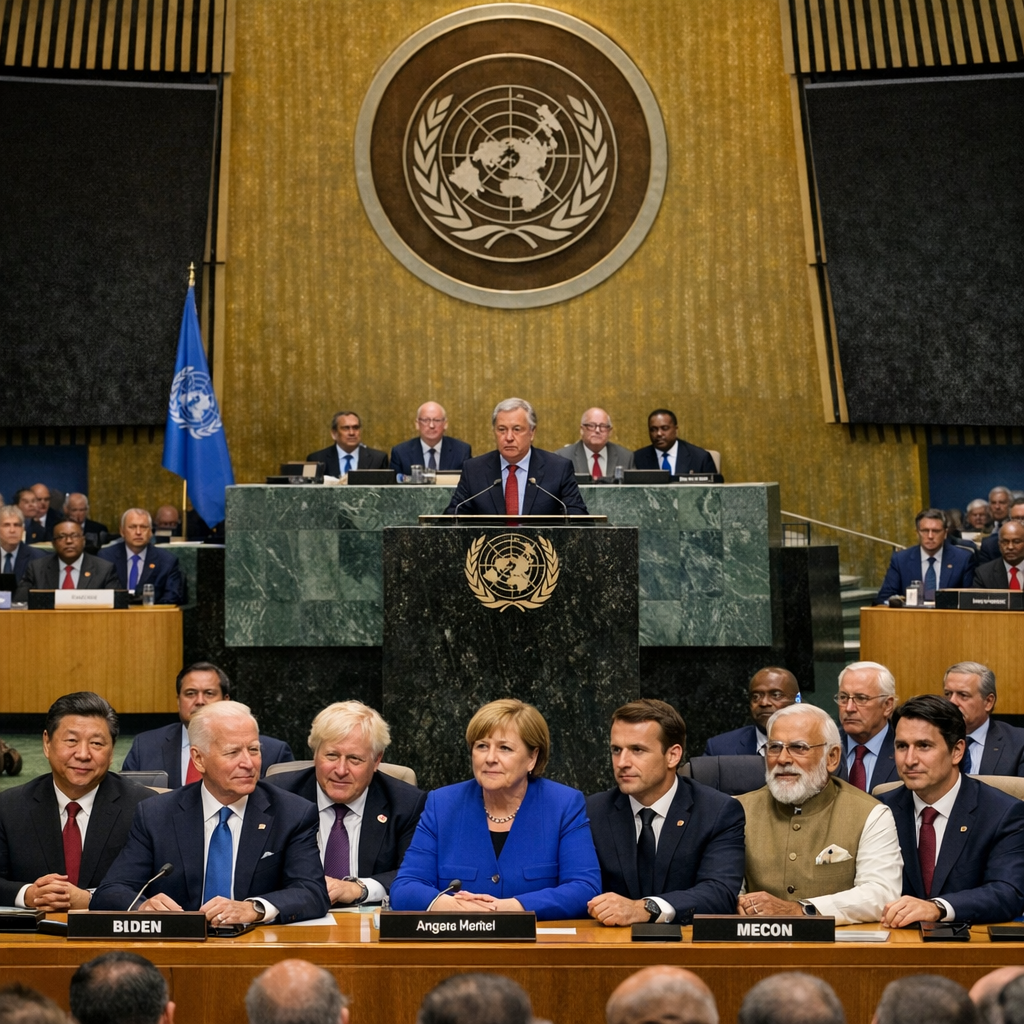
Setting the Stage: The UN Speaks of a Fractured World
At a major gathering in New York, the United Nations has sounded the alarm on the state of global affairs. Secretary-General António Guterres declared that we are living in a time where wars, global inequality, climate emergencies, and rapid technological changes make cooperation more essential—and more difficult—than ever. He appealed to world leaders to build a system based on interdependence, not division. This annual meeting comes at a moment when diplomatic norms are being tested and trust among nations is strained.
Wars Without End: Conflict in Multiple Frontlines
Diplomatic fatigue is visible as the wars in Ukraine and in the Middle East continue, showing little sign of resolution. Efforts to mediate peace have repeatedly faltered, and the human cost keeps climbing. The UN’s latest statements underscore how civilian infrastructure—hospitals, energy systems, schools—is caught in the crossfire, deepening the humanitarian crisis in many regions.
Climate Negotiations at a Dull Moment Before the Storm
Despite growing evidence of climate risks, global climate talks are increasingly gridlocked. At the recent Bonn conference (SB64), parties made progress on establishing a just transition mechanism and initiating steps from the global stocktake process. However, key topics—such as defining climate adaptation indicators or moving forward mitigation programmes—remain unresolved. With COP31 looming, negotiations are under pressure to deliver clarity on these once–divisive issues.
The UAE’s Role: Mediator, Watchdog, and Advocate
From its home base in Dubai and Abu Dhabi, the UAE has increasingly positioned itself as a voice of restraint and diplomacy in regional disturbances. It has criticized attacks on civilian infrastructure as grave violations of international law and called for immediate de-escalation, especially in the Strait of Hormuz and other contested areas. The UAE’s stance reflects not only concern for regional stability but for its own security and economic wellbeing amid growing uncertainty.
What to Watch Going Forward
- Diplomatic breakthroughs or breakdowns: Will leaders offer bold solutions to conflict zones, or will existing tensions deepen?
- Climate deal outcomes: With COP31 ahead, how will countries finally resolve stalemates around adaptation, finance, and mitigation?
- Geopolitical realignment: Emerging blocs like BRICS, shifting alliances, and rising populism may redefine global power—impacting trade, defense, and cooperation.
- UAE’s balancing act: As the UAE navigates between great power politics, economic opportunities, and regional tensions, its leadership will matter—not just locally, but across the Middle East and beyond.
For those of us in Dubai and the UAE, these global stories aren’t distant. They shape our trade, our security, our climate policies—and our sense of hope. In a world at a crossroads, the challenge is clear: transform diplomacy, commitment, and cooperation into action before the next flashpoint ignites the next crisis.