

By Ali Al-Ameri
What Community Looks Like on Social Media vs Reality
Almost every advertisement or tasteful social post about Dubai shows the gloss: sleek towers, bright lights, poolside brunches. It’s an image that attracts people — it’s why many of us came here. But that polish can hide discomfort: that social scenes are often curated, approval is measured in likes, and genuine connection can feel elusive.
I’ve spent thousands of hours in neighbourhood WhatsApp groups, building gym routines, walking in neighbouring parks, stomaching stereotypes — and still wondering: do I truly belong here? Is it possible, in a transient city like this, to feel stable?
The Hidden Cost of Maintaining Appearances
We all see them: posts about the latest restaurant, photos of elegant interiors, successes big and small framed as trophies. But behind many images, there’s the unspoken pressure: high rents, growing bills, visas contingent on work, the cost of sending remittances back home.
I once met someone living on a tight budget who still felt compelled to post updates as if everything is perfect: chipped nails hidden, fatigue ignored, doubts suppressed—all to avoid being judged for somehow failing to measure up to an image of success.
Moments of Authentic Connection
And yet… there are small rebellions against this performative life. I remember blooming friendships formed when a neighbour asked if I needed help in the lift, a baker who knew my favourite bread, the person who literally opens a door when I’m there. It’s during shared patience—traffic, power cuts, long lines—that a simple kindness becomes profound.
WhatsApp groups aren’t just for food recommendations. They become venues for local advice, for communal support during emergencies, for sharing genuine fears. In those moments, words get messy. They reveal pain, hope, and resilience. They build belonging, even if softly.
Toward a more human community
Here’s what I believe helps shift from curated facades to vibrant neighbourhoods where real lives are visible:
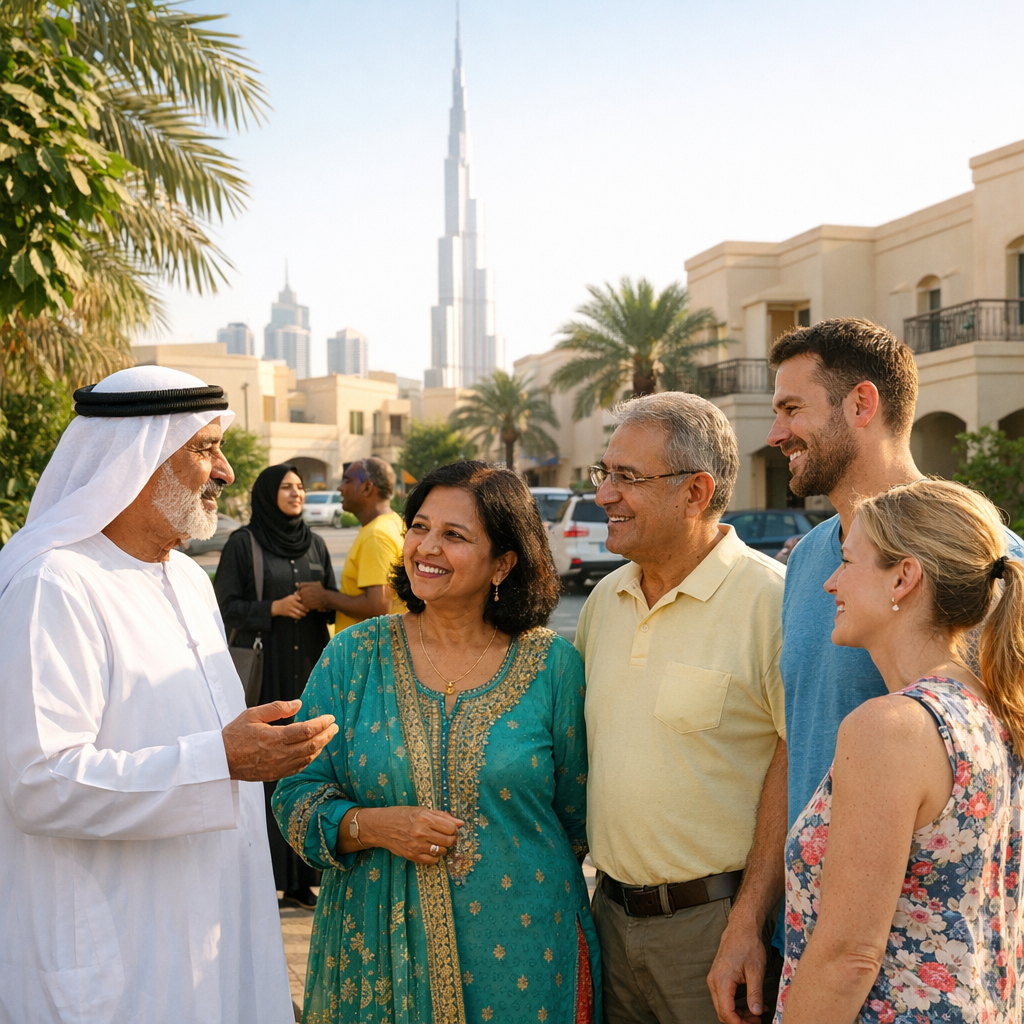
- Embrace vulnerability: say you’re tired. Ask for help. South-Asian, Filipino, Emirati, Arab, Western—all of us carry invisible loads.
- Create small rituals: weekly walks, shared coffee corners, block-parties at compound gardens. These give space for interaction beyond scheduled photo-ops.
- Celebrate difference, not just sameness: appreciate cultural festivals, languages, foods. Not as spectacles, but as rooted parts of people’s identities.
- Support civic platforms: let’s use feedback tools, resident management meetings, suggestion boxes. Let authorities, landlords, neighbours know what actually matters: quiet nights, clean corridors, safe streets.
Dubai is full of possibilities. Its skyline, its energy, its promise — these things offer opportunity. But belonging—true belonging—comes when our cracks show, our voices soften, our stories connect. That is where community—or what I believe community must become—resides.