

By Khalid Al-Qasimi
Two Main Seasons and the Transition Phases
Dubai’s climate follows a simple but intense rhythm. There are primarily two seasons: a mild, mostly dry winter from December through March, and an extremely hot summer stretching from May to September. In between—April–May and October–November—are transitional periods when temperatures rise or fall sharply and humidity shifts noticeably. These change-over weeks can be uncomfortable as the body adapts to extremes of heat or relief.
Typical Temperatures & Rainfall
During summer months, daytime highs often exceed 40 °C (≈104 °F), especially in July and August. Nights, even by the coast, stay warm—often above 30 °C. In winter, daytime highs hover in the mid-20s °C (≈77–80 °F) and nighttime lows can drop to around 15–16 °C outside urban heat-island zones. Rain is rare overall, but most of it falls between December and February, with January usually the wettest month.
Weather Phenomena to Watch
Even within its dry desert environment, Dubai experiences distinct weather events that affect daily life and environment:
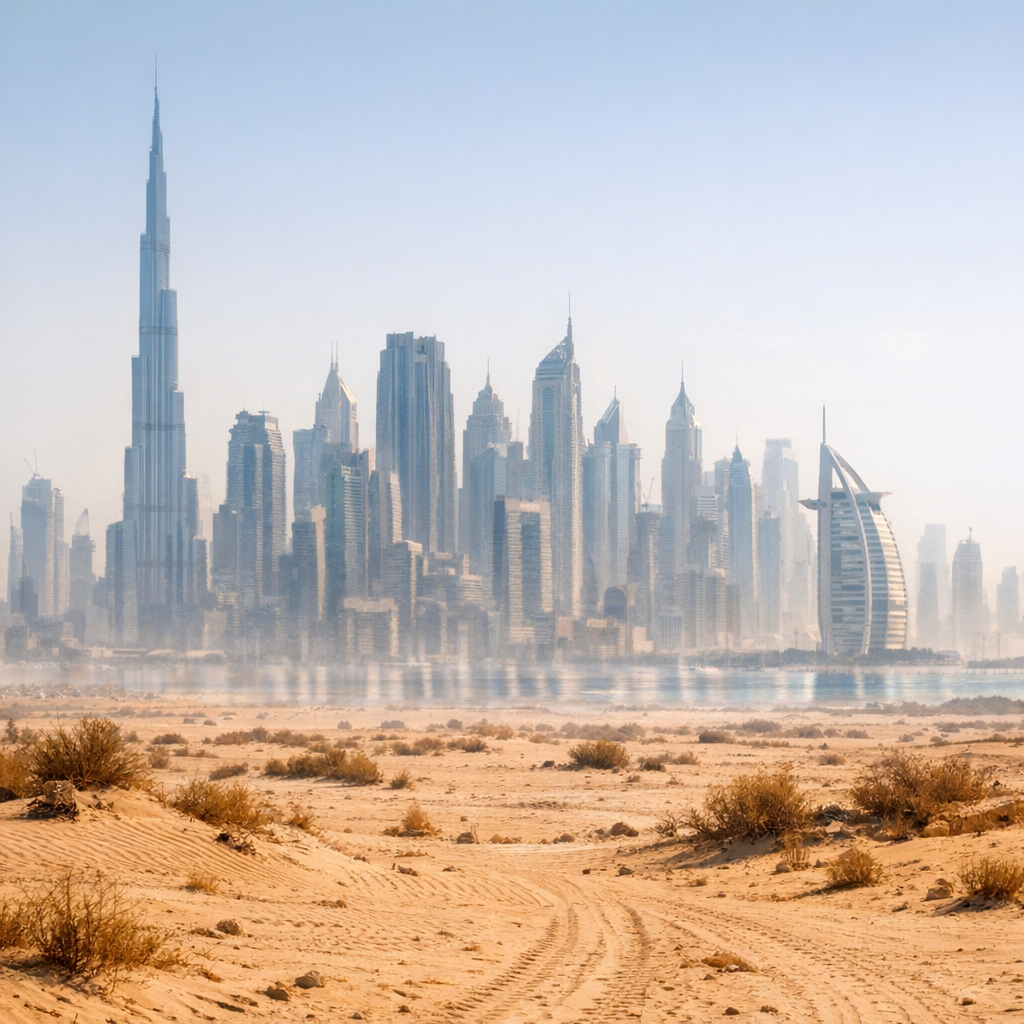
- Dust and sand incursion: Strong northwesterly winds generate periods of reduced visibility and elevated airborne particles. During summer, these storms are more frequent and exacerbate air-pollution concerns.
- Humidity spikes: Coastal humidity can push perceived heat well beyond actual temperatures, especially during summer nights. When coupled with calm winds, it can make outdoor conditions oppressive.
- Winter rain & rare severe events: Though overall rainfall is low, winter showers and occasional thunderstorms occur. Extreme flooding has been an issue during sudden intense downpours—highlighting gaps in urban drainage.
Signs of Environmental Stress
Dubai doesn’t just weather harsh heat—it’s also facing environmental challenges:
- Rising sea and air temperatures: The waters of the Arabian Gulf are warming. Marine heatwaves affect marine life and can further increase humidity and local air temperatures.
- Desertification and water scarcity: The natural aridity is becoming more severe in some areas. The pressures on water supplies intensify during summer and in transitional seasons when evaporation is high and rainfall almost nil.
- Urban heat island effect: Dubai’s built environment absorbs and re-radiates heat. Nights in densely built central areas remain significantly warmer than outskirts, offering little respite. Green space, shading, and reflective surfaces are crucial for cooling.
What Locals Can Do
Managing comfort and safety in this climate requires both personal vigilance and community planning:
- Plan outdoor activities during winter or transitional hours (early morning or evenings in summer).
- Monitor air quality before prolonged outdoor exposure—dust episodes and humidity can spike health risks.
- Support and use green infrastructure—shade trees, cool pavements, parks—to reduce ambient urban heat.
- Conserve water, especially in summer; use efficient appliances, fix leaks, and respect shared resources.
- Stay aware of weather alerts during thunderstorm or flooding seasons; ensure drainage paths are clear in your area.
Looking Ahead: Adaptation and Environmental Planning
Dubai’s climate rhythms are well known but evolving. Rising global temperatures, changing wind patterns, sea level pressures, and urban growth all contribute to new challenges. Long-term adaptation—through improved infrastructure, resilient landscaping, sustainable water management, and heat-resistant urban design—will be essential to maintaining comfort, health, and environmental integrity.