

By Khalid Al-Qasimi
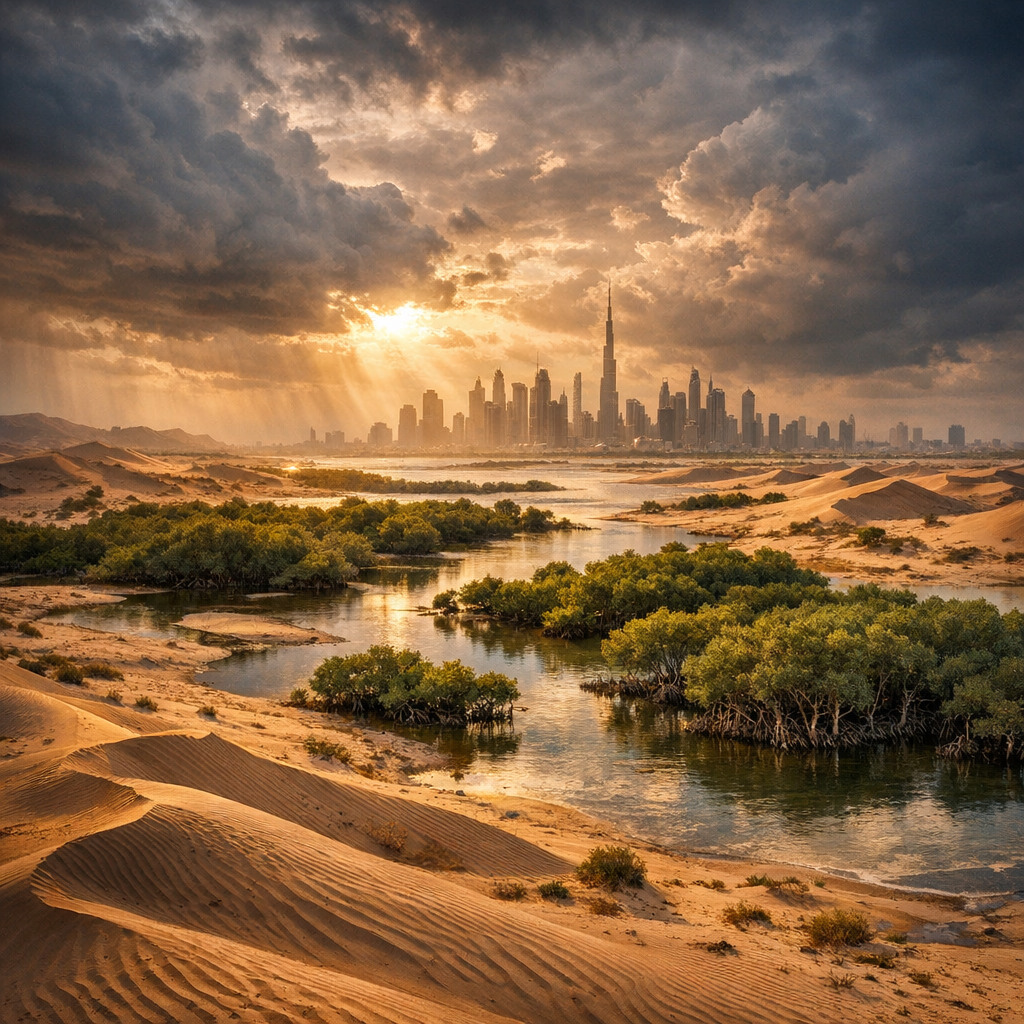
Dubai’s environment is defined by its desert climate, coastal setting, and increasingly by the impacts of climate change. Understanding these climate norms—and the natural areas that thrive between asphalt and sand—helps make sense of the weather shifts we experience, and the conservation work that preserves what might be lost.
Seasonal Climate Patterns
Dubai has two core seasons: a hot, humid summer that stretches from June through September, and a cooler winter from December through March, joined by brief transitional periods in between. During summer months, daytime highs frequently exceed 40 °C, while nights remain warm, especially near the coast. Winters are milder—in daytime highs of around 25 °C and cooler nights, sometimes dipping into the low teens in desert areas. Rainfall is rare and occurs mainly in winter months, typically as short, intense downpours rather than prolonged storms.
Emerging Weather Trends
One recent concern is the delay of cooling transitions: autumn often remains heat-trapped longer than expected, with high humidity making it feel warmer well into October. In contrast, winter’s arrival is relatively sharp, bringing cooler evenings and occasional rain. Climate-science reports show rising average temperatures and noticeable changes in rainfall timing, suggesting that traditional weather patterns may be shifting.
Alongside temperature shifts, air quality is a year-round concern. Dubai has developed the National Air Quality Agenda 2031 and operates a Smart Integrated System that monitors pollutants like nitrogen dioxide, particulate matter, sulfur dioxide, and ground-level ozone. Days with high humidity, dust, and still air often see spikes in pollution levels, with implications for public health.
Natural Ecosystems & Protected Areas
Dubai is home to eight protected natural reserves, covering some 31 % of the emirate’s land. These reserves include mountain, desert, coastal, wetland, and mangrove ecosystems. They are essential not only for conserving biodiversity but also for services like flood mitigation, carbon storage, and coastal protection.
Mangrove forests, especially those in Ras Al Khor and Jabal Ali sanctuaries, are strong indicators of ecosystem health. Recent surveys show that mangrove trees—such as the Grey Mangrove (Avicennia marina)—are well established in many parts. Aquatic wildlife, including endangered sea turtles, coral reefs, and seagrass beds, continues to be monitored closely. Initiatives like artificial osprey nesting platforms, wildlife tracking, and water quality sampling form a growing body of conservation work.
Challenges & What We Can Do
Climate change amplifies extreme heat and can intensify rain when it comes—sometimes leading to flash floods and infrastructure strain. Sea-level rise, warmer ocean temperatures, and desertification threaten coastal and marine ecosystems. Urban expansion and resource demand can stress water supply, air quality, and soil health.
On the positive side, Dubai is evolving its environmental governance. Laws protect wildlife sanctuaries, wetlands, and marine habitats. Restoration programs replant mangroves, track vulnerable creatures, and engage communities in citizen science. Awareness of air quality limits or excess heat warnings, and investments in green infrastructure, can help people adapt day by day.
Everyday Tips for Resilience
- Check local air quality indices and avoid strenuous outdoor activity during high pollution or heat stress.
- Seek shade, hydration, and breathable clothing during the summer months.
- Support or visit protected areas—responsible nature walks or bird-watching help awareness.
- Reduce waste and water use to ease pressure on local ecosystems.
Dubai’s weather and natural environment aren’t static—they are patterns still in flux, shaped by history, geography, and now global climate dynamics. But through science, policy, and everyday action, there’s an opportunity to protect what defines the emirate—and what sustains it—for years to come.