

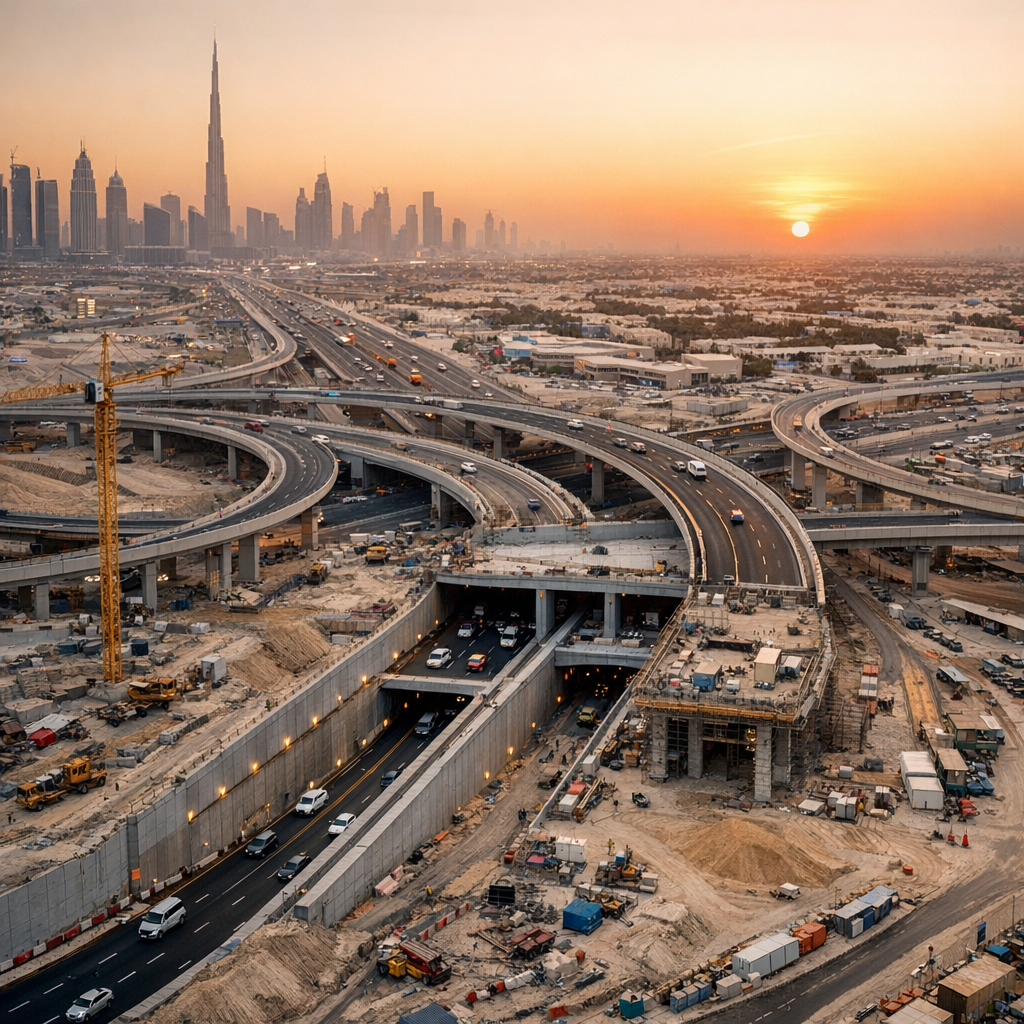
Dubai’s Roads and Transport Authority (RTA) has awarded a AED2 billion contract to build the Latifa bint Hamdan Corridor, a major east-west road spanning roughly 12 kilometres. The new project is set to improve traffic flow between Sheikh Zayed Road, Al Khail Road, Sheikh Mohammed bin Zayed Road, Emirates Road and other key arteries.
What the project includes
The corridor will feature seven bridges extending 2,300 metres and eight tunnels covering 900 metres, along with an extension of Latifa bint Hamdan Street to four lanes in each direction, and new loop ramps and interchanges. Its design anticipates a capacity of around 16,000 vehicles per hour each way, serving more than 130,000 trips daily.
Expected benefits for residents and commuters
One of the most striking improvements will be travel-time reductions: the corridor is projected to cut the trip between Umm Al Sheif Street and Emirates Road from 33 minutes to about 15 minutes—a nearly 54% reduction. It will also serve both existing and future residential and development areas such as Nad Al Sheba, Dubai Hills, District One, Living Legends, Majan and Global Village.
Alignment with Dubai’s wider planning goals
This infrastructure undertaking supports broader urban development strategies, including Dubai’s 2040 Urban Master Plan and Economic Agenda D33, by promoting connectivity, sustainable mobility and improved quality of life. It also incorporates plans for cycling tracks—12.5 kilometres that will link with existing routes from Al Qudra to Jumeirah.
When it’s coming and what to expect along the way
The Latifa bint Hamdan Corridor project is expected to be completed by the end of 2028. During construction, traffic disruptions are likely in adjacent areas and on some connecting roads. Residents are advised to monitor RTA updates and allow extra travel time where routes overlap with construction zones. Once finished, it should significantly ease congestion, especially during peak hours.