

By Khalid Al-Qasimi
Weather & Environment Beat
Dubai’s Seasonal Shifts: More Than Just Heat and Sun
Dubai’s climate is classified as hot desert (Köppen BWh). There are two main seasons—summer and winter—separated by two transitional periods in spring (March-April) and autumn (October-November), when temperatures and weather conditions shift noticeably. Coastal humidity is higher and nights are milder along the Gulf shoreline; inland areas and deserts experience much larger swings in temperature. Spring and autumn are relatively brief, but essential for planning outdoor activities.
Typical summer highs reach 40-45 °C; winter daytime highs hover around 24-26 °C, with cooler nights especially away from the coast. Rainfall is rare and concentrated mainly in winter months.
Fog, Rain, and Sudden Storms: Nature’s Extras on the Schedule
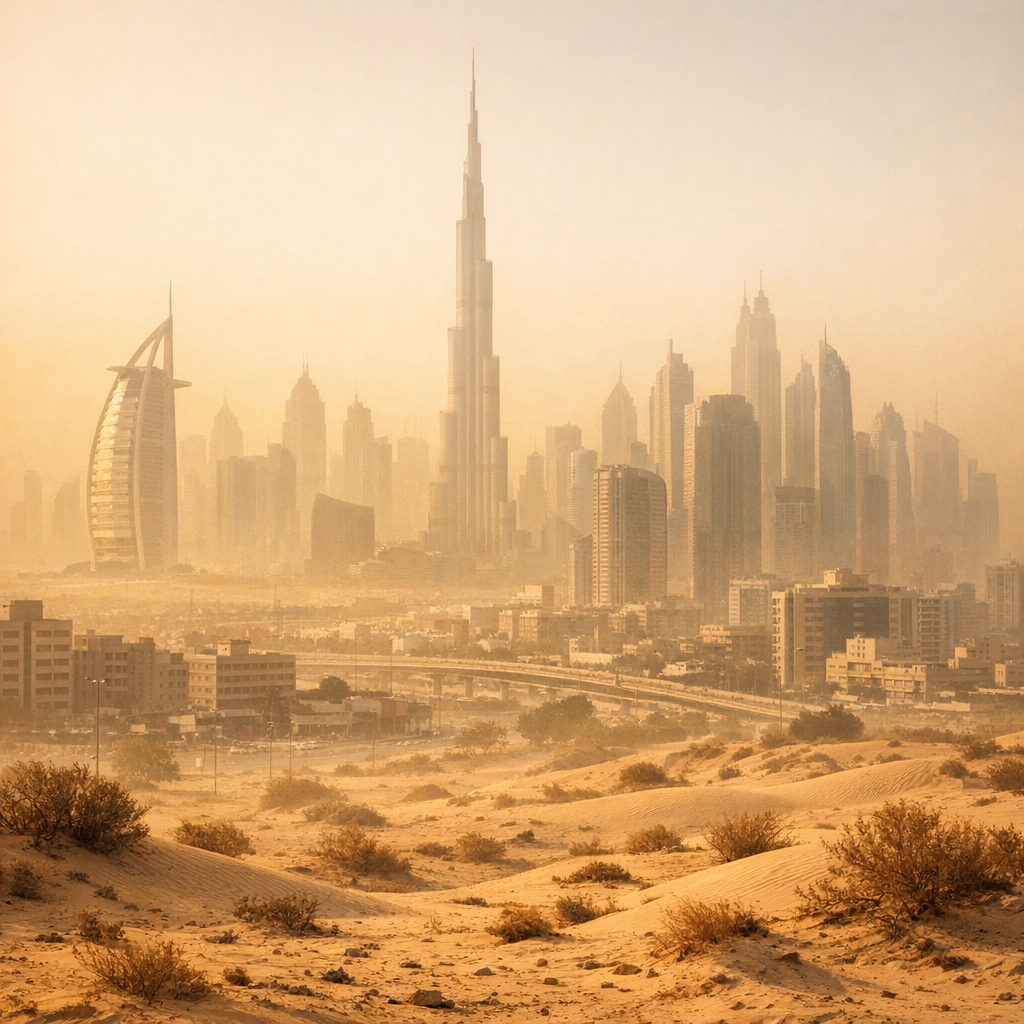
Despite the arid setting, Dubai sees frequent fog from mid-December through March. Fog forms under calm conditions, clear skies, and when there’s dust or sand in the air—each element helping water vapour condense. On average, there are over 130 fog or mist days annually.
Rainfall is scattered but can be intense. Most rainfall happens in winter. Occasionally thunderstorm downpours sweep through, sometimes catching infrastructure off-guard. Coastal zones record less rain than mountainous or interior areas. Summer rain along the coast is rare but not impossible—convective storms sometimes grow and unleash short bursts.
Heat, Humidity, and Human Comfort
Summer is more than high temperatures: the combination of heat and humidity, particularly along the shoreline, amplifies discomfort. Overnight lows remain high, often above 30 °C during peak summer months. The “feels-like” temperature, or heat index, can be much higher than the air temperature suggests.
In contrast, winter nights offer relief. While inland deserts may drop into single digits, along the city and coast nights tend to stay above 14-18 °C, making evenings pleasant. Winters attract most visitors and are often considered Dubai’s most livable period.
Air Quality and Environmental Stressors
Air quality remains an ongoing concern. Dust and sand storms, emissions from traffic and industry, and high humidity trapping pollutants all contribute. The UAE has set out a National Air Quality Agenda 2031, with goals including reducing annual PM₂.₅ to meet stricter health thresholds and achieving more “clean air days”. Real-time monitoring and smart emissions tracking are part of that strategy.
Climate change adds pressure. Rising average temperatures, more extreme heat days, and rare but more severe rainfall events—like those causing flooding—point to shifting risks. Planning for resilience in infrastructure, water systems, and public health is increasingly important.
What Residents Should Keep in Mind
- Watch the transitions: late April to May and October to November bring rapid changes—storms, heat, sometimes fog.
- Humidity matters: even if the shade feels bearable, high moisture makes it feel hotter, especially near sea level.
- Fog and poor air can reduce visibility—morning travel during winter may require extra caution.
- Keep track of air quality alerts, especially if you have asthma or other respiratory sensitivity.
- Support sustainability actions—green spaces, emissions reduction—in everyday life, because long-term shifts depend on collective effort.
Dubai’s weather isn’t just about brutal summer sun; it’s about how patterns shift, how extremes arrive unexpectedly, and how our environment and planning must adapt. Paying attention to the seasonal rhythms, environmental pressures, and health risks gives us tools to live more comfortably in this desert climate.
— Khalid Al-Qasimi