

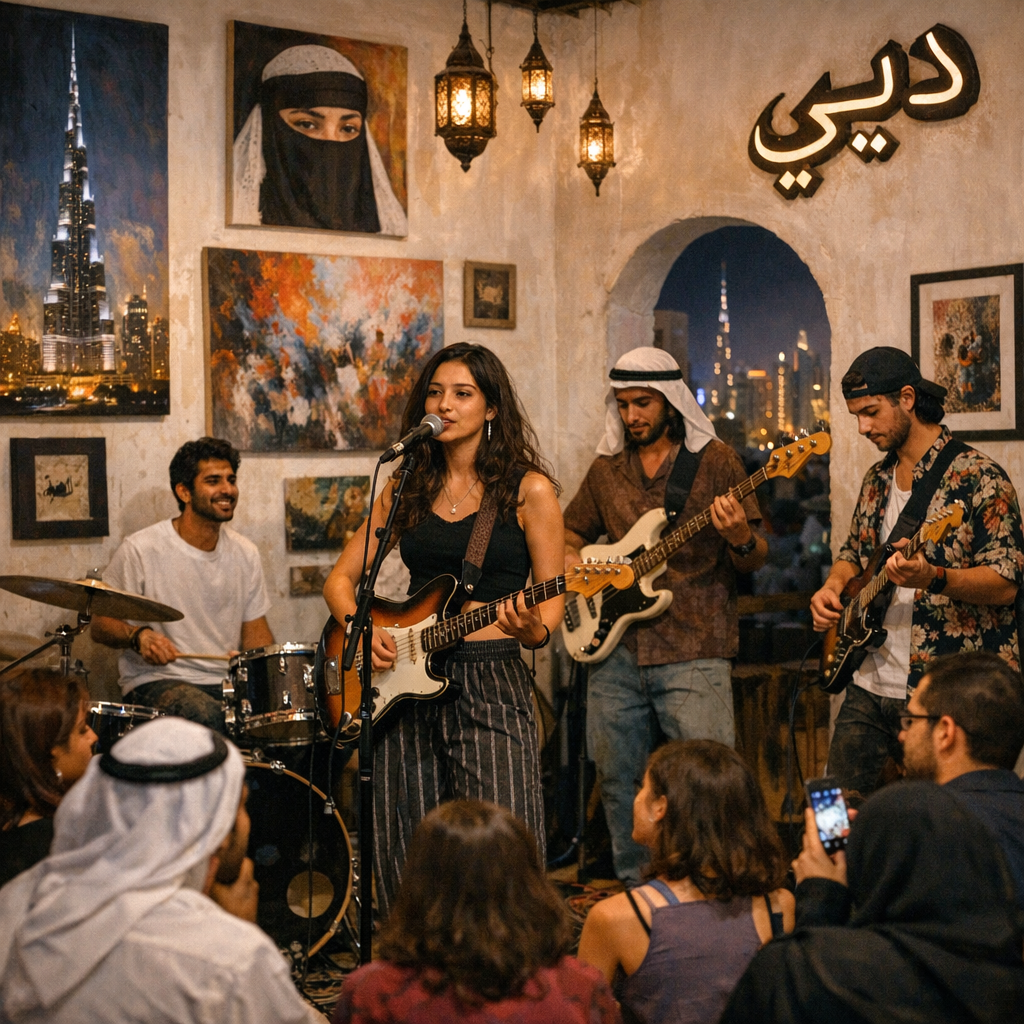
Dubai’s arts and culture scene has entered a dynamic stage. Once dominated by large-scale festivals and tourism-facing events, an undercurrent of experimentation is now shaping music, galleries and cultural festivals. Both public institutions and independent voices are contributing to a more layered and accessible creative ecosystem.
Local music: beyond big names
While big venues and headline concerts remain prominent, there’s a growing movement of live performance in intimate spaces. Small shows at creative hubs like Alserkal Avenue, the DIFC, and pop-ups by independent producers offer platforms for emerging artists across genres. Whether it’s alt-electronic, experimental fusion or traditional Arabic-influenced sound, performers are increasingly finding ways to connect directly with community audiences.
Art for everyone: galleries, walks & installations
Art galleries are no longer confined to white cubes. Alserkal Avenue, Jameel Arts Centre, and gallery programs in DIFC are placing interactive installations and public art where people live, work and relax. Meanwhile, initiatives like Dubai Collection Nights bring works from private collections into public view through exhibitions, talks and workshops, letting visitors explore art in social hubs like libraries, studios and open spaces.
Why festivals and fairs still matter
Festivals like Art Dubai and World Art Dubai serve as vital anchor points—bringing together galleries, collectors, talks and site-specific projects. These events draw international attention, spark conversations across cultures, and showcase ambitious public art and digital work. They also help nurture local talent through commissions, young artist prizes, and learning programmes.
Challenges & opportunities
Access remains uneven. While many events are free or affordable, costs—for venues, production, licensing—still limit what independent creators can do. On the other hand, new regulations (such as licensing requirements for publicly played music) are shaping how cafes, galleries and small venues operate. Keeping the momentum alive will depend on fair access to resources, visibility, and support for those often outside the big spotlight.
Looking ahead: sustaining the pulse
For Dubai’s cultural scene to grow richer, space—both physical and social—matters. Emerging artists need performance venues, affordable studios, curation networks, and platforms for experimentation. Collaborations between government, private sector and creatives can open doors for new work, support innovation, and ensure a diversity of voices. Every mural, small concert or gallery opening adds to a mosaic of expression defining Dubai today.
By embracing both grand spectacles and understated local moments, Dubai is becoming more than a global event centre—it’s a place where stories, sound, and art thrive in daily life.