

By Layla Al-Mansoori
Understanding climate-induced migration
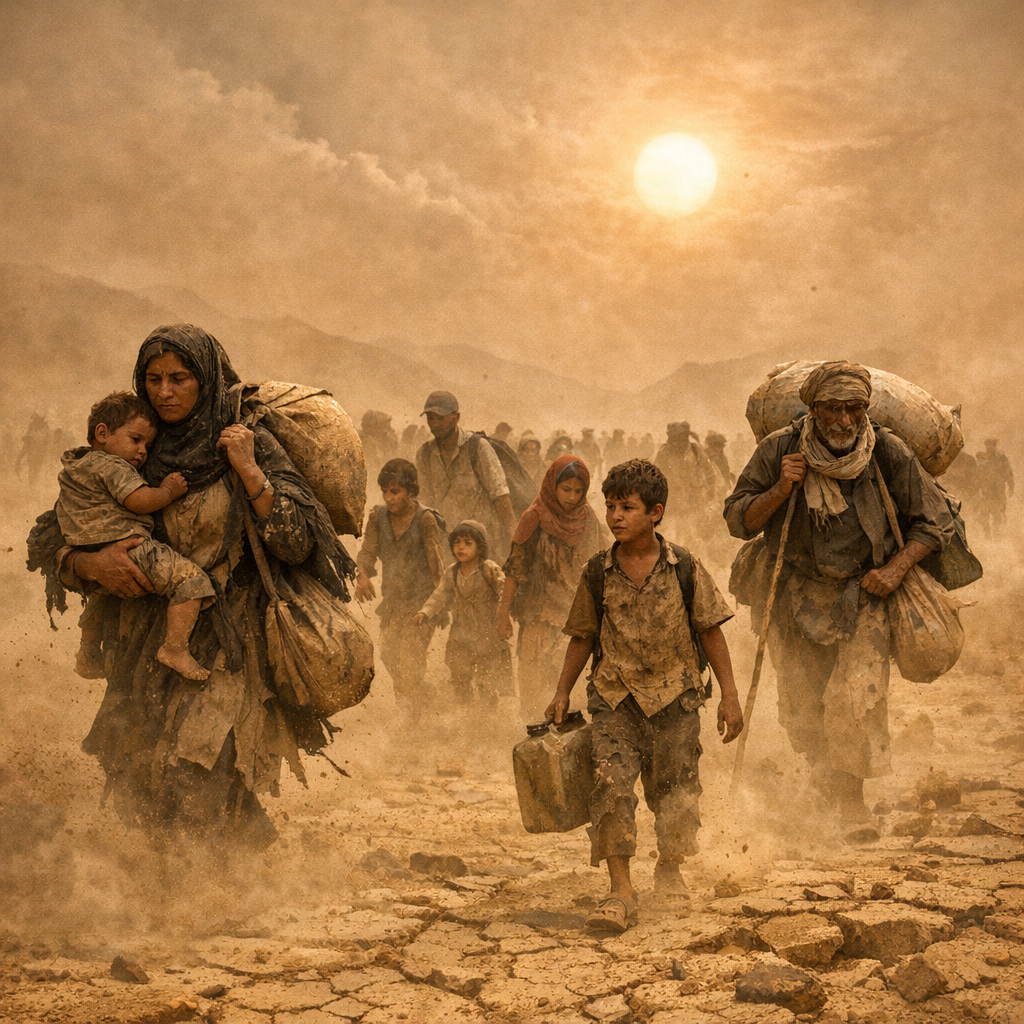
Climate migration refers to people relocating because of environmental changes—whether sudden disasters like hurricanes or gradual ones such as rising temperatures, sea-level rise, or drought. Most movement remains within national borders. Migration is usually internal, frequent, and often temporary. Yet slow-onset climate shifts could push more people to cross borders permanently.
How many people and where?
Scientists estimate that by 2050, tens to hundreds of millions could be affected by climate change to the point of displacement in the Global South if mitigation and adaptation aren’t improved. “Hotspots” include regions prone to water scarcity, rising seas, or recurrent extreme weather—often among poorer countries with limited infrastructure.
Challenges faced by those on the move
Many displaced people do not receive legal status as “climate refugees.” International frameworks like the 1951 Refugee Convention don’t recognize environmental factors as grounds for asylum. This gap fuels vulnerability and uncertainty for those forced to move. Dynamic pressures—economic hardship, political instability, lack of access to land or water—often interplay with climate, making it hard to define who qualifies for protection.
The burden of staying versus leaving
Not everyone can move. Some people are «trapped»—remaining in high-risk zones due to poverty, disability, age, or lack of resources. Staying in place can be more dangerous as environmental threats intensify. Conversely, migration can carry costs: loss of livelihood or cultural belonging, irregular migration risks, and social tensions in destination areas. Solutions must balance rights to stay with support for those who move.
Global responsibilities and policy pathways
Addressing climate migration requires coordinated effort—from local resilience to global cooperation.
- Adaptation and mitigation: Efforts to reduce carbon emissions and build climate-resilient infrastructure are fundamental. Without strong mitigation, climate impacts will grow, pushing more people toward migration.
- Legal frameworks: International law needs to evolve to recognise climate pressures as valid reasons for protection or humanitarian support. Regional definitions and visas could help fill gaps.
- Inclusive urban planning: As many migrants move toward cities, better housing, basic services, and integration policies are essential. Cities will face pressure from rapid growth if migrants arrive in large numbers.
- Risk-informed development aid: Funding should target climate-vulnerable communities, focusing on prevention, early warning, and support for those who stay and those who move. North-South cooperation in finance and technical support matters.
Conclusion: Shared future, shared action
Climate migration is not a distant possibility—it is already reshaping lives across continents. While the number of people forced to move will likely grow, so will the pressures on law, policy, and human dignity. The world must strengthen protection, build resilient communities, and ensure that mobility is a choice, not a desperate measure. Only then can global progress truly include those whose lands are sinking, whose crops are failing, and whose future is at climate’s mercy.