

By Layla Al-Mansoori
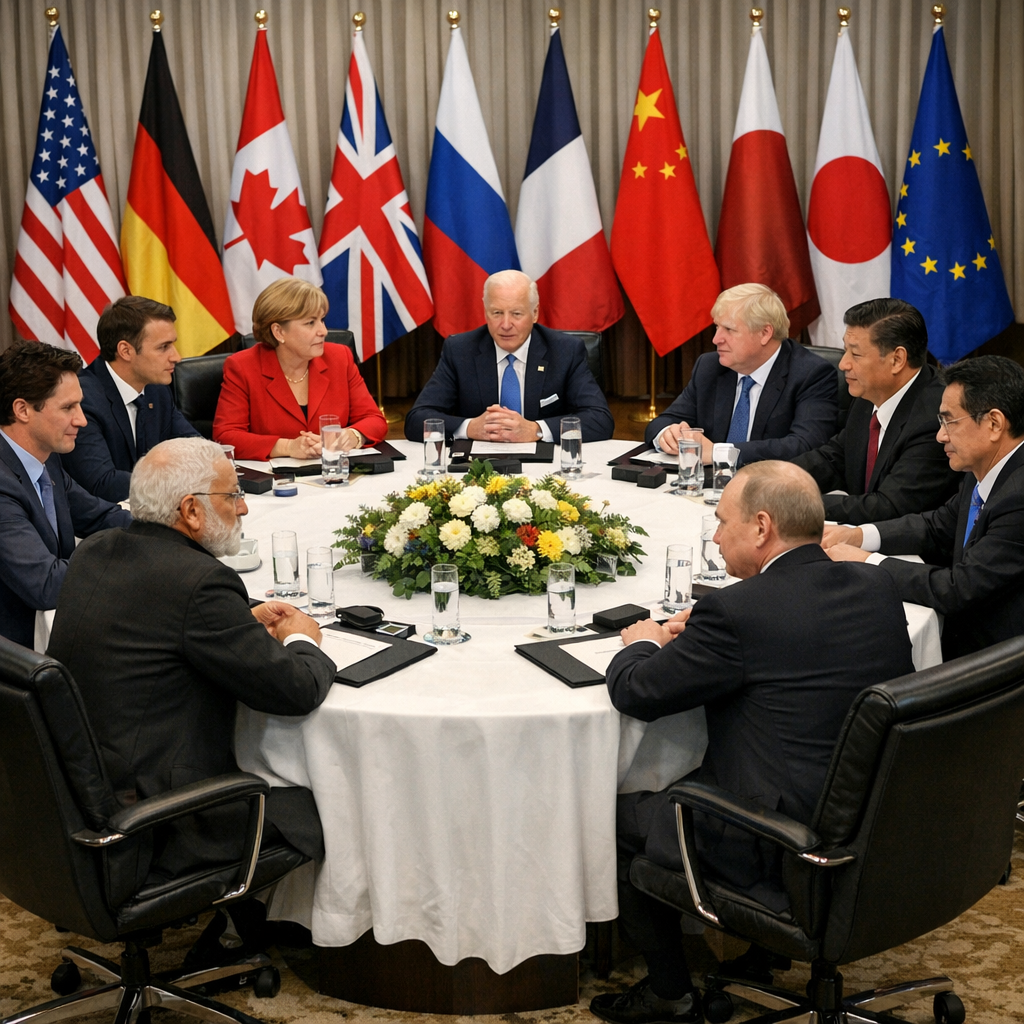
In recent years, three interwoven global themes have reshaped how nations interact: shifting trade patterns driven by geopolitical tensions; accelerating climate crises demanding strong multilateral action; and unprecedented levels of displacement affecting tens of millions worldwide. Here in Dubai—where global commerce, environmental innovation, and humanitarian cooperation are part of daily life—these trends hit close to home.
Trade in a Multipolar World
The multilateral trading system, once grounded in clear rules and predictability, is under strain. Institutions like the World Trade Organization (WTO) are being challenged by rising barriers, export controls, and a growing sense among states that existing trade rules no longer reflect the realities of supply chains reshaped by digitalization and new geopolitical alignments. One report warns that without reforms, trade blocs may fragment, weakening global growth and hurting smaller economies most. Meanwhile, tensions between major players—particularly the US and China—continue to ripple through the global economy, prompting companies to reconsider where and how they source materials and sell products. This includes regions like the Gulf where trade with both East and West is essential.
Climate Action and the Push for Just Transition
As climate impacts intensify—from resurging heat waves and sea level rise to shifting rainfall patterns—expectations are growing for governments to turn climate pledges into concrete, rapid action. At recent UN climate summits and meetings, world leaders called for scaled-up clean energy investment, greater access to climate finance, and policies that protect vulnerable communities in the transition to low-carbon economies. For the UAE, a nation already investing in renewables and hosting global climate forums, these conversations are familiar—and central to balancing growth, energy security, and environmental responsibility.
Forced Displacement at Record Levels
The number of people forcibly displaced by conflict, persecution, or environmental disaster has surpassed 120 million globally. Conflicts in Sudan, Ukraine, Afghanistan and elsewhere continue to generate large flows both of refugees fleeing abroad and of internally displaced persons within their home countries. Displacement often lasts years, with many unable to return even when conflicts end. Protection systems are stretched thin, and questions are rising about how the international community can both uphold refugee rights and share responsibilities more equitably.
What Cooperation Looks Like Moving Forward
These global challenges demand collaboration rather than competition. For trade, that means updating international rules to accommodate digital trade, clean energy goods, and supply chain resilience—all while protecting smaller nations. On climate, strong partnerships are needed to deliver finance, technology transfer, and adaptation resources. For displacement, it will take shared responsibility: humanitarian support, durable solutions, and policies that recognize the dignity and rights of refugees and displaced persons.
Dubai—and the wider UAE—sits at a pivotal intersection of these global currents. With its strategic trade links, efforts in clean energy, and role as a hub for humanitarian aid, the region has the chance to both witness and contribute to solutions. In a world where boundaries are shifting, cooperation isn’t optional—it’s essential.