

By Khalid Al-Qasimi
The Two Main Seasons (& Why They Feel So Different)
Dubai’s climate isn’t neatly split into four seasons as many other places experience. Instead, residents know two primary regimes: a long, intense summer from roughly May through September; and a milder, dry winter from November to March. April and October act as brief transition months where the city shifts from one regime to the other. Temperatures during summer often soar past 40 °C, while winter days range more comfortably between 20–30 °C. Near-coastal humidity rises during summer, making the heat feel heavier.
These patterns are shaped by Dubai’s desert landscape and its proximity to the warm waters of the Arabian Gulf. Moisture evaporates from the sea and raises overnight humidity; dust and heat combine in daytime to push what the thermometer says and what you feel far apart.
How Humidity Builds Without Rain
Warm Gulf waters are a major source of moisture. However, despite high humidity levels—often 60–90% along the coast through summer—rain can still be rare. That’s because the atmosphere must reach saturation for rainfall, which does not always happen even with thick humidity.
Colder nights don’t hold as much moisture, so even if the amount of water vapour in the air remains steady, relative humidity can spike after sunset. When temperatures dip near dew point, fog and dew become common.
Dust, Air Quality, and Climate Change Trends
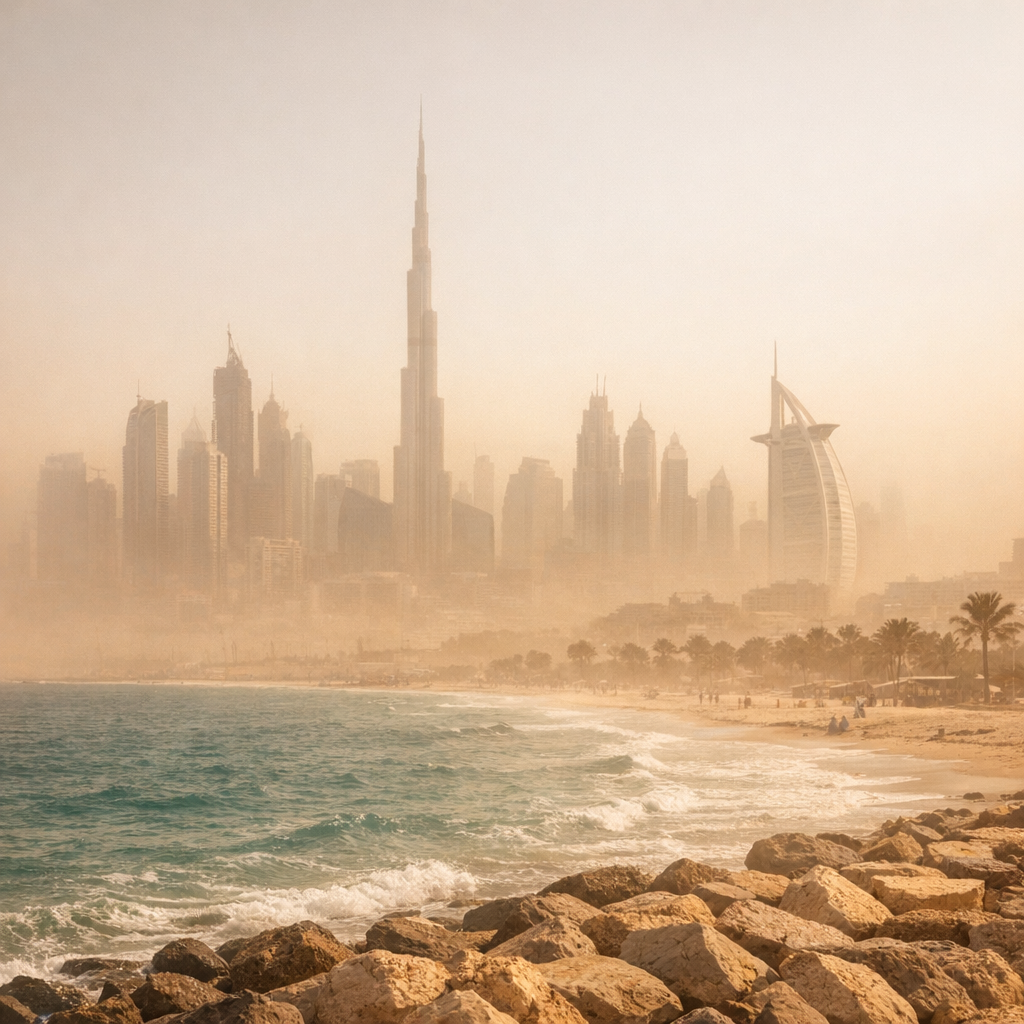
Dust storms are a recurring feature in summer, stirred up by heat, dry terrain, and shifting wind patterns. These storms not only reduce visibility but also worsen air quality and can trigger respiratory discomfort. Dubai and the UAE monitor particulate matter (especially PM10 and PM2.5) through the national AQI system for public awareness.
At the same time, climate change is nudging the city’s weather cycles in subtle but noticeable ways. Spring highs now feel more like early summer, and autumn cooling is stretching longer—September and October still carry summer’s heat and humidity. Winters are warming, overnight lows are higher, and the difference between summer and winter is less sharp.
What This Means for Daily Life
- Take advantage of outdoor time during the cooler months (November-March). Evenings and mornings are safer and more comfortable, especially away from sealed coastlines.
- In summer, mornings and late afternoons are more bearable; midday and early afternoon are harshest. Shade, hydration, and cooled indoor spaces are essential.
- Avoid intense outdoor activity during dust storms. Keep tabs on the AQI via official platforms, especially if you have asthma or other respiratory sensitivities.
- Expect gradual shifts in seasonal routines: school calendars, outdoor event planning, and health advisories may adapt as weather patterns change over time.