

By Khalid Al-Qasimi
Dubai’s climate is one of the most extreme in the world, combining intense heat, low rainfall, and rapidly changing seasonal patterns. Whether you’re a long‐time resident or a recent arrival, understanding these shifts can help you stay comfortable, safe, and mindful of environmental impact.
Climate Basics: Temperature, Rain, and Humidity
Dubai has a hot desert climate (Köppen BWh). Summers last from roughly May through September and feature daytime highs that often exceed 40 °C, especially in July and August, with nights remaining above 30 °C by the coast. Winters (December through February) are much milder, with daytime highs near 24 °C and lows that can dip into the teens. Rainfall is rare—most of it occurs between November and March, with February typically being the wettest month.
Humidity becomes a major factor during summer, especially near the Persian Gulf. Even when daytime temperatures are scorching, high humidity makes the air feel heavier and can raise the heat index considerably.
Seasonal Transitions & Subtle Signals
Unlike places with four distinct seasons, Dubai’s seasonal change is gradual. Meteorologically, summer is defined from June 1 to August 31, but the most intense heat starts to ease well into September—even before astronomical summer ends.
One traditional marker, locally known as the appearance of Suhail, appears around late August and signals the first observable change: cooler soil temperatures, dew formation in early mornings, slightly milder evenings, and rising vegetation response.
The Dust, the Rain, and the Rising Stakes
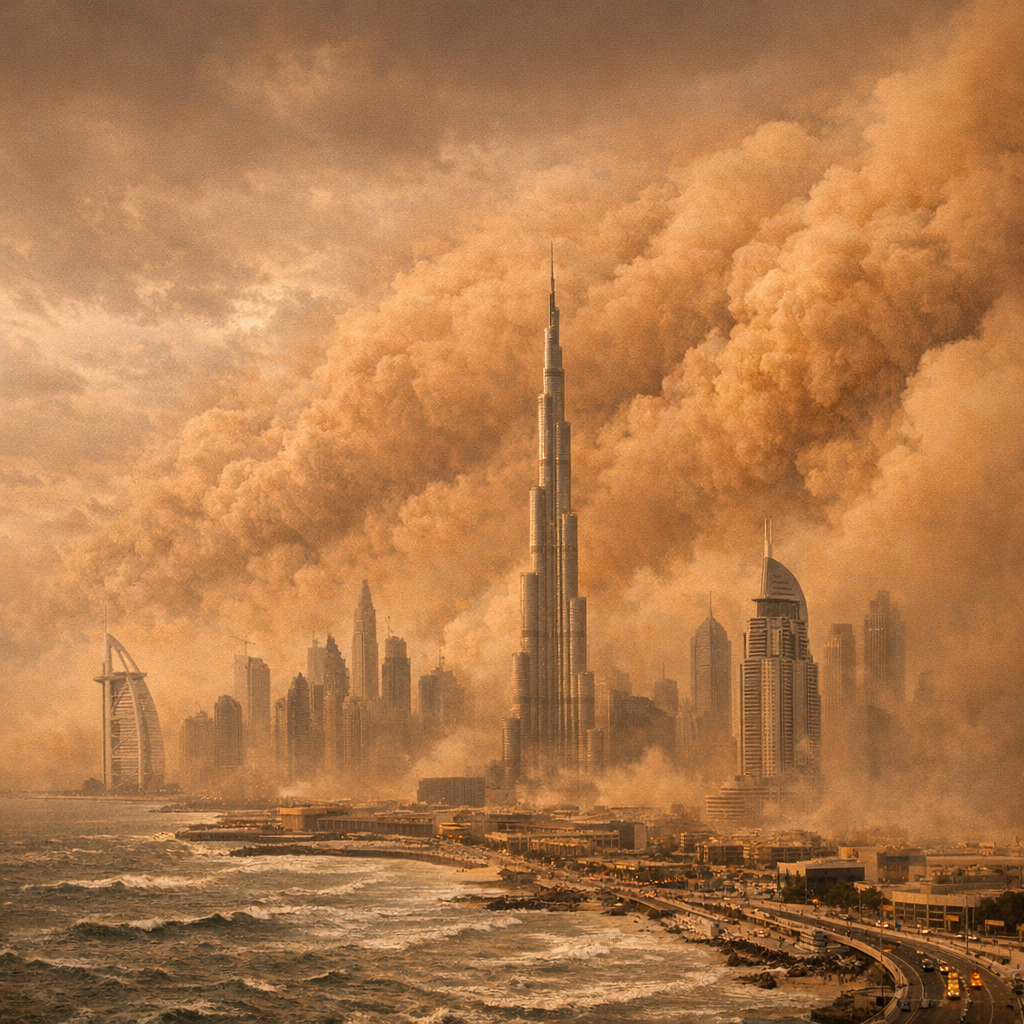
Dubai experiences frequent dust storms and episodes, especially in the winter and mild transition periods (March–April, also late autumn). These are driven by dry winds and changes in wind direction, particularly from the southwest. These storms reduce visibility, increase health risks, and impact travel.
While rainfall is usually light and short‐lived, sudden downpours and floods are becoming more frequent. Rising sea levels and infrastructure challenges make the city more vulnerable to intense storms—a concern echoed in recent climate studies.
Environmental Pressures & What Residents Can Do
Dubai’s rapid urban growth, reliance on air conditioning, and limited water resources are putting pressure on the environment. Increasing temperatures and changing precipitation patterns worsen water scarcity, affect public health, and threaten green spaces, wildlife corridors, and coastal areas.
Simple actions can help: minimizing outdoor exposure during dust storms, conserving water at home, using energy-efficient cooling, and supporting green urban landscaping—trees, plants, and shaded areas help by cooling the microclimate and reducing sharp urban heat islands. Awareness of air quality alerts—especially for vulnerable groups—is also critical.
Tips for Weather & Environment Resilience
- Check daily air quality indices and avoid strenuous activity when levels are poor.
- Adapt your schedule: early mornings and evenings tend to be cooler.
- Choose indoor activities when heat or humidity peaks.
- Plant and support native species—drought-tolerant greenery can reduce heat near homes.
- Stay updated on Dubai and UAE environmental policies and initiatives.
Living in Dubai means adapting to its extremes—but also becoming part of a resilient future. The patterns of weather and environment may shift, but our awareness and actions can make a difference.