

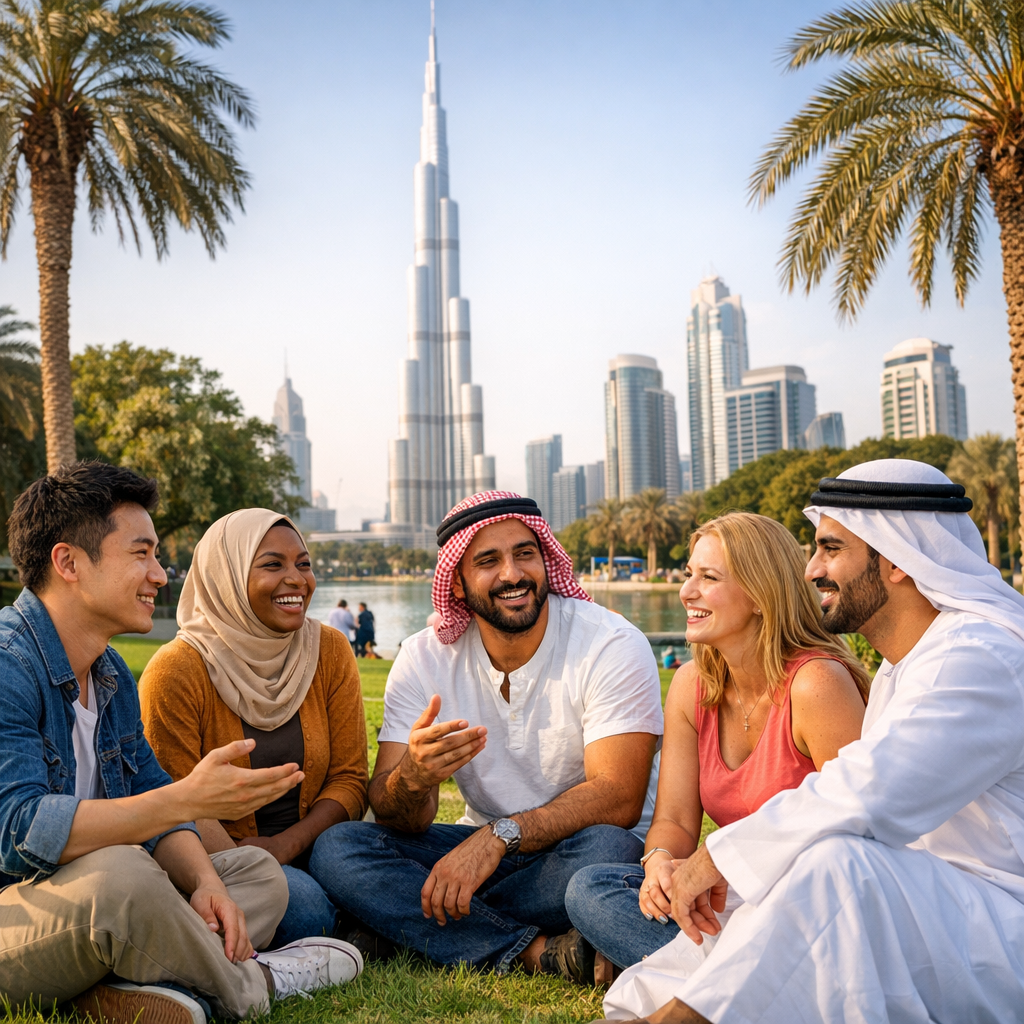
Dubai is often praised as a melting pot of cultures, a place where people from all over the world live, work, and raise families. Yet for many, something essential is still missing: a sense of belonging that feels real. I’ve lived here for several years now, and although I’m grateful for the opportunities, I often wonder why it’s easier to live alongside people who share your background than to truly connect across cultural lines.
Expat bubbles: A double-edged comfort
One of the first things newcomers notice is how insulated these ‘community bubbles’ can be. Nationality, language, religion, even cuisine often determine who we spend time with. On one hand, finding comfort among people who understand your story is natural. On the other, it can limit exposure to other lives.
Research has shown that expats in Dubai tend to form clusters around shared backgrounds—Western expats separate from South Asians or Southeast Asians, Arab expats forming another group, with limited mixing among them or with Emiratis. These divisions are reinforced by language, social circles, and even neighbourhoods. There are real consequences beyond feeling unseen: less opportunity to challenge assumptions, reduced cultural sensitivity, and a slower pace toward a richer, shared civic life.
What belonging should feel like
For me, belonging isn’t about losing my own culture—it’s about culture-sharing. It should be as simple as inviting someone to break bread, inviting them into your world, not just your space. When I walk through markets in Al Bastakiya or the Gold Souk, I feel like Dubai’s heart shines brightest there: Arabic call to prayer echoing, the warmth in a shopkeeper’s faces, the mix of Hindi, Farsi, Tagalog spoken in nearby stalls. That’s what connection feels like. Belonging is knowing you are more than a visitor.
Paths toward greater connection
Here are ways I believe Dubai can—and already is—moving toward belonging:
- Shared public spaces: Parks, community centres and cultural festivals where Emiratis and expats alike feel welcome without needing a ticket or being invited.
- Language exchange and cultural learning: Even small efforts—learning a few Arabic phrases or being open to others’ mother tongues—go a long way.
- Inclusive events and volunteering: Initiatives like “An Hour with the Cleaner” or environmental cleanups bring people from different walks of life together to serve Dubai—common purpose can build strong community ties.
- Institutional support for diversity: Schools, workplaces and authorities can design policies, spaces and narratives that emphasize unity without erasing difference.
Why this matters long-term
Because cities aren’t built just with concrete or skylines—they’re built with relationships. When someone feels they belong, they invest more in their community: protecting it, improving it, sharing it. Dubai’s reputation as cosmopolitan is something many only see from the outside. What if this was felt inside too, in every street, every home, every workplace?
I believe Dubai has the potential to be more than a place to live—it can be home, for all of us.