

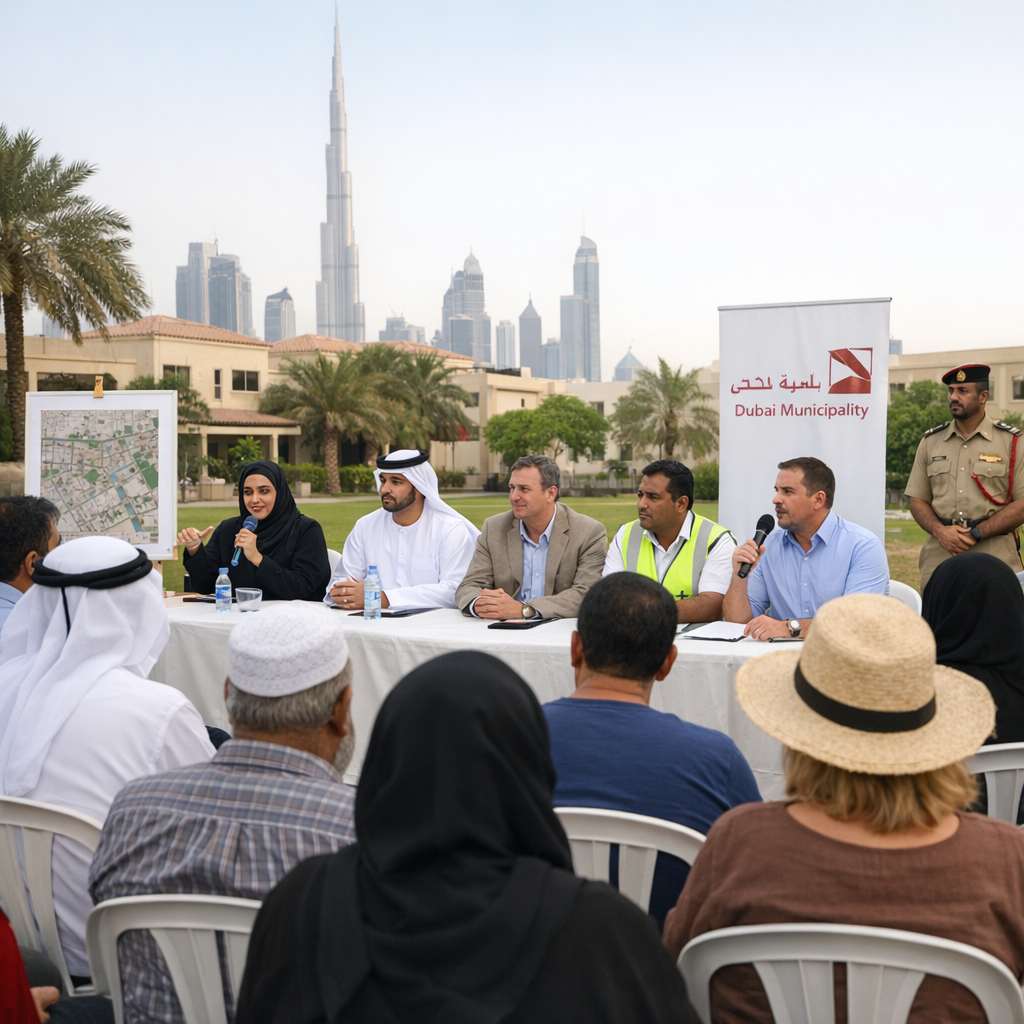
Dubai is growing fast, and with growth comes the challenge of making sure every resident feels heard, safe, and comfortable in their own neighbourhood. Across areas like Umm Suqeim, Al Warqa and Al Quoz, ongoing council sessions, forums and projects are turning community feedback into action—on garbage, lighting, road safety, civic space, and more.
Listening sessions move from talk to concrete plans
The Roads & Transport Authority recently hosted a Customer Council meeting with residents of Umm Suqeim, Jumeirah and nearby districts. Residents outlined key concerns: inefficient corridors, poor internal road conditions, dim street lighting, limited public transport and few safe pedestrian or cycling paths. RTA laid out plans to address many of these—including upgraded roads, flexible mobility options, and expanding public transport and walking infrastructure. These are not vague promises; rather, they reflect a shift toward more engaged planning. What residents suggest is now being directly tied to project priorities.
Municipal dialogue in Al Warqa: housing, sewerage and urban design on the table
Over at Al Warqa, municipality officials met with residents and families in an on-site dialogue. Feedback focused especially on sewer odours, urban planning, setbacks of villas, annex regulations and more accessible housing facilitation. Local leadership presented both immediate and longer-term measures—upgrading sewage treatment systems, modifying setback laws, expanding green spaces, and launching waste recycling contracts. There’s also a target to serve more residents with more reliable waste collection and stronger environmental quality in public areas.
Safety and community well-being in Al Quoz
The Positive Spirit Council and Dubai Police engaged 540 workers in Al Quoz through a Community Forum to boost public awareness on road safety, cyber fraud, emergency numbers, and more. It was a reminder that safety initiatives are not just done for people—but with them. Interactive sessions, recreational activities and trusted voices reinforced understanding and trust. Meanwhile, thousands benefit from long-running programs like “Sawaed Al Aman,” which empowers school students with safety skills and social awareness.
The environmental lens: waste, soil, and sustainability
Dubai’s circle of sustainability is expanding. Under initiatives like Circle Dubai, the goal is to reduce waste per person substantially by encouraging door-to-door sorting, smart bins and broad participation across residential, commercial, education and tourism sectors. One pilot in Palm Jumeirah transformed algae and organic material into nutrient-rich compost for green spaces. And the municipality’s pact with Enviroserve expands e-waste recycling, data security in disposal, and public-school engagement—a push toward circular economy, not just clean-up.
What this means for communities
- Faster responses: when residents bring up local issues—lighting, smells, traffic—those are showing up in action plans soon after.
- Greater inclusion: forums and councils map where concerns are most felt, allowing more equitable distribution of improvements.
- Visible impact: better roads, cleaner public spaces, safer crossings, and improved waste and recycling services. Small changes add up.
What more residents can do
Even as authorities plan and act, there’s a big role for individual contributions:
- Join council meetings or forums in your area—your voice makes planning more responsive.
- Report local issues like lighting outages, drainage problems or road hazards using municipal apps or hotlines.
- Participate in environmental initiatives: sort waste at home, support clean-ups, follow e-waste drop-off programs.
- Encourage kids and neighbours to engage with safety programs—young ambassadors are helping spread awareness.
Dubai’s growth is often presented in numbers—skyscrapers, metro lines, population increases. But the mark of a city well done comes in how its residents experience daily life: the clean streets, strong lighting, efficient roads, safe walkways, and accessible services. When communities are involved, that difference shows up far more often. And as so much of what makes Dubai work depends on its people—this shift toward listening and action matters.