

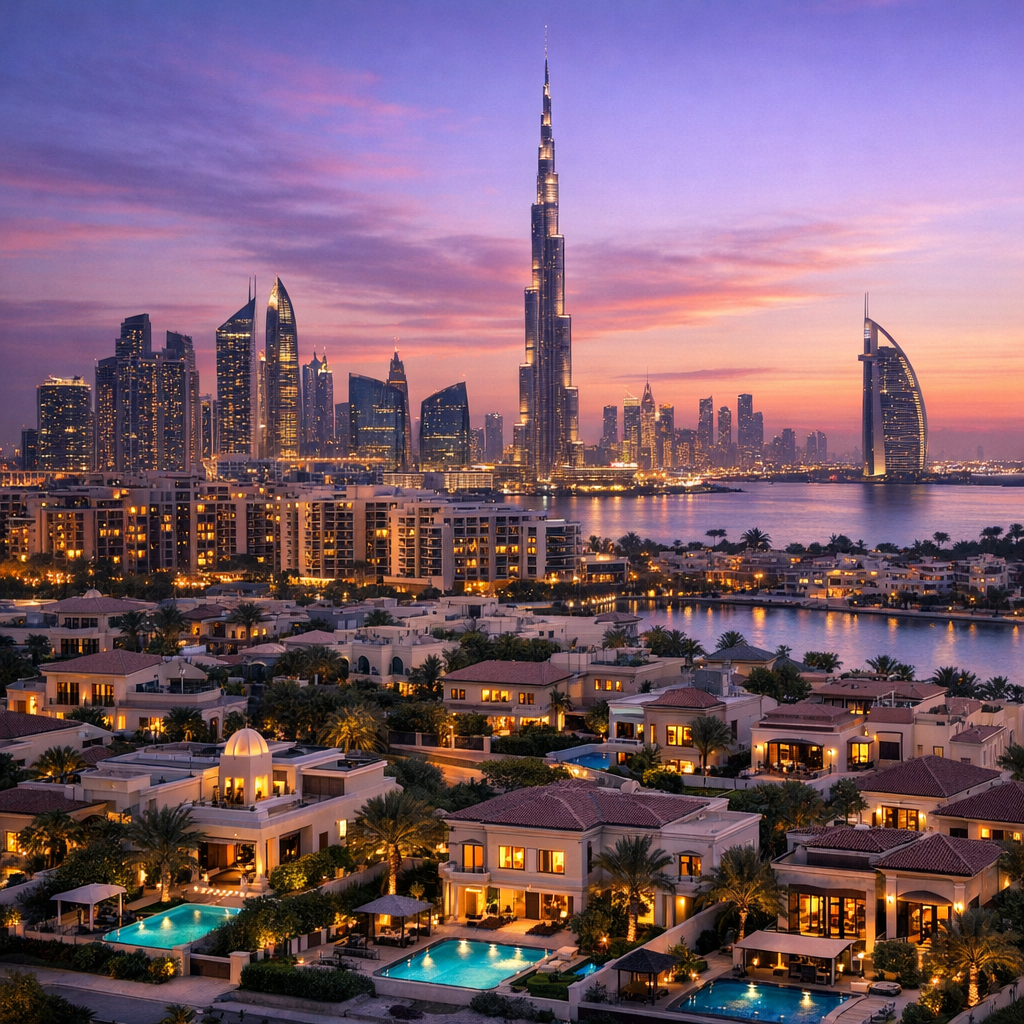
Dubai’s real estate landscape is entering a phase of moderation. After years of rapid growth in both sales and rentals, recent data point toward a more balanced, thoughtful market—where buyers and renters are growing more selective, and developers are adapting accordingly.
Sales & Prices: Growth Slows, but Villas Outpace Apartments
Residential sales remain strong, but growth in transaction volume and property prices is more measured than in previous years. Some of the most vivid growth pressures have eased, and buyers are increasingly focused on established communities, development track record, and long-term value rather than hype. Apartments are still in demand across many areas, but villa communities are clearly performing better in terms of price appreciation.
Rentals: Stability with Emerging Flexibility
After sharp jumps in rents in prior years, rental growth is now stabilizing. New tenancy agreements and renewals are steady, while vacancy rates are rising slowly in some sub-markets. Landlords are seeing that during softer demand periods—such as summer—longer leases are playing a more important role in keeping income stable. Gurgaon-style affordability remains key for many renters, who are seeking value over prestige.
Ownership vs Renting: A Subtle Tilt Toward Buying
Signals from buyer sentiment surveys indicate that more people now prefer ownership over renting. Programs for first-time home-buyers and residency policies linked to property ownership have helped shift the mindset of many residents. Steady inflows of new residents and expatriates, combined with government measures, are reinforcing that trend.
Infrastructure, Community & Supply: What’s Driving Value?
Communities with strong infrastructure—as in reliable transportation, good schools, and access to services—are increasingly commanding a premium. Areas well-connected to major projects such as metro extensions, logistical hubs or upcoming transit lines are seeing more interest. Meanwhile, despite a large number of units under construction, concerns about supply chain delays and handover schedules remain widespread. Projects with long-term planning and proven delivery are more trusted now.
What This Means for Different Types of Buyers and Renters
- End-users (families, long-term residents): Look for resale or ready homes in well-built communities rather than gamble on untested new-builds. Consider long-term leases if total cost of ownership (price + maintenance) is still high.
- Investors: Yield focus is shifting; apartments in affordable and mid-tier communities with strong tenant demand may outperform ultra-luxury villas in terms of immediate returns. Beware of oversupply in certain luxury segments.
- Landlords and developers: Flexibility in payment plans, delivery transparency, and strategic positioning (location + amenities) are becoming central differentiators.
In short, Dubai’s real estate market is maturing. The exuberant phases of runaway growth are behind us. Now, value is returning to the spotlight—long-term durability, community infrastructure, and credible delivery are shaping the winners.